



- Hormuz deadline risk dominating AUD/USD
- Inflation surging, spending holding up, RBA hike risk elevated
- Aussie still trading as a pro-cyclical, risk-sensitive FX
- Downside risks outweigh upside into the deadline
Deadline day for Hormuz
The deadline for Iran to reopen the Strait of Hormuz is today’s defining risk event for AUD/USD, with Trump warning of strikes on Iranian power plants and bridges if it isn’t met by 8pm US eastern time on Tuesday, a scenario that would mark a clear escalation and raise the risk of prolonged disruption to energy supply. That risk continues to overwhelm a domestic economic backdrop that would normally be supportive for the Aussie.
Inflation surges, spending holds up
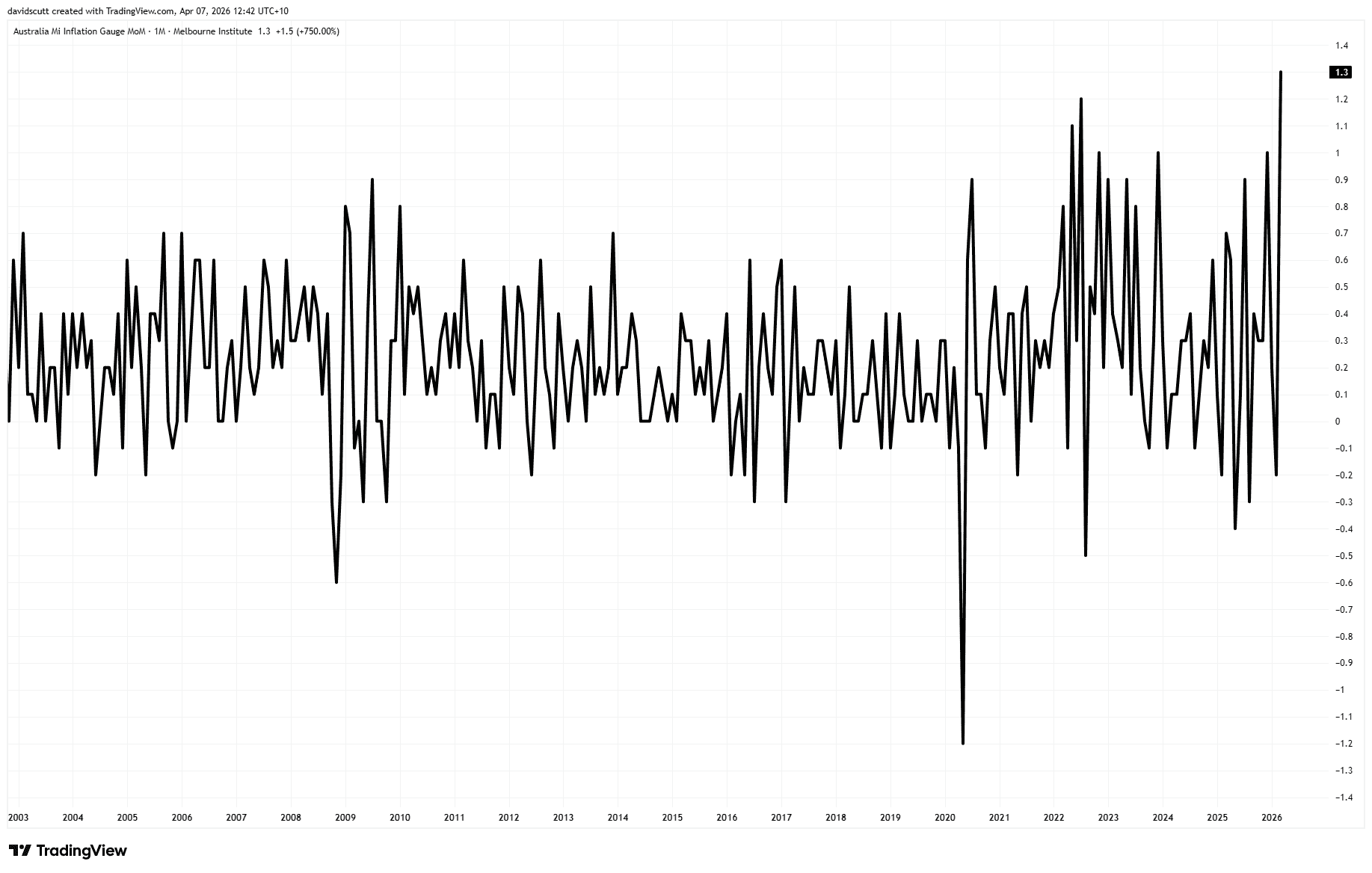
Australia’s inflation problem has worsened as a result of the Iran war, with the Melbourne Institute MI inflation gauge jumping 1.3% in March, the largest increase on record, pushing the annual pace up to 4.3%. Higher fuel prices explain much of the increase, but the risk is second-round effects through wages and inflation expectations the longer this persists.
Source: TradingView
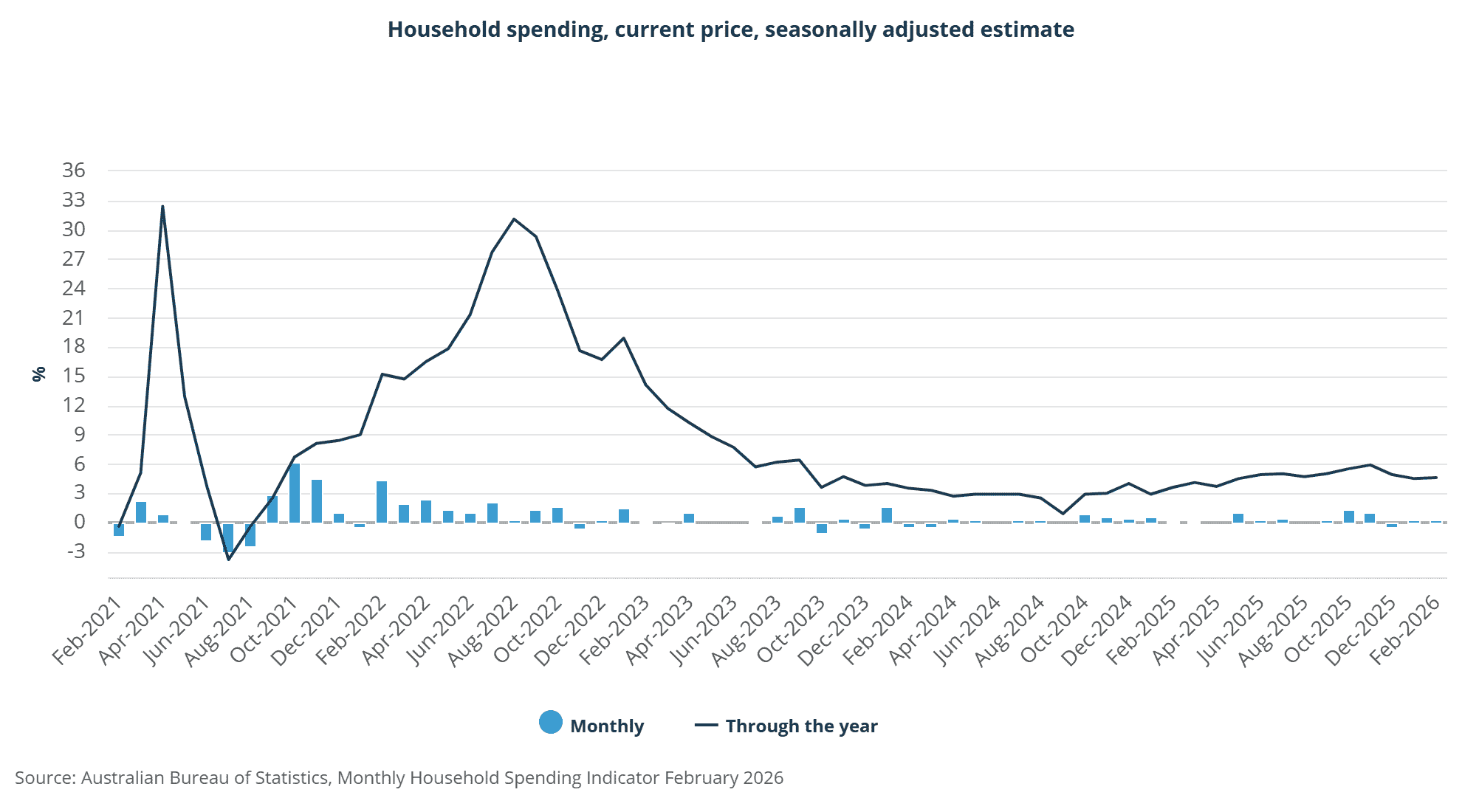
At the same time, household spending is holding up. ABS data for February showed a 0.3% monthly increase in nominal spending, with discretionary services again doing much of the heavy lifting.
Source: ABS
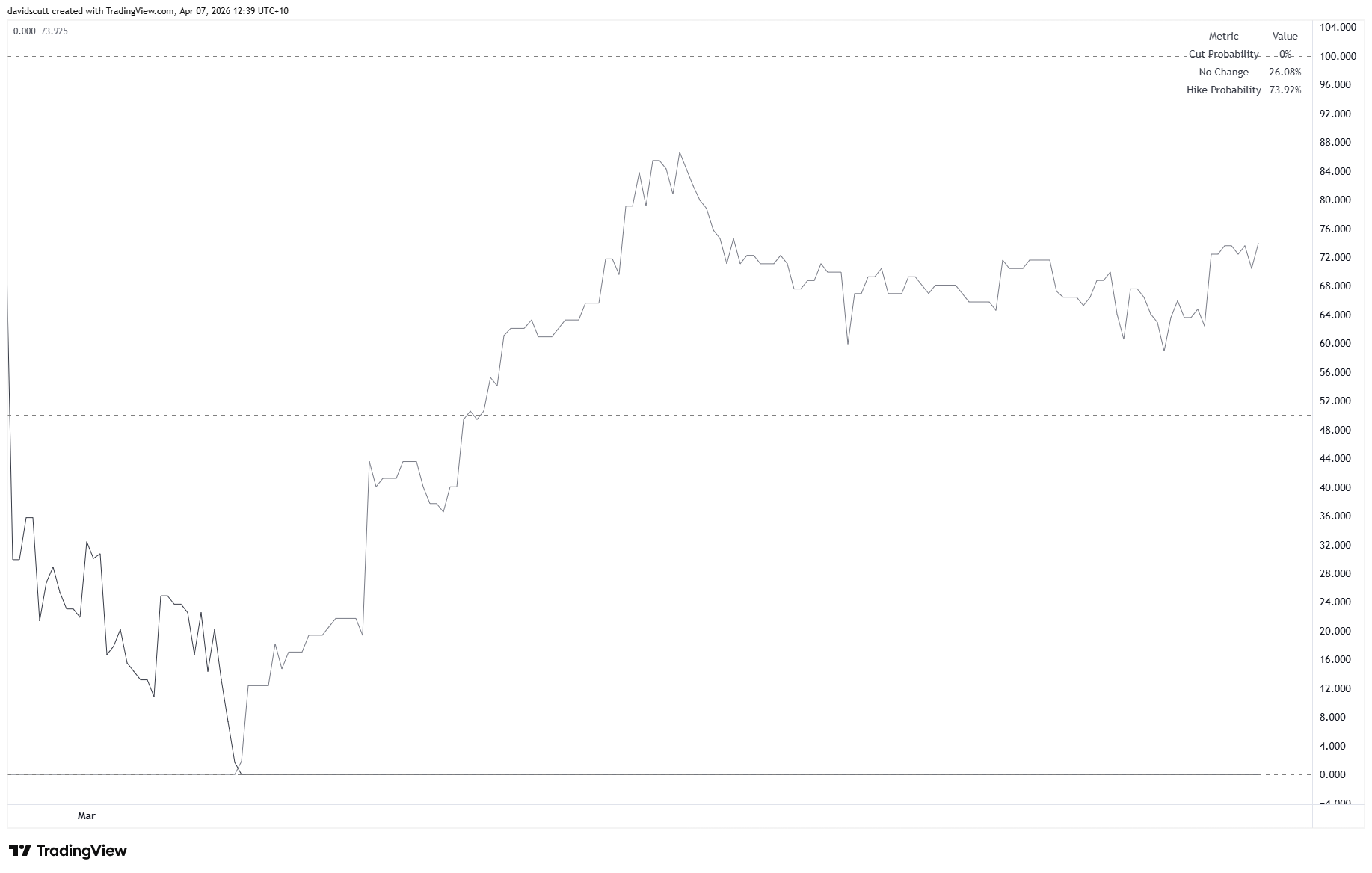
That combination explains why traders continue to price the risk of further RBA rate hikes despite obvious downside risks to activity. Markets assign around a 75% probability to a 25bp hike in May, which would deliver a third straight increase and take the cash rate back to 4.35%, the peak of the prior tightening cycle, with some further tightening still priced beyond that.
Source: TradingView
Under normal circumstances, that would support AUD/USD. But not on this occasion.
Risk appetite driving AUD/USD
When it comes to the latest Hormuz deadline, markets clearly favour another Trump TACO, otherwise the Aussie would be getting hammered. However, while the price action suggests a high probability of another de-escalation, it’s the distribution of outcomes that matters most for the Aussie. Any escalation would threaten energy supply and create downside risks to global growth, which would work against AUD/USD upside. It may be deemed low probability, but it would pack a punch should it actually play out.
Source: TradingView
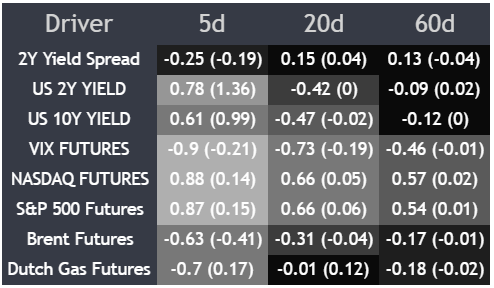
That view is underlined by the correlation analysis above. AUD/USD’s relationship with AU-US two-year yield differentials has effectively broken down, sitting around -0.25 over the past week and only 0.15 and 0.13 over the past month and quarter. By contrast, the link to US yields is far stronger.
But it’s risk appetite the Aussie has been most sensitive to. Correlations with Nasdaq and S&P 500 futures are sitting close to 0.9 over the past week, showing AUD/USD is still trading as a pro-cyclical asset as the market shifts from the initial energy price shock to what it means for global growth.
Energy risk shifts macro lens
The energy channel has been central to how the Aussie has performed since the war began, initially outperforming as a beneficiary of stronger terms of trade from higher prices before reverting to its traditional role as a barometer of risk appetite and the global economic outlook.
See, the US is far less vulnerable to energy supply disruptions than Australia, meaning inflation concerns tend to dominate there. The US is largely self-sufficient, so it has access even if at higher prices. In Australia, where fuel supply largely originates offshore for diesel, gasoline and avgas, the concern is just as much about the hit to activity from actual scarcity of supply as it is about inflation.
That explains why higher energy prices and expectations for additional RBA rate hikes are no longer translating into AUD strength, combining with a deteriorating macro backdrop and elevated volatility to create ongoing headwinds for upside.
Technicals: Don’t overcomplicate it
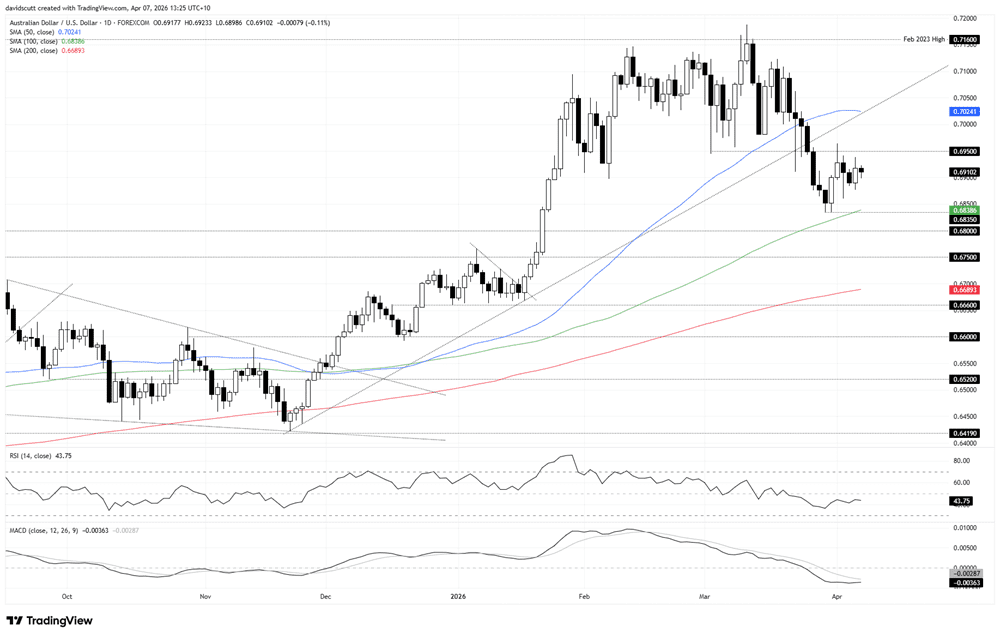
Source: TradingView
For AUD/USD, the technicals don’t need to be overcomplicated. Near-term, the signal will almost certainly be trumped by geopolitics, depending on whether we see another Trump TACO or not.
If we do, .6950 is the first level overhead of note, having acted as both support and resistance recently. We’ve seen some violent reversals after trading through it, reinforcing the need to put risk management at the forefront. A sustained break above .6950 would bring the 50DMA into play, the final real topside barrier before the March highs above .7160.
If the power plant and bridge day scenario actually plays out, marking a clear escalation in the Iran war and raising the risk of prolonged energy supply disruptions, AUD/USD would likely come under significant downside pressure, putting .6835, the 100DMA, .6800 and the 200DMA on the radar for shorts.
From a momentum perspective, RSI (14) and MACD have both come off their recent lows but continue to favour selling into strength from a purely technical standpoint. RSI remains below the neutral 50 level, while MACD looks like it may soon cross above the signal line, although it remains deep in negative territory.