



Despite maintaining consistent neutrality for most of the week, USD/CAD is set to close with a decline of more than 0.36% in today’s session. So far, this has been the most relevant bearish move in favor of the Canadian dollar during the recent trading week. Selling pressure has held as the US dollar has shown short-term weakness, mainly due to the drop in US Treasury yields. If this dynamic persists, it could become a catalyst for more consistent selling pressure in USD/CAD in the coming sessions.

US Treasuries lose ground
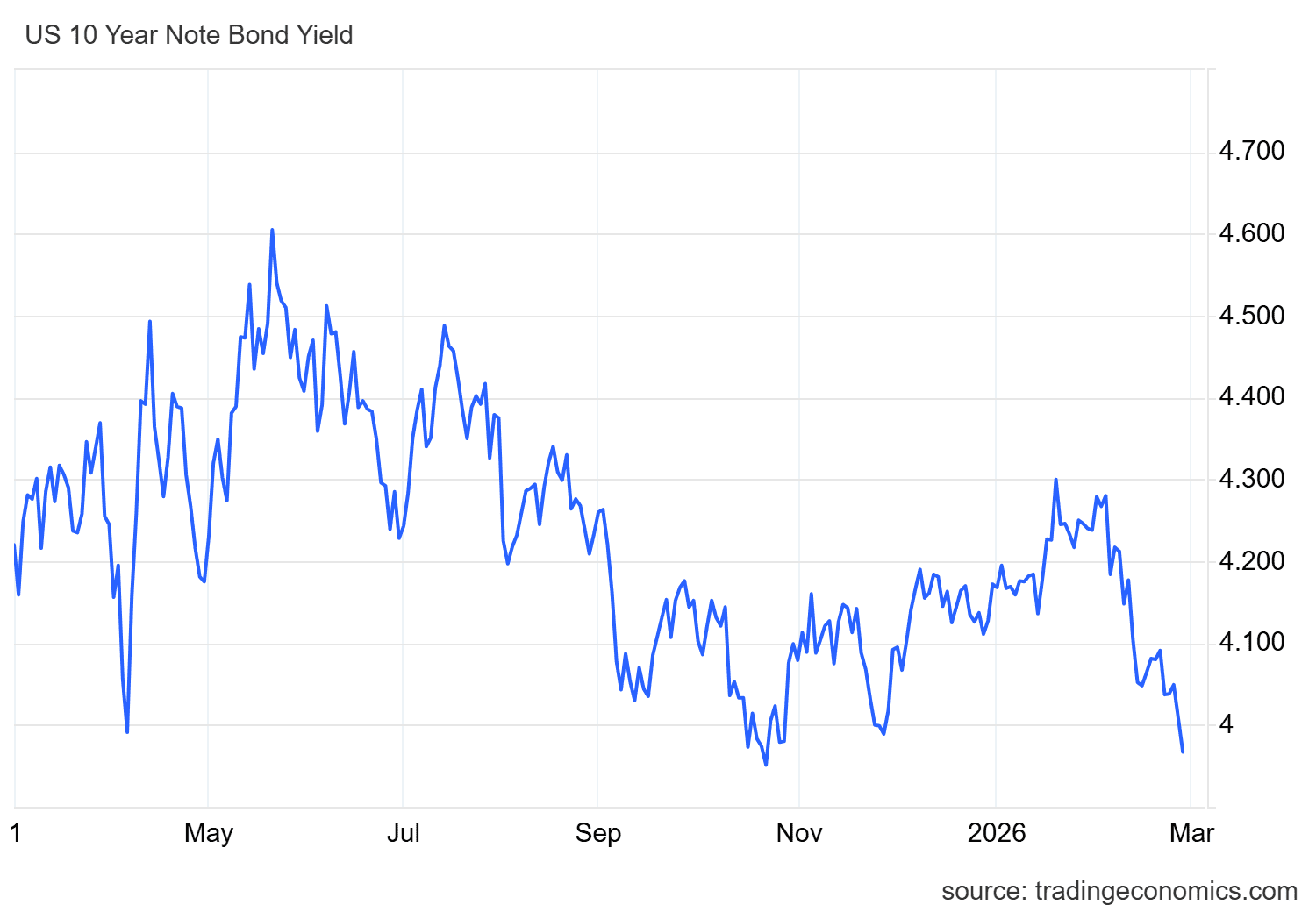
As the final week of February comes to a close, one of the most relevant developments has been the loss of attractiveness in US Treasury bonds. The 10-year yield has broken below the 4.00% level and is now fluctuating around 3.96%, moving further away from the recent highs near 4.3% seen in previous sessions. This pullback suggests a loss of momentum in yields and, consequently, a moderation in the relative appeal of the US fixed-income market.
Source: TradingEconomics
This move is particularly relevant in a context where trade tensions have not yet been fully resolved. The decline in yields may be reducing the attractiveness of dollar-denominated assets compared to other fixed-income alternatives, potentially moderating capital inflows into the United States and cooling short-term demand for the US dollar.
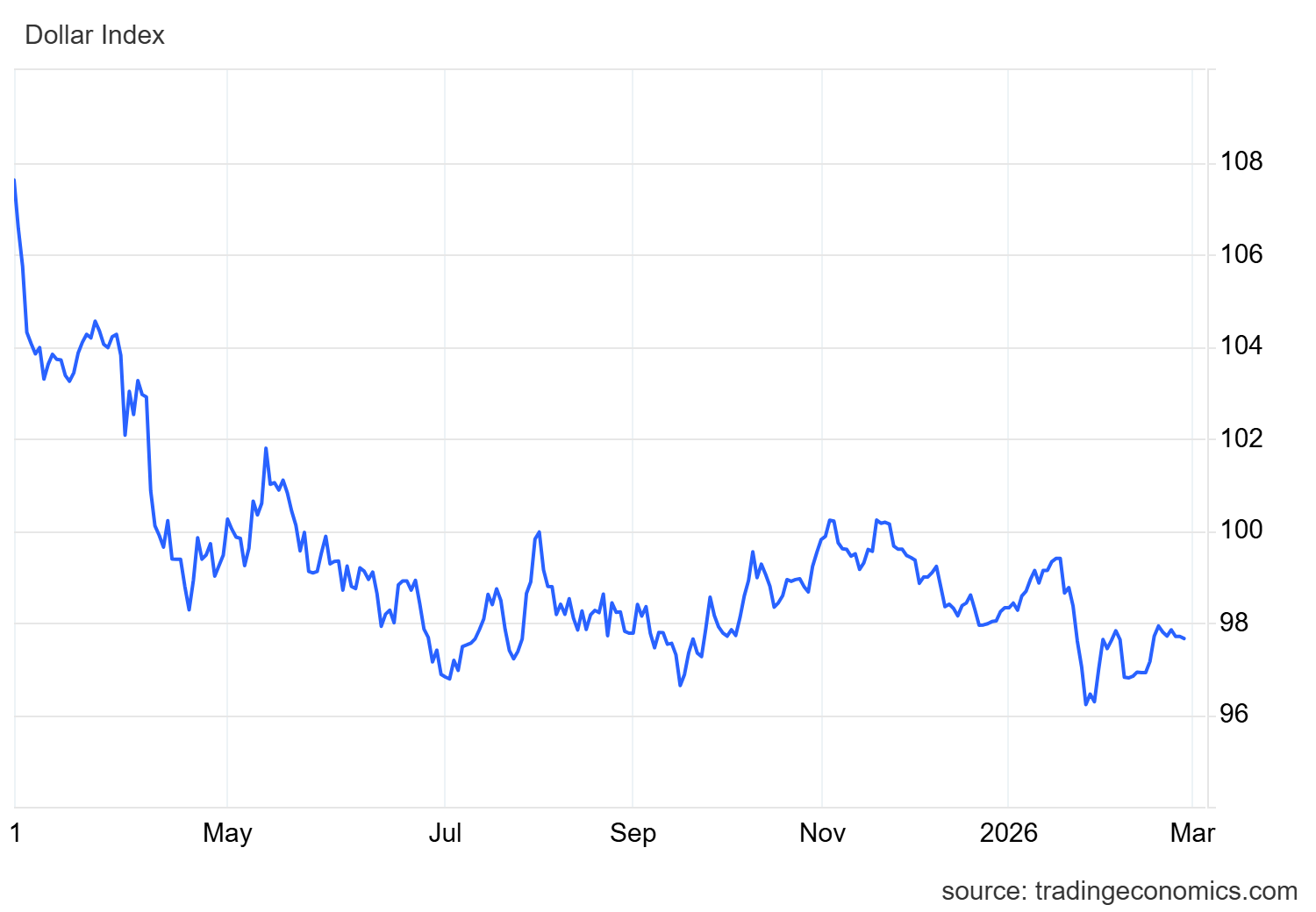
Indeed, this scenario is beginning to reflect in the behavior of the DXY index, which measures the dollar’s strength against other currencies. The index is currently weakening toward the 97.6 area, moving further away from the key psychological 100-point level. This suggests that demand for the dollar remains moderate, in line with the loss of momentum in bond yields.
Source: TradingEconomics
Under this context, if weakness in the 10-year yield continues in the coming sessions, the US dollar may struggle to regain ground. This could allow the Canadian dollar to gain relative strength and maintain a bearish bias in USD/CAD.
Technical outlook for USD/CAD
Source: StoneX, Tradingview
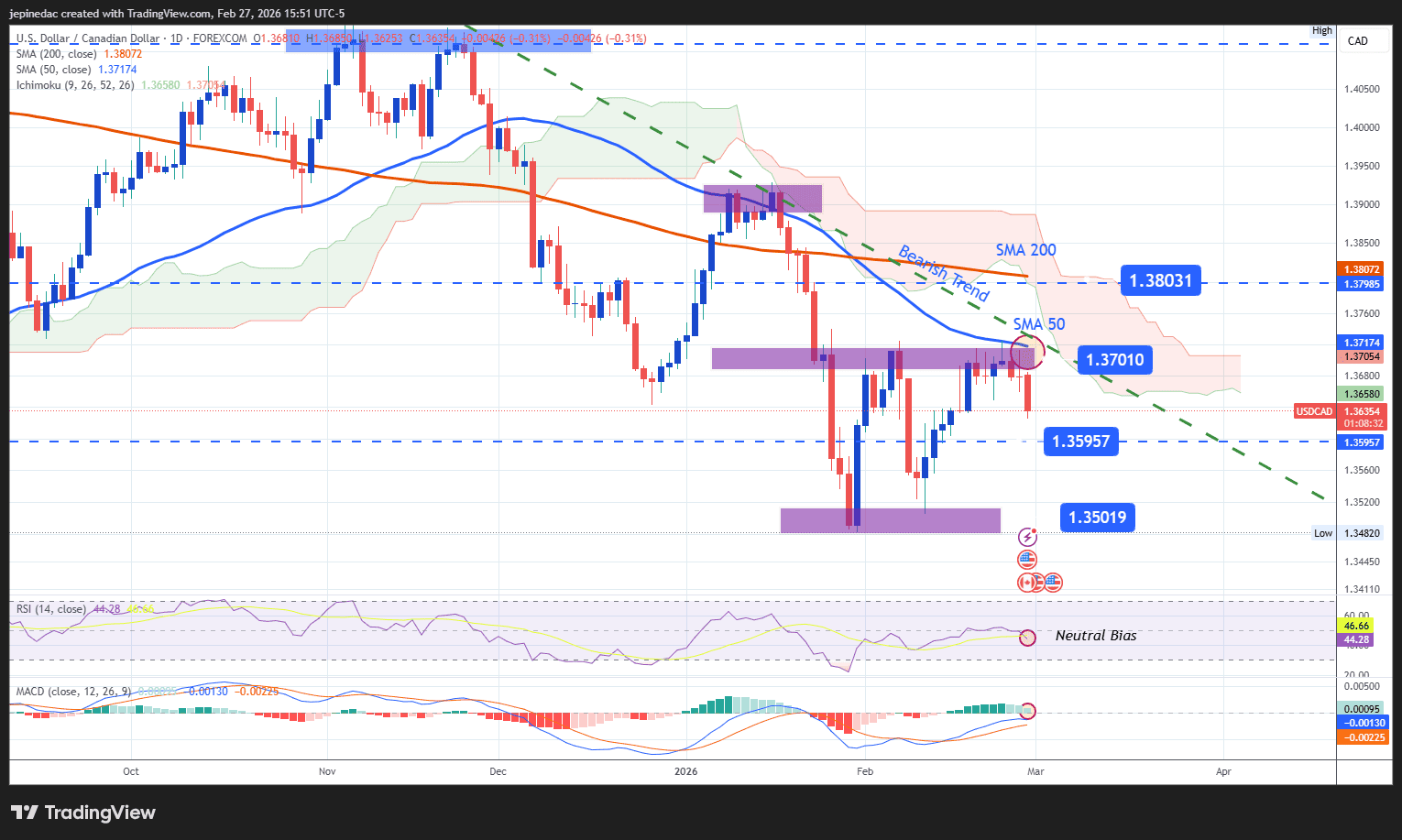
- Nothing halts the downward trendline: Since late November 2025, USD/CAD has maintained consistent bearish swings, forming a descending trendline on the daily chart. Despite recent recovery attempts, bullish moves have not been strong enough to break this structure, which remains the most relevant technical reference in the short term. If selling pressure persists, the dominance of this trendline could extend in the coming sessions.
- RSI: The RSI line is approaching the neutral 50 level, suggesting equilibrium in the average momentum of the last 14 sessions. If this behavior continues, a short-term phase of indecision may persist, although with a slightly weaker bias for the US dollar.
- MACD: A similar scenario is observed in the MACD, whose histogram remains close to the zero line. This indicates a lack of clear dominance in short-term moving averages, reinforcing the neutral tone within a broader bearish structure.
Key levels:
- 1.37010 – Relevant resistance: Level aligned with recent highs and close to both the prevailing downward trendline and the 50-period simple moving average. Sustained moves above this zone could threaten the descending structure and open the door to a stronger bullish bias, potentially triggering a short-term upward move if demand strengthens.
- 1.35957 – Current barrier: Relevant neutrality zone aligned with retracement levels observed in July 2025. If price consolidates below this level, a dominant bearish bias could strengthen in the coming sessions, reducing the likelihood of a bullish breakout within the current structure.
- 1.35019 – Crucial support: Level aligned with recent lows and the main bearish barrier to monitor. A sustained break below this zone could enable new lows, reinforce the dominant selling bias observed in previous weeks, and extend a more aggressive downward trend in the medium term.
Written by Julian Pineda, CFA, CMT – Market Analyst
Follow him on: @julianpineda25