


Geopolitical risk is creeping back into the narrative. The US has positioned aircraft carriers, bombers and naval assets around Iran, and rhetoric has hardened on both sides. Naturally, this sparks talk of war and oil shocks. However, traders are not pricing war – they’re pricing risk premium.
View related analysis:
- Crude Oil Outlook: WTI Tests $62 Support as COT Signals Limited Pullbacks
- Gold Price Outlook: Options Sentiment Extreme as Bears Target 4800
- Gold Outlook: Dead Cat Bounce Risk Builds Near Highs
- Nasdaq 100 Leads Risk-Off as Tech Earnings Weigh, Gold Slides
Pressure Tactics, Not a Pre-War Signal
At its core, this looks like pressure and leverage rather than a prelude to invasion. The US is pairing military readiness with stalled nuclear negotiations, signalling it has credible strike options if talks fail. That doesn’t automatically translate into boots on the ground or a regime-change campaign.
While military assets dominate headlines, diplomacy is still in motion. Indirect nuclear talks between the US and Iran are underway in Geneva, facilitated by European intermediaries, with Oman acting as a key backchannel. The discussions have stretched over several days, with scope for further rounds if progress is made.
The fact talks are continuing at all suggests both sides are still probing for a diplomatic off-ramp before tensions harden further.

Why Crude Oil Traders Should Pay Attention
Iran exports the bulk of its oil to China, and Washington has been tightening sanctions to curb those flows. Even without a single missile being fired, rising tensions increase the risk premium embedded in oil prices.
The Strait of Hormuz sits at the centre of this dynamic, with a meaningful share of global supply moving through that narrow passage. Any disruption — real or perceived — can send volatility sharply higher.
Crude Oil: Assessing the Near-Term Landscape
In the near term, the most probable path remains continued posturing, sharp headlines and ongoing diplomacy. A limited strike cannot be ruled out, but a sustained regional war still looks like a lower-probability outcome.
Markets tend to react first and analyse later. That means oil, gold and the US dollar may respond to headlines before underlying developments are fully confirmed. Traders should watch crude for signs that risk premium is expanding beyond rhetoric, while also monitoring safe-haven flows. Ultimately, price action trumps the narrative.
WTI Crude Oil Futures (CL) Technical Analysis
WTI Crude Oil Futures Positioning | COT Report
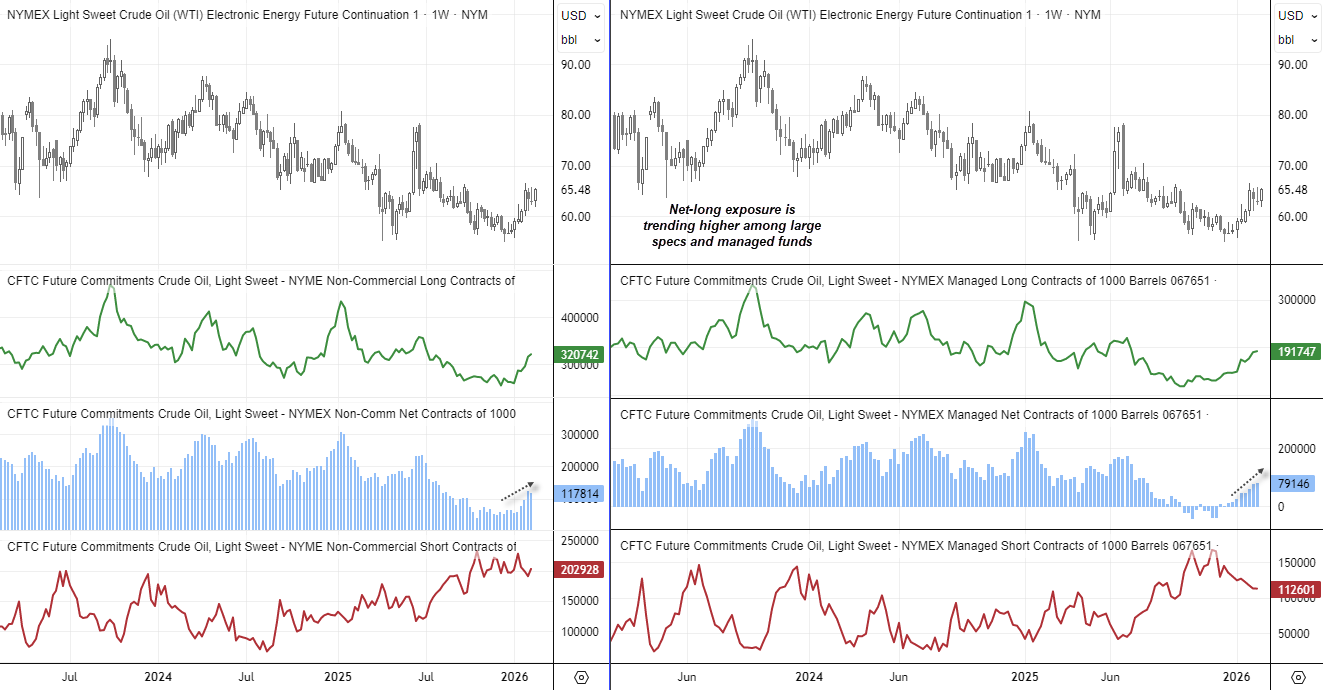
Net-long exposure in WTI crude oil futures has been trending higher for several weeks among large speculators and managed funds. Gross short positions have been easing, while prices have edged higher alongside a pickup in managed fund long exposure. That said, short positioning among large specs remains relatively elevated, suggesting there is still fuel for short covering should crude extend higher.
Importantly, overall net-long exposure is nowhere near historical sentiment extremes. That leaves room for additional upside if geopolitical risk premium expands. For now, price action is attempting to stabilise, but conviction may hinge on how nuclear talks in Geneva conclude and whether tensions translate into real supply risk.
Source: CFTC (COT), NYMEX, LSEG
WTI Crude Oil Futures (CL) Technical Analysis
Oil prices rose over 4% on Wednesday, marking the strongest bullish session for WTI since October. The move reinforces the importance of the $62 support zone highlighted last week, with clear demand emerging around those lows.
The daily trend remains constructive, and Tuesday appears to have marked an important swing low near the monthly pivot point. However, with prices pushing toward cycle highs, some caution may be warranted. Pullbacks within Wednesday’s range could attract dip buyers if momentum continues to build toward the $70 region.
Escalation risk remains a wildcard. A confirmed US attack could trigger a sharper rally, although for now diplomacy remains the base-case scenario. A sustained break below $62 would weaken the near-term bullish structure and invalidate the current constructive bias.
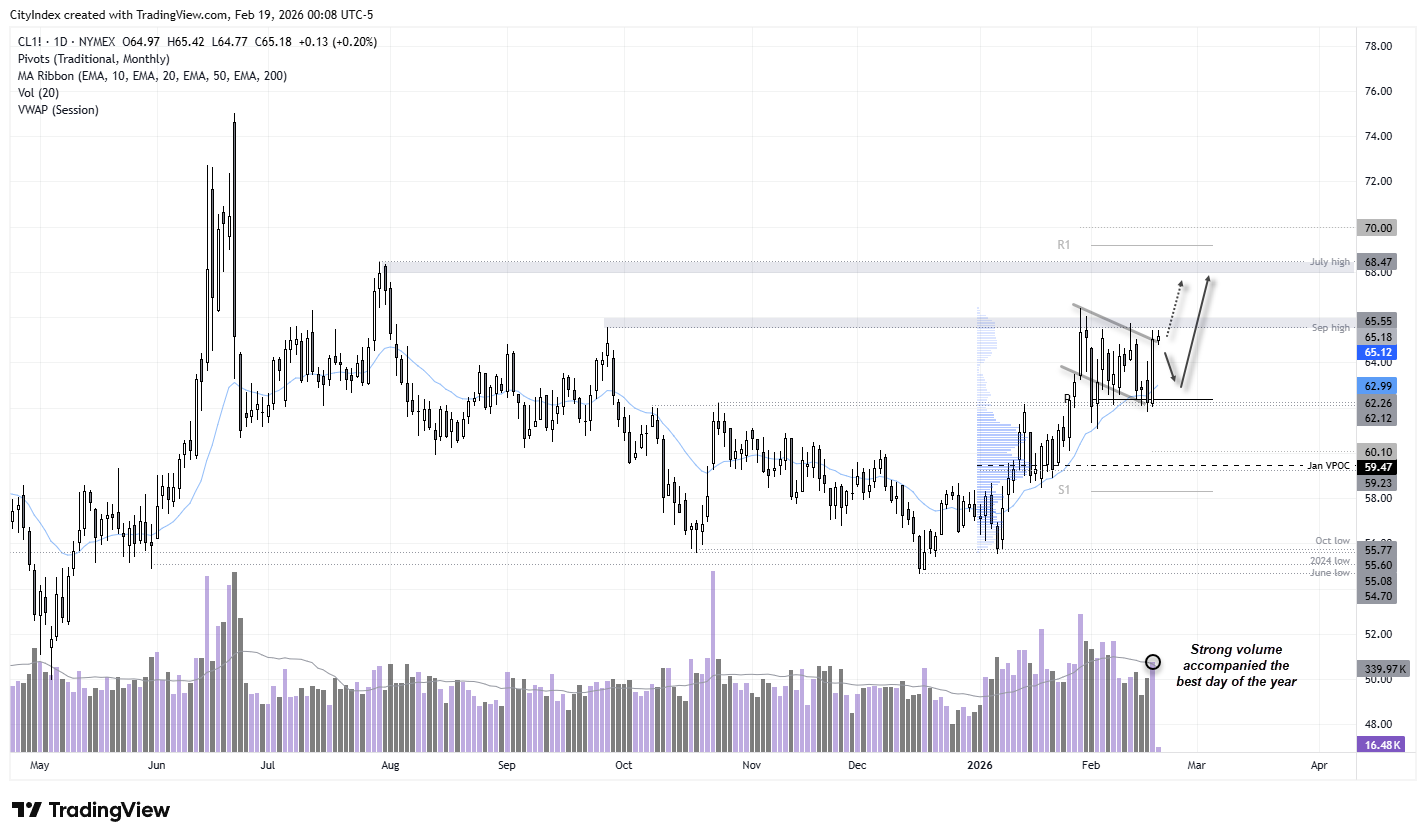
Chart analysis by Matt Simpson - Source: TradingView
View the full economic calendar
-- Written by Matt Simpson
Follow Matt on Twitter @cLeverEdge
How to trade with City Index
You can trade with City Index by following these four easy steps:
- Open an account, or log in if you’re already a customer
• Open an account in the UK
• Open an account in Australia
• Open an account in Singapore
- Search for the market you want to trade in our award-winning platform
- Choose your position and size, and your stop and limit levels
- Place the trade