



The week has not been favorable for euro price action in the short term. This is mainly due to the fact that, shortly after the Federal Reserve’s decision, EURUSD began to show renewed weakness, with the pair posting a decline of more than 0.8% on the day, bringing a bearish bias back into focus.
For now, the central bank decision appears to have triggered a renewed strength in the U.S. dollar, pushing the euro lower. This development could remain relevant in the coming sessions, maintaining a downward bias in EURUSD. However, the market is still awaiting the European Central Bank’s policy decision, scheduled for tomorrow.

Federal Reserve Day
Earlier today, the Federal Reserve announced its monetary policy decision, keeping the interest rate unchanged at 3.75%, in line with expectations and reinforcing its current neutral stance.
Following the decision, Jerome Powell’s speech gained particular attention, as he highlighted that inflation remains above the 2.00% target. He also pointed to potential inflationary pressures, driven by rising oil prices and ongoing uncertainty linked to the Middle East conflict.
Although Powell maintained a cautious tone, he made it clear that rate cuts are not guaranteed in the short term, and that the Fed will continue to closely monitor incoming data before adjusting its policy stance.
This message had a direct impact on the Fed’s probability outlook. Prior to the speech, markets expected rate cuts to begin around December 2026. However, expectations have now shifted, with a higher probability that rates will remain unchanged even until March 2027.
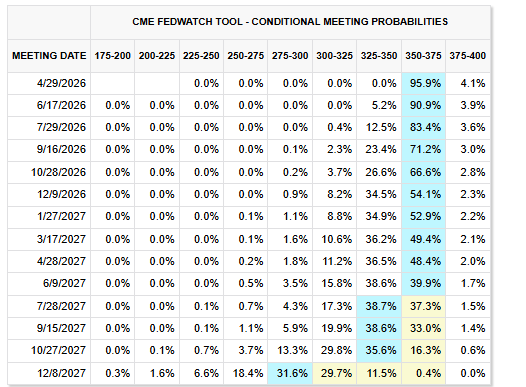
Source: CMEGROUP
This shift in expectations has supported the U.S. dollar, as it has boosted the U.S. bond market, with the 10-year yield moving closer to 4.3%, restoring attractiveness and encouraging capital inflows.
This effect is already visible in the DXY (U.S. Dollar Index), which measures the strength of the U.S. dollar against a basket of major currencies. The index has regained the 100 level, showing renewed buying pressure in the dollar in the short term.
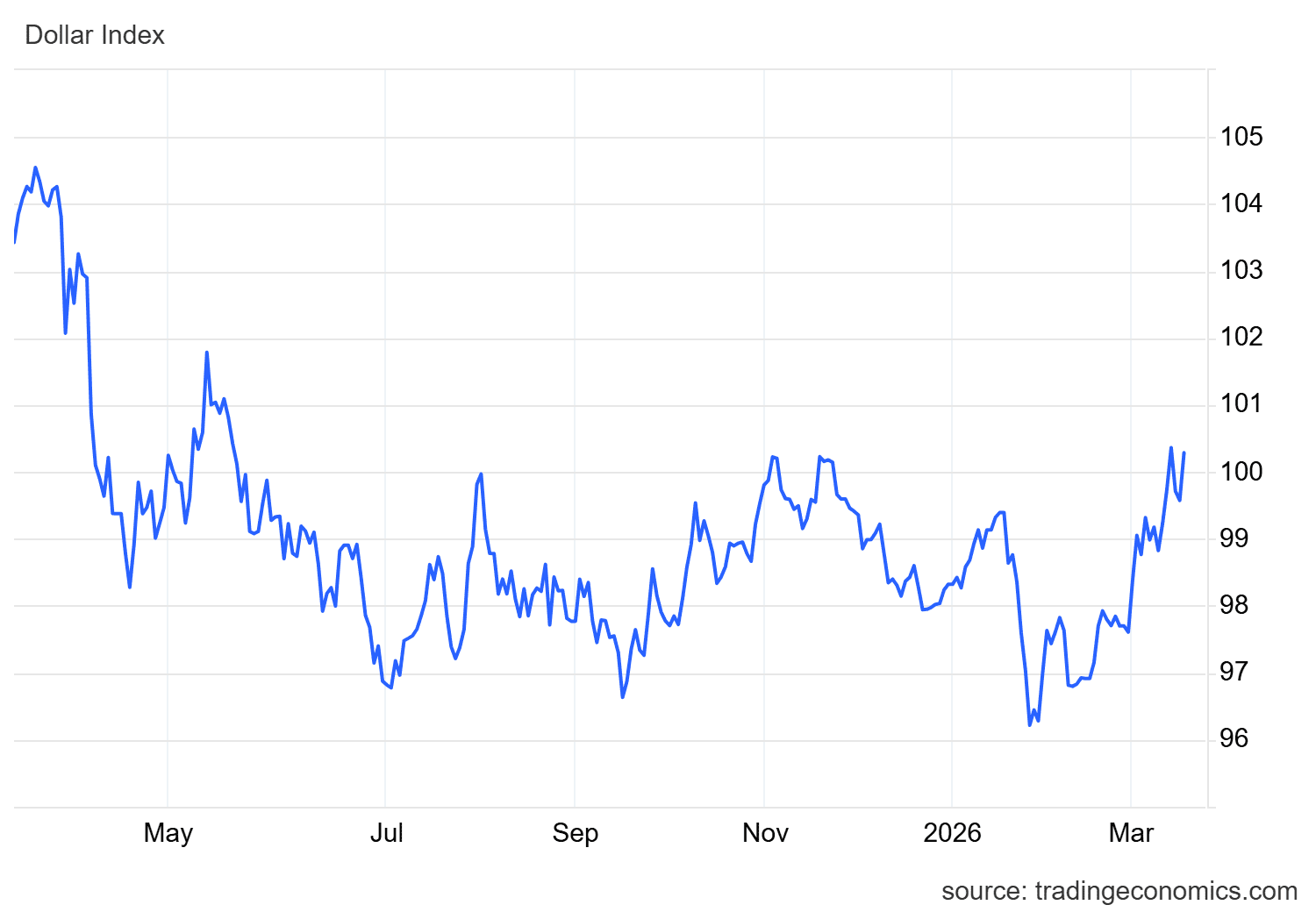
Source: Tradingeconomics
With this in mind, the Federal Reserve decision stands out as a key catalyst for dollar strength, which could continue to weigh on EURUSD in the coming sessions.
Will the European Central Bank decision matter?
The European Central Bank is also set to announce its decision tomorrow, with expectations pointing to no change in the 2.15% refinancing rate, with a probability close to 98.0%.
For now, the ECB appears to be aligned with the Fed’s cautious stance, maintaining close attention on inflation dynamics. However, even if the ECB holds rates steady, the rate differential with the U.S. remains significant.
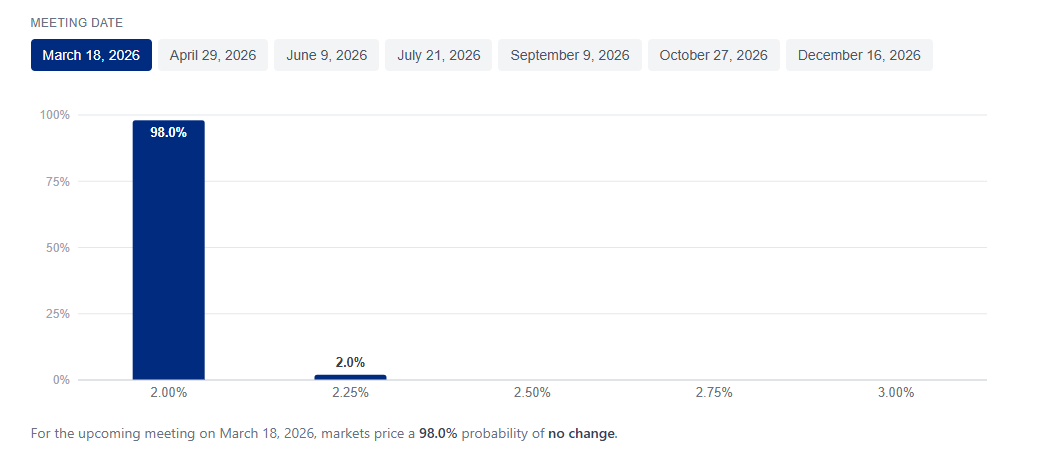
Source: ECBWATCH
As long as this differential persists, dollar-denominated assets are likely to remain more attractive than euro-denominated ones. Therefore, the ECB decision alone may not be enough to reverse the bearish bias in EURUSD in the short term.
EUR/USD Technical Outlook
Fuente: StoneX, Tradingview
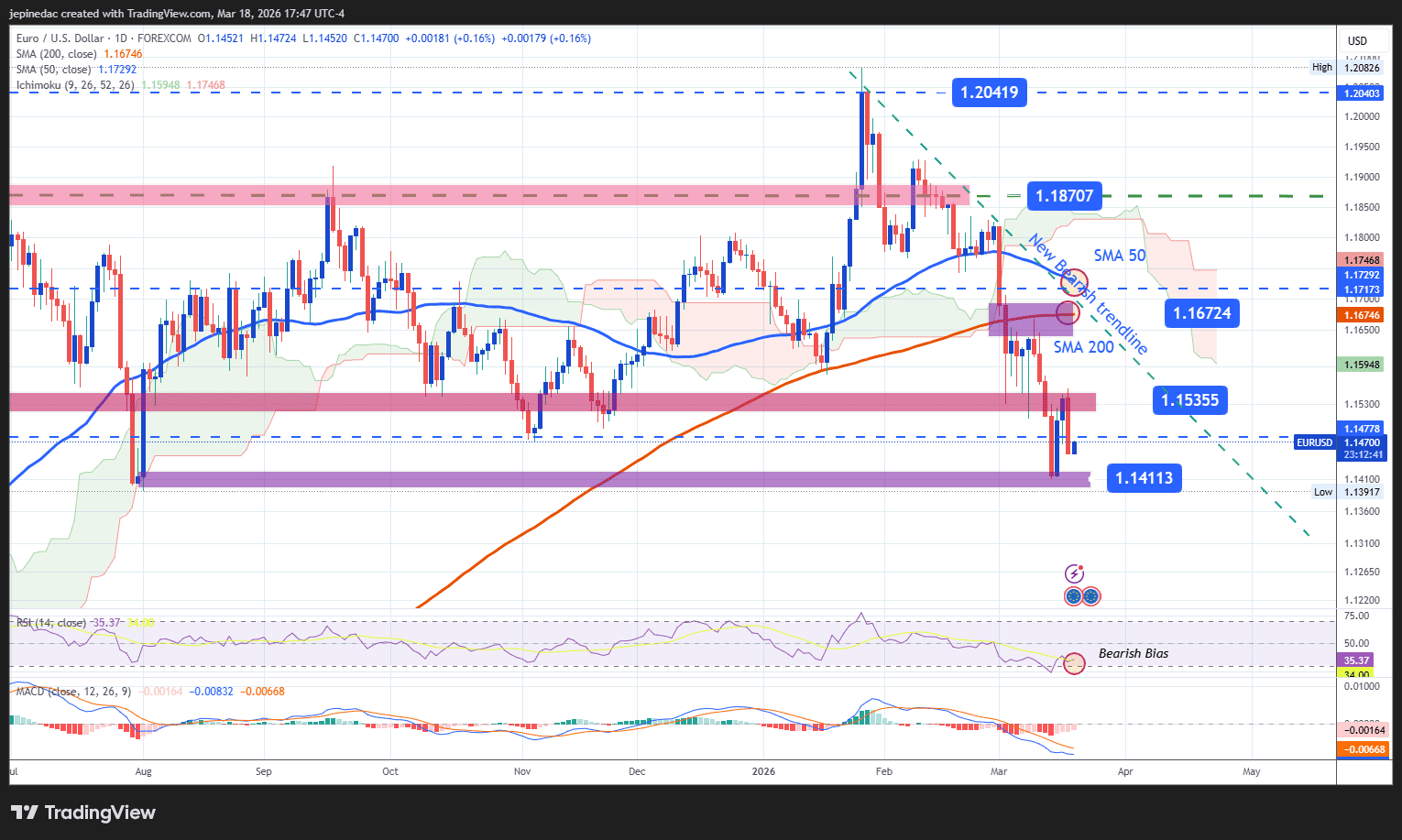
- The new downtrend remains firm: Since January, EURUSD has been showing a consistent bearish structure, with progressively lower lows forming a more defined downward trendline. This remains the dominant technical structure, and as long as selling pressure persists, it is likely to continue guiding price action.
- RSI: The RSI indicator remains below the 50 level, confirming that bearish momentum is still dominant. However, it is approaching the oversold zone (30), which could signal potential short-term corrective rebounds.
- MACD: The MACD is currently near the zero line, suggesting a balance between buying and selling forces. This could open the door to a consolidation or corrective phase in the short term.
Key levels:
- 1.16724 – Key resistance: Level aligned with recent highs and the 200-period moving average. A break above this area could invalidate the current downtrend and trigger a more sustained bullish bias.
- 1.15355 – Near-term barrier: A recent neutrality zone that could act as tentative barrier during potential short-term bullish rebounds in the EUR/USD.
- 1.14113 – Key support: A level not seen since August 2025. A break below this zone could reinforce the bearish bias and extend the current downtrend in the coming sessions.
Written by Julian Pineda, CFA, CMT – Market Analyst
Follow him on: @julianpineda25