



FX futures positioning is becoming increasingly stretched, with speculative euro longs near extremes, bearish exposure building in the Swiss franc, and conviction fading in the yen. Meanwhile, the US dollar shows early signs of stabilising after months of weakness. This report reviews CFTC Commitment of Traders data across major currencies before drilling into EUR/USD, USD/CHF, USD/JPY and USD/CAD for potential inflection points.
View related analysis:
- CAD/JPY Outlook Ahead of Canada Jobs and Trump Tariff Ruling
- AUD/USD 2026 Outlook: Policy Divergence and a Shifting Dollar Trend
- AUD/USD Hints at Pullback as US Dollar Bulls Regain Footing
- Australian Dollar Outlook: AUD/USD Momentum Falters Near Highs
Large Speculator Positioning | COT Report
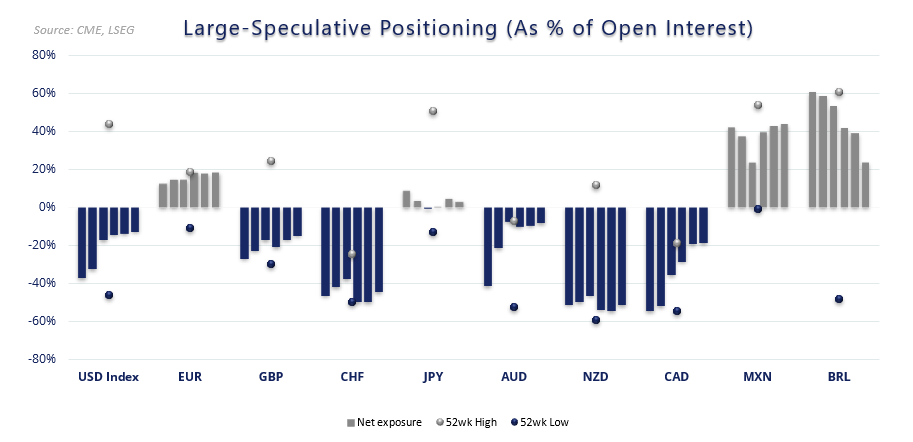
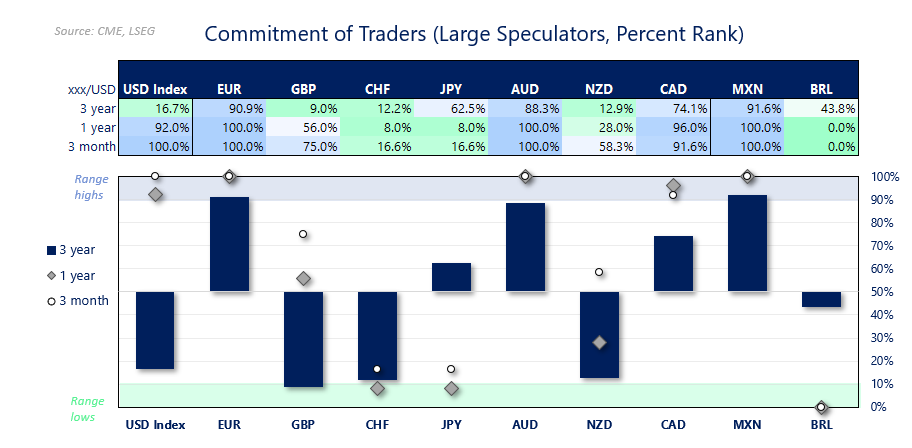
Large speculators have remained net-short the US dollar index since June, although that exposure has been reduced by around 75% in recent weeks to roughly -38k contracts. This has allowed the 3-month and 1-year percent ranks to recover, even if broader sentiment remains skewed against the US dollar.
Charts prepared by Matt Simpson – Data Source: CME, CFTC, IMM
That backdrop has naturally benefited the euro, given its 57% weighting in the US dollar index. Large speculators are now the most bullish on EUR since July 2023, with gross long exposure reaching a record high — a potential sign positioning is becoming stretched.
Elsewhere, Swiss franc bears have eased off, with net-short exposure edging away from its 18-month extreme.
Finally, note the shift in sentiment towards the Brazilian real. Net-long exposure has fallen to a 45-week low as longs unwind and shorts rebuild, raising the risk that large speculators flip to net-short positioning in the weeks ahead.

Asset Manager Positioning | COT Report
Asset managers flipped to net-short USD index futures two weeks ago, for the first time since mid-October. That leaves both asset managers and large speculators aligned in a bearish view on the US dollar.
Asset managers have also increased net-long exposure to the Brazilian real, moving counter to large speculators, who have been unwinding longs.
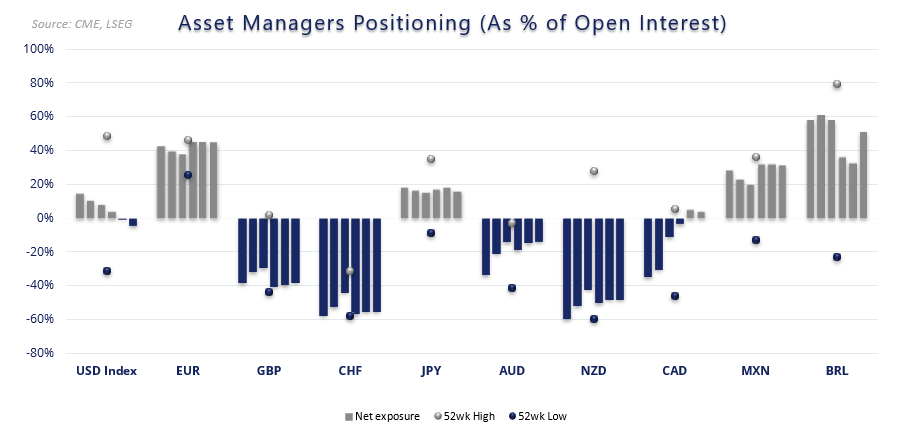
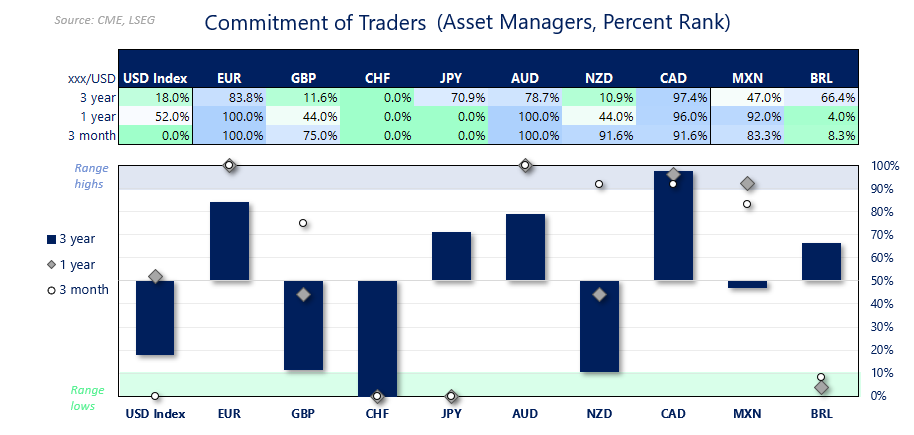
Chart prepared by Matt Simpson – Data Source: CME, CFTC, IMM
Comparing asset manager exposure with large speculators across FX futures shows relatively few differences beyond the US dollar and BRL. One notable exception is the Japanese yen, where asset managers appear less convinced of a bullish outlook given their lower levels of net-long exposure.
I suspect Australian dollar futures will eventually flip to net-long exposure among both trader groups, reflecting divergent monetary policy expectations between the RBA and Fed. For now, however, both remain net-short AUD/USD, albeit at a diminishing pace.

EUR/USD (Euro) Futures Positioning | COT Report
The slide in the US dollar has pushed net-long exposure to the euro to an 18-month high among large speculators and a 15-month high among asset managers. With net positioning fast approaching its 2023 peaks, this raises the risk a sentiment extreme is forming — one that could leave EUR/USD vulnerable to a pullback or the US dollar index primed for a rebound.
That risk is heightened by the fact that gross long positions have reached record highs among both trader groups, increasing the chance of a crowded trade.
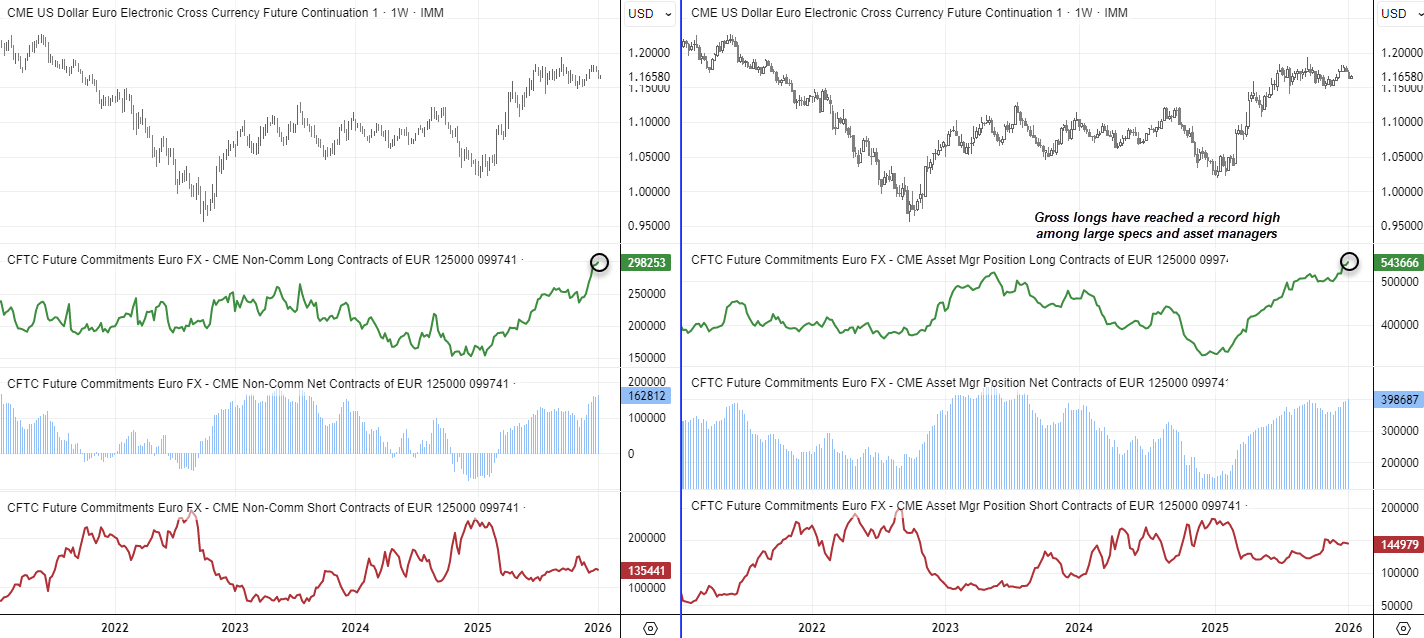
Chart prepared by Matt Simpson – Data Source: CME, CFTC, LSEG
CHF/USD (Swiss Franc) Futures Positioning | COT Report
Swiss franc futures have retained their strength despite a notable build-up in net-short exposure among both large speculators and asset managers. At some point, that bearish positioning needs to be validated either by a weaker franc (a rise in USD/CHF), or by traders covering shorts — a move that could instead drive the franc higher. The latter scenario carries the risk of intervention from the Swiss National Bank.
More recently, momentum has turned lower for the franc, leaving USD/CHF looking increasingly bullish. If incoming US data continues to support a “higher for longer” Fed stance — despite political pressure on Jerome Powell — current net-short positioning in CHF may ultimately prove justified, with a broader USD/CHF rally potentially just getting started.
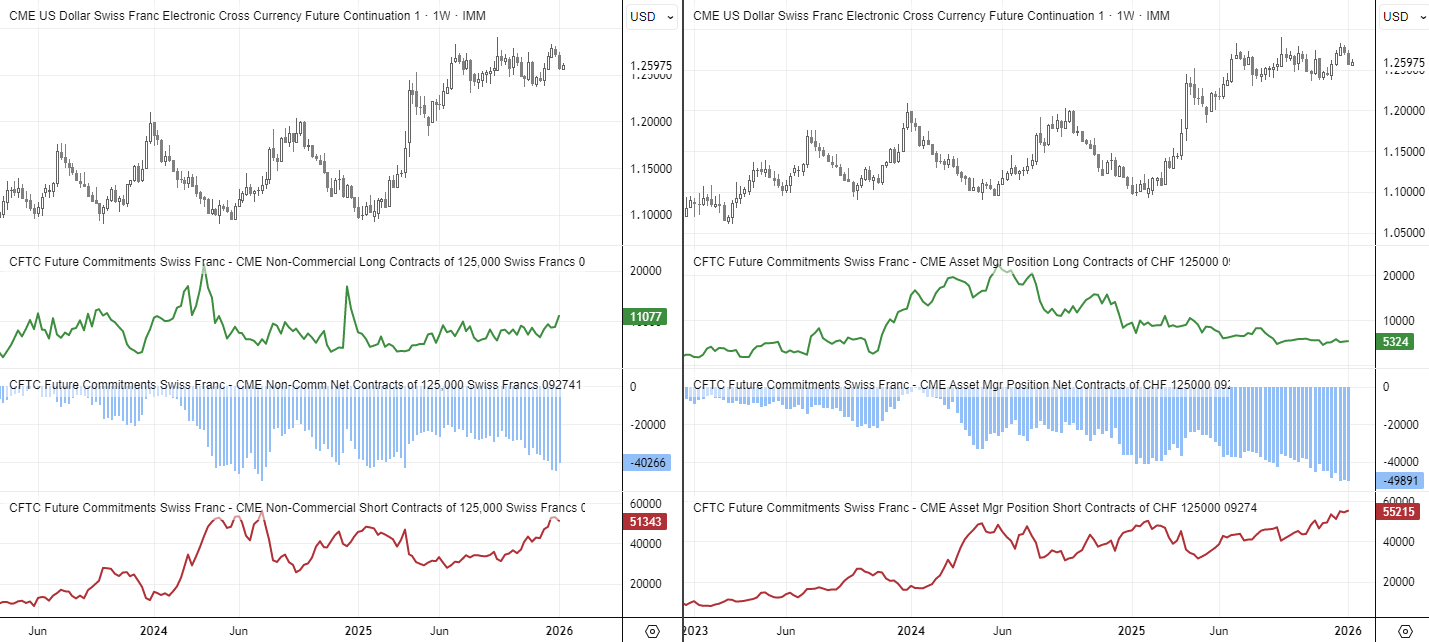
Chart prepared by Matt Simpson – Data Source: CME, CFTC, LSEG

JPY/USD (Japanese Yen) Futures Positioning | COT Report
There were high hopes at the start of 2025 that the Bank of Japan would deliver several rate hikes. Instead, traders had to settle for two well-telegraphed 25bp moves spread across the year. While the BoJ is still expected to hike in 2026, the excitement around prospective tightening has clearly faded.
Large speculators are on the cusp of flipping back to net-short exposure, having briefly done so three weeks ago. More notably, net-long positioning has been trending lower since peaking in Q2. Asset managers remain net-long the yen by around 46.5k contracts, although their bullish exposure is also rolling over.
Volumes have declined across both trader groups, with gross longs and shorts trimmed in recent weeks — a sign conviction is waning.
A weaker yen therefore looks plausible. However, nearby support from the January 2025 low could cap near-term upside in USD/JPY.
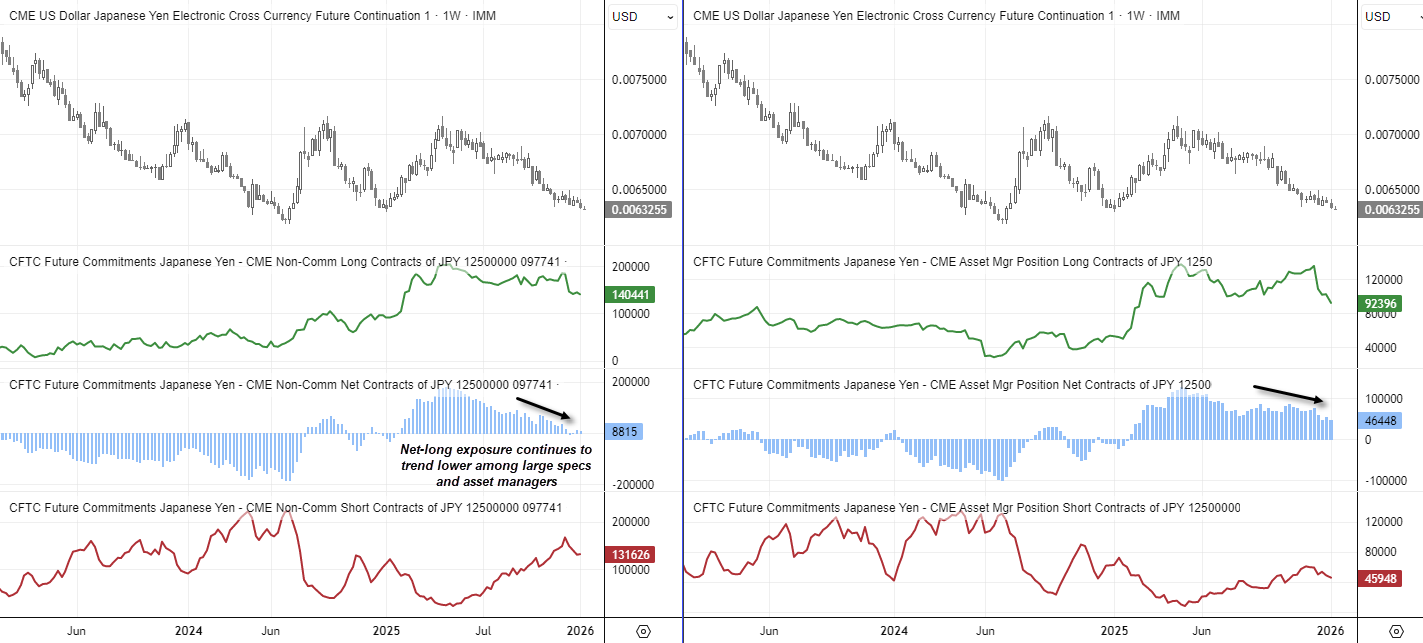
Chart prepared by Matt Simpson – Data Source: CME, CFTC, LSEG
CAD/USD (Canadian Dollar) Futures Positioning | COT Report
The Canadian dollar saw a surge in bullish bets through December alongside its rally. However, with momentum having since turned against the trend, many of those positions are now being unwound. That dynamic raises the risk asset managers slip back to net-short exposure after just two weeks in net-long territory, while large speculators appear likely to remain net-short for now.
With momentum now pointing sharply higher for USD/CAD, I suspect a break above 1.40 and move towards the December high is now on the cards for bulls.
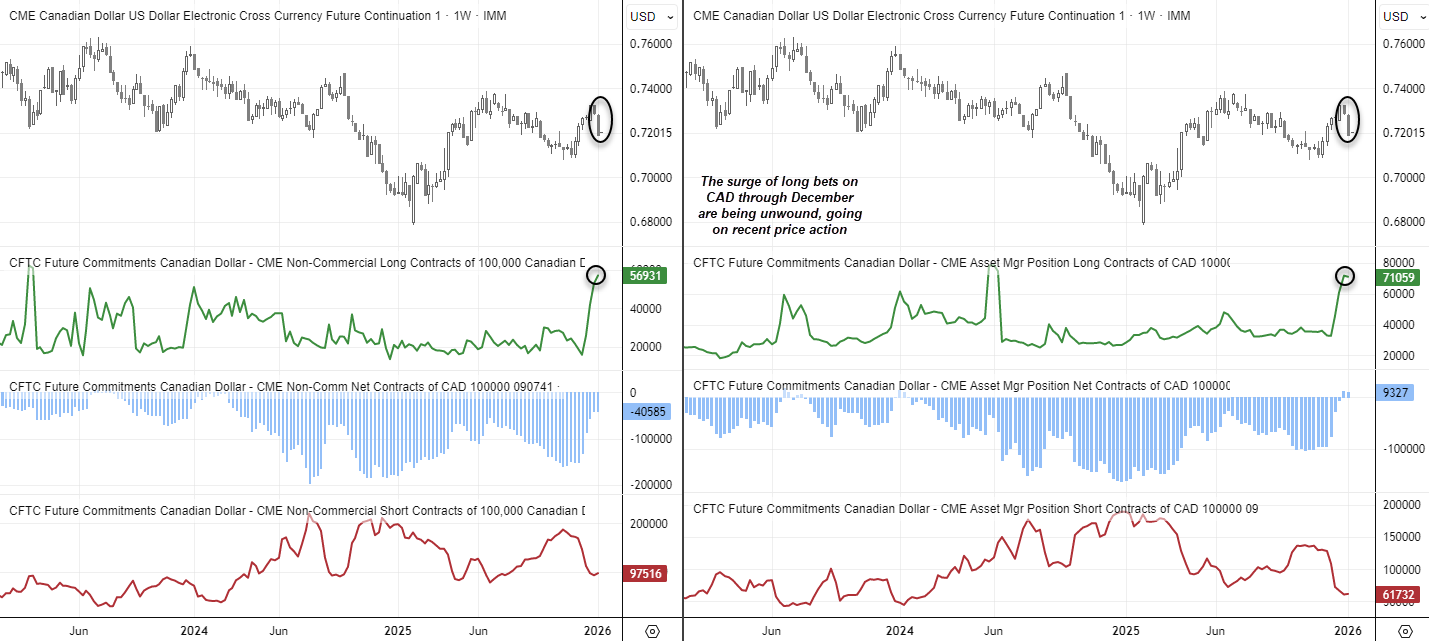
Chart prepared by Matt Simpson – Data Source: CME, CFTC, LSEG
View the full economic calendar
-- Written by Matt Simpson
Follow Matt on Twitter @cLeverEdge
How to trade with City Index
You can trade with City Index by following these four easy steps:
- Open an account, or log in if you’re already a customer
• Open an account in the UK
• Open an account in Australia
• Open an account in Singapore
- Search for the market you want to trade in our award-winning platform
- Choose your position and size, and your stop and limit levels
- Place the trade