



The latest Commitment of Traders (COT) report reveals an important shift in US dollar positioning across the futures market. After reaching a five-year extreme in net-short exposure, traders have begun trimming bearish bets against the USD, helping fuel the dollar’s recent rebound.
While geopolitical tensions in the Middle East have supported the US dollar, the COT data suggests the move was already brewing, with positioning stretched across several major currency futures markets. The reduction in USD shorts has coincided with notable shifts in positioning across EUR/USD, GBP/USD, USD/JPY, AUD/USD and NZD/USD futures.
With speculative positioning still elevated in several currencies, traders may need to consider whether the US dollar rally has further to run or if crowded trades elsewhere could trigger the next round of volatility.
View related analysis:
- Wall Street Futures Feel the Heat of Crude Oil Surge
- Australian Dollar Outlook: Options Price Downside Risk Yet AUD/USD Holds Firm
- ASX 200 Outlook: Oil, Yields and Global Equities Drive Market Risk
- FX Futures Positioning: US Dollar, EUR/USD, GBP/USD | COT report
- US Dollar Eyes 100, Though EUR/USD and USD/CAD Warn of Pullback
COT Report Highlights Shifting US Dollar Positioning in FX Futures Markets
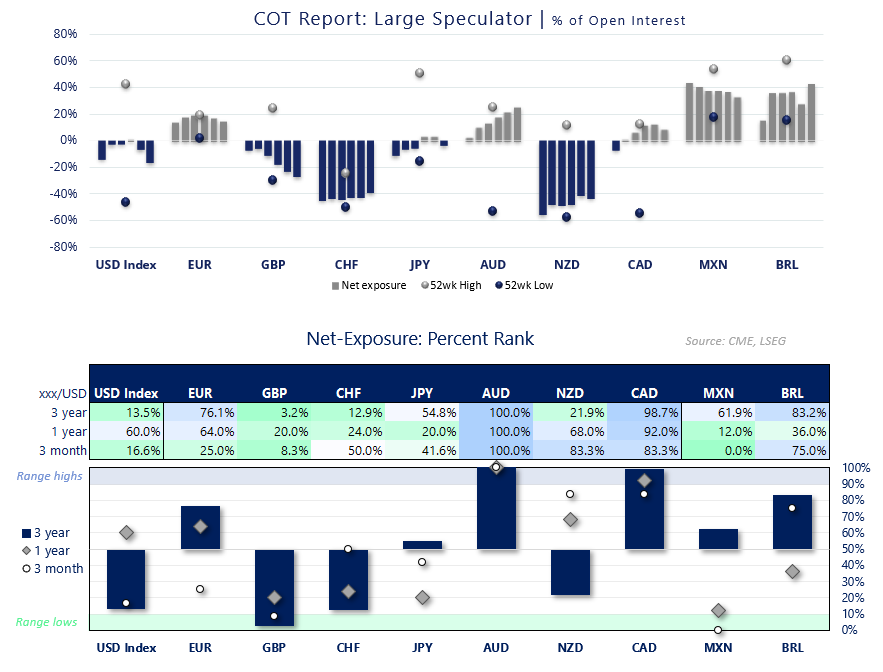
Large Speculator Positioning from the COT report
Source: CFTC (COT), LSEG
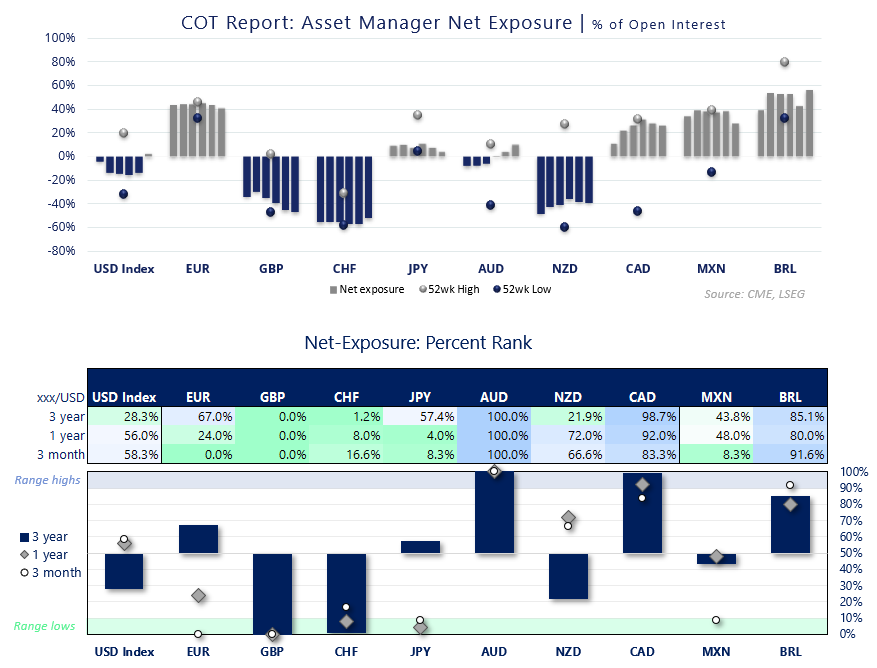
- US Dollar: Asset managers flipped to net-long exposure to the US Dollar Index, while overall USD exposure in the futures market was reduced by $6.5 billion to -$13.1 billion.
- EUR/USD: Short bets against the euro continued to rise, dragging net-long exposure in EUR/USD futures lower for a third consecutive week among large speculators.
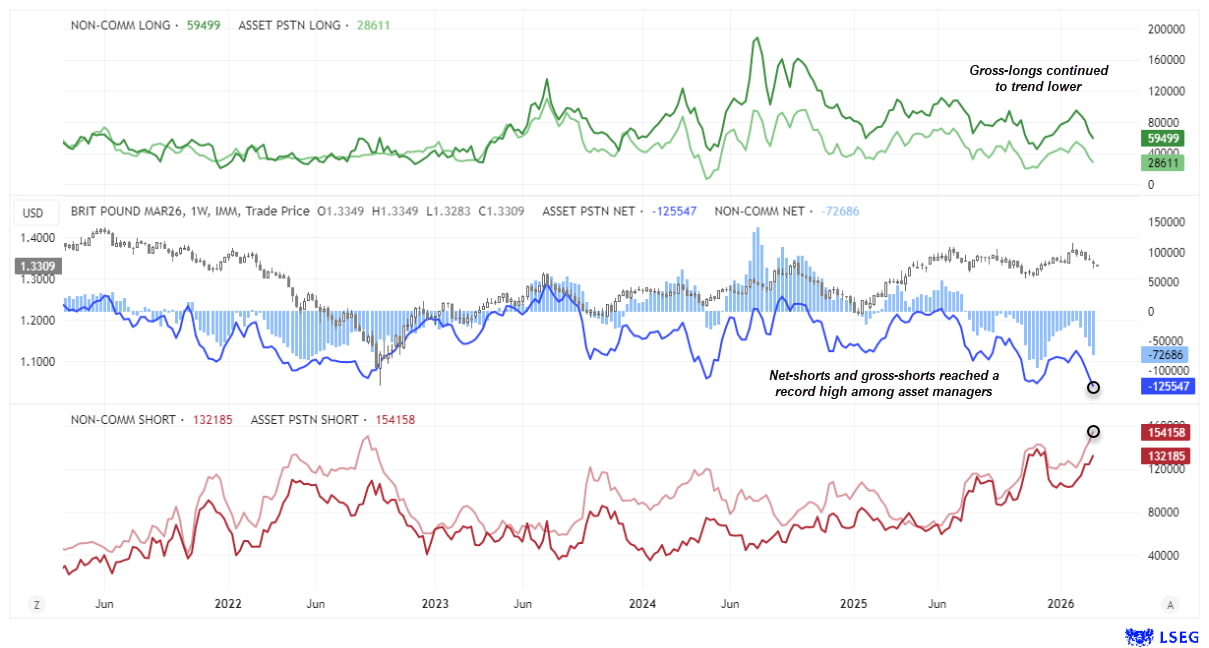
- GBP/USD: Asset managers reached a record-high level of net-short exposure in British pound futures.
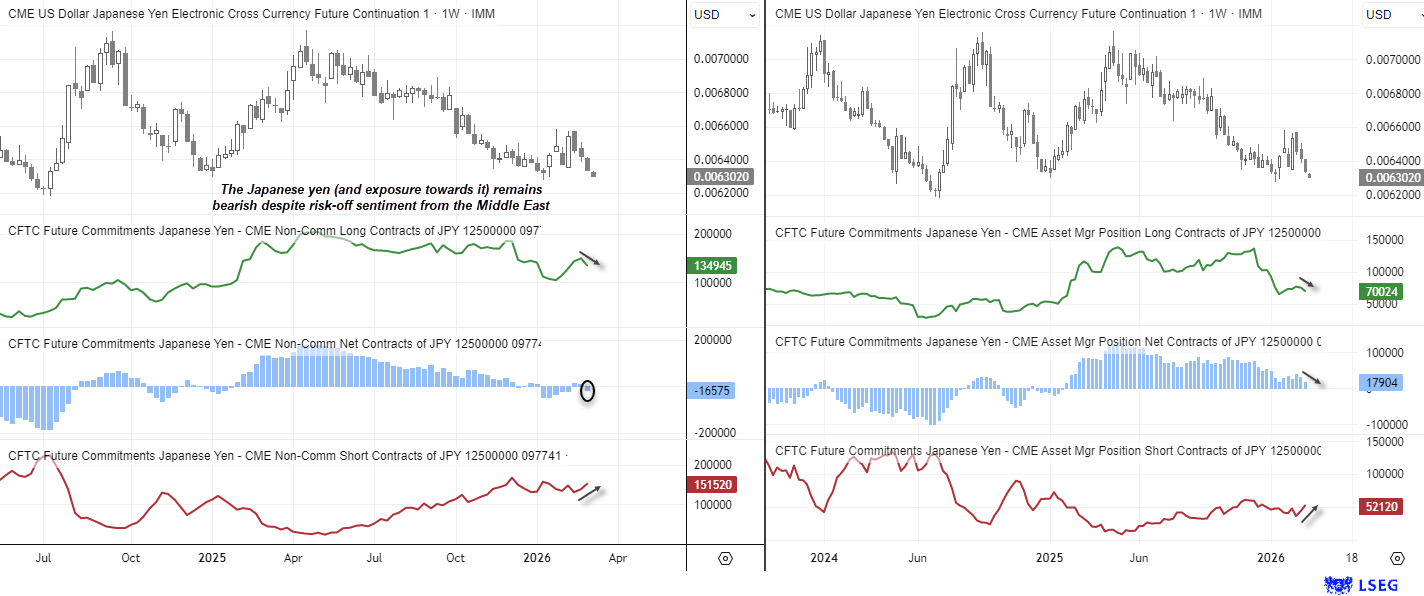
- USD/JPY: Large speculators flipped to net-short exposure in Japanese yen futures.
- USD/CAD: Net-long exposure edged lower by a combined 8k contracts among large speculators and asset managers.
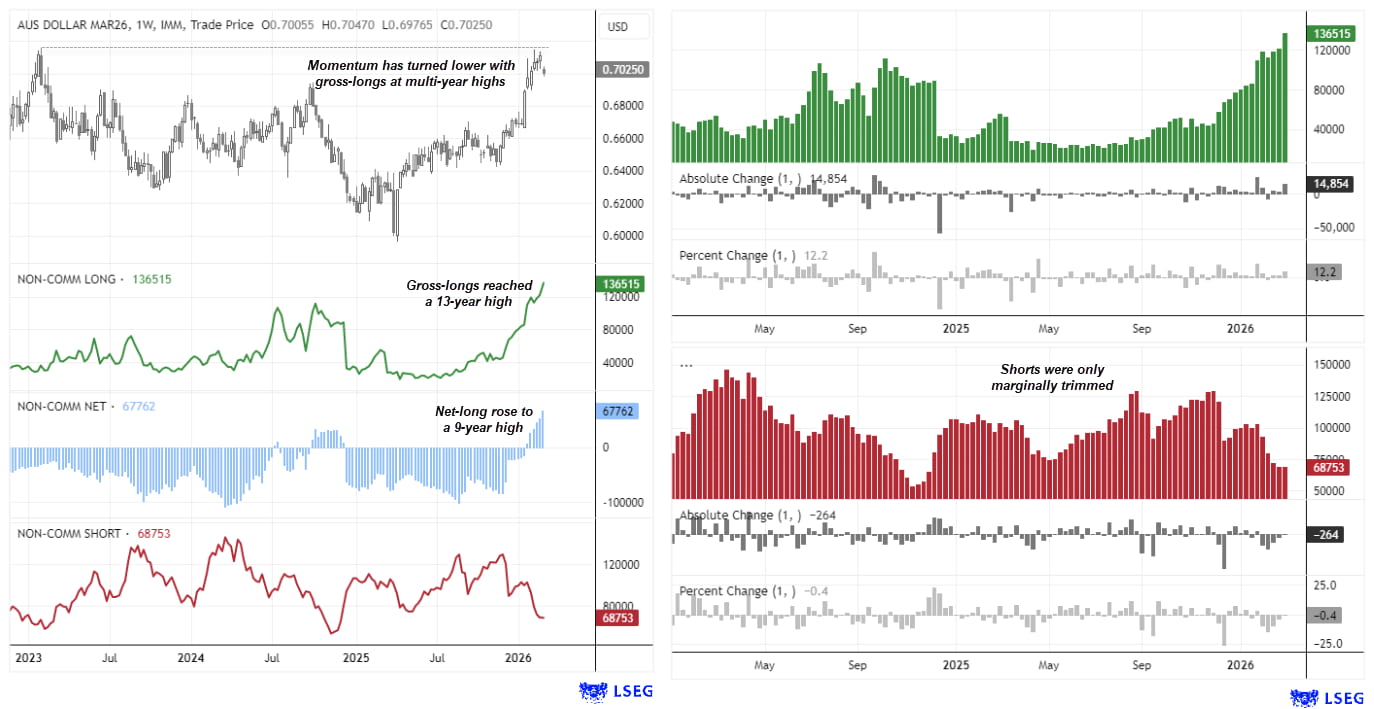
- AUD/USD: Both sets of traders continued piling into longs, pushing net-long exposure higher by a combined 33k contracts.
- NZD/USD: Net-long exposure was reduced by 8.3k contracts.
Asset Manager Positioning | COT Report
Source: CFTC (COT), LSEG

FX Futures Positioning | COT Report (IMM Data)
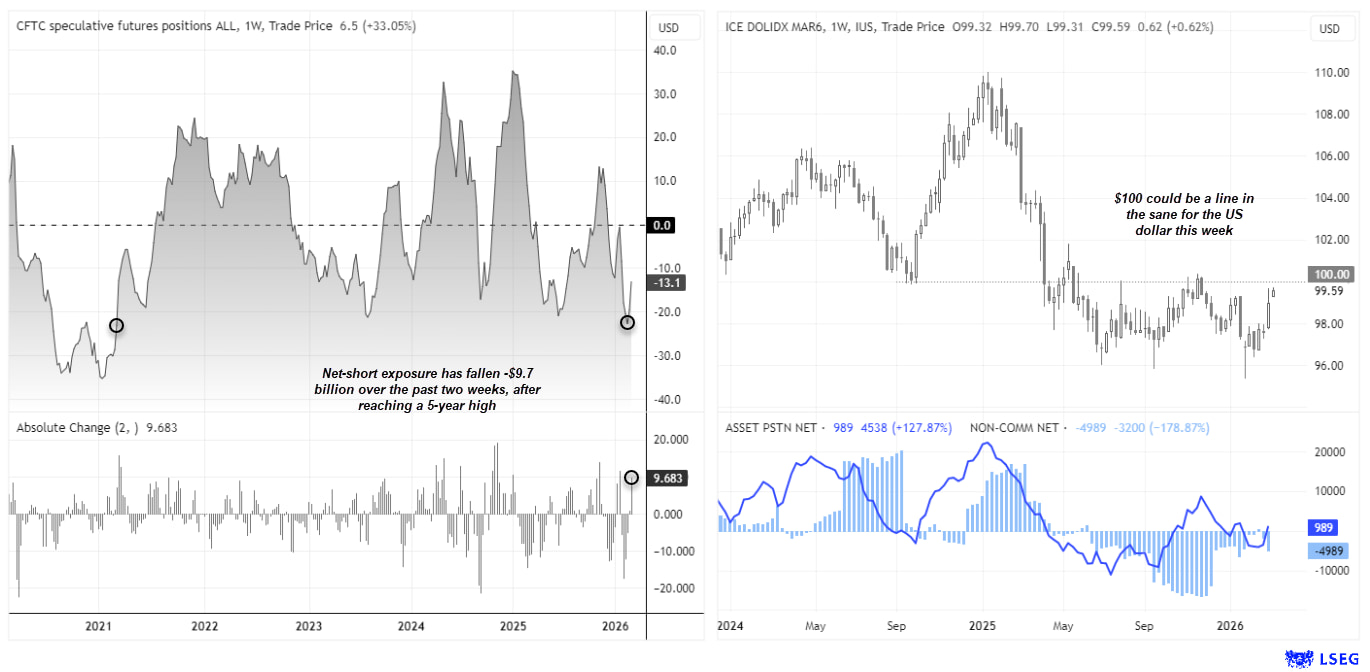
US Dollar Index (DXY) Futures Positioning | COT Report
While much of the US dollar’s rebound can be attributed to the Middle East conflict, there were already signs of an incoming sentiment extreme — and I flagged them several times. Traders were collectively net-short the US dollar on the futures market by $22.7 billion two weeks ago, a five-year high. Since then, they have reduced that exposure by $9.7 billion to -$13.1 billion.
Asset managers also flipped to net-long exposure to the US Dollar Index last week, albeit by a mere 989 contracts. That is arguably closer to the mark than large speculators, who increased their net-short exposure to -4.9k contracts.
100 remains the clear line in the sand for the US dollar this week, with the index trading less than 40 points below it at the time of writing.
Source: CFTC (COT), LSEG
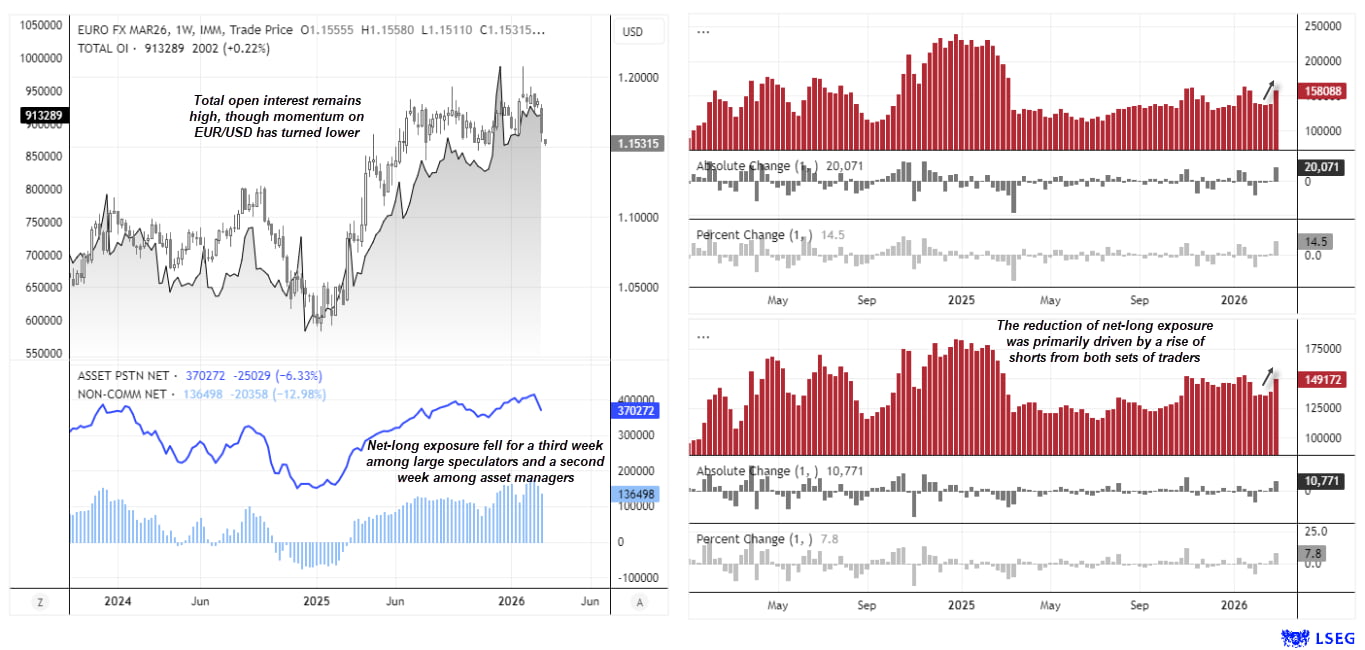
EUR/USD Futures Positioning | COT Report
The top may be in for the euro, and once again it did not arrive without warning. Gross longs had been printing record highs until just a few weeks ago, yet large speculators have begun trimming their positions while asset managers reduced theirs by 14.2k contracts (around 30k over the past two weeks).
That said, rising short bets have made the bigger dent in net-long exposure. Both sets of traders increased gross shorts by a combined 31k contracts, with 20.1k from large speculators, marking a 14.5% increase. Shorts could continue to rise if the Middle East conflict prolongs, particularly if it begins to draw NATO further into the spotlight.
Source: CFTC (COT), LSEG

GBP/USD Futures Positioning | COT Report
Asset managers remain firmly behind short bets against the British pound, with both gross-short and net-short exposure reaching record highs on GBP/USD futures last week. What makes this particularly interesting is that GBP/USD itself does not appear oversold. This raises the question of whether spot prices need to fall further to justify asset managers’ bearish positioning, or if traders could eventually be forced to cover shorts and trigger a counter-trend rally.
Much of this ultimately lies in the hands of the US dollar. For now, however, asset managers appear in no rush to close their shorts, suggesting GBP/USD could still have further downside ahead.
Source: CFTC (COT), LSEG
USD/JPY Futures Positioning | COT Report
Not even the influx of war headlines from the Middle East has been enough to trigger safe-haven flows into the Japanese yen. It seems traders have largely thrown in the towel on any meaningful hiking path from the Bank of Japan, and instead favour the US dollar during periods of turbulence stemming from the war in Iran.
Large speculators flipped to net-short yen exposure by last Tuesday’s close — notably after the war had already broken out. Asset managers trimmed their net-short exposure to a 13-month low of 17.9k contracts, reducing shorts while also increasing longs. There is nothing particularly dramatic in the positioning itself, other than the clear signal that the yen is simply not acting as a safety play around Middle East headlines.
Source: CFTC (COT), LSEG
AUD/USD Futures Positioning | COT Report
Futures traders continued piling into Australian dollar longs, pushing net-long exposure to a nine-year high among large speculators and asset managers. Long positions rose by a combined 31k contracts, up 12.2% for large speculators and 12% for asset managers, while both groups also trimmed short exposure.
What stands out is that this surge in bullish positioning arrived after the US strike on Iran, suggesting traders were more focused on the implications of higher commodity prices and a potentially hawkish RBA than the usual risk-off headwinds for the Aussie. The build in longs also reflects a broader speculative shift that has pushed AUD positioning to multi-year extremes in recent COT data.
Source: CFTC (COT), LSEG
View the full economic calendar
-- Written by Matt Simpson
Follow Matt on Twitter @cLeverEdge
How to trade with City Index
You can trade with City Index by following these four easy steps:
- Open an account, or log in if you’re already a customer
• Open an account in the UK
• Open an account in Australia
• Open an account in Singapore
- Search for the market you want to trade in our award-winning platform
- Choose your position and size, and your stop and limit levels
- Place the trade