



As the trading week progresses, GBPUSD has shown a decline of around 0.4%, with weakness in the pound and strength in the U.S. dollar. This renewed selling pressure emerged after the release of UK inflation data, which raised doubts about how aggressive the Bank of England may be in the short term. As a result, demand for the pound has weakened and, if this dynamic persists, a more pronounced bearish bias could develop in the coming sessions.

Inflation data day
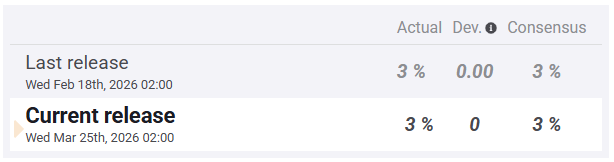
During today’s session, UK CPI YoY inflation data was released, with no major surprises, as the figure came in at 3.00% for March, in line with expectations and unchanged from February.
Source: Fxstreet
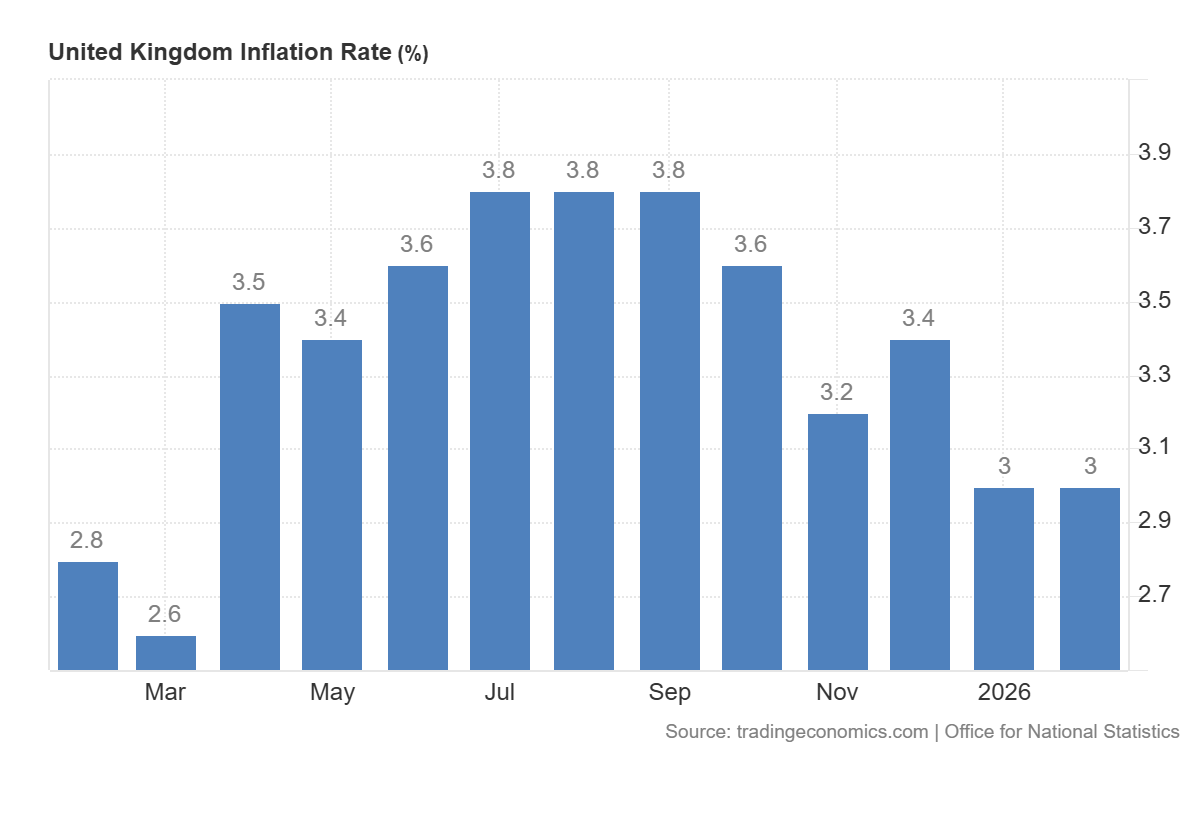
In this context, UK inflation has started to show a more stable pattern, declining from 3.4% in December to the current 3.00% level. Although this remains above the Bank of England’s 2.00% target, the recent stability may be interpreted as a sign that current monetary policy is working, reducing the urgency for immediate rate adjustments.
Source: TradingEconomics
In its latest decision in March, the Bank of England kept rates unchanged at 3.75%. Additionally, some committee members have begun to lean toward potential rate cuts in the future. While inflation is not yet fully under control, the bank has indicated that a highly restrictive stance may no longer be necessary, as inflationary pressures have started to ease.
This divergence in outlook compared to the Federal Reserve, which continues to maintain a more aggressive stance and higher rates for longer, may be weighing on the attractiveness of pound-denominated assets. In this environment, markets continue to favor U.S. dollar assets, contributing to recent weakness in GBPUSD. If this divergence persists, selling pressure may remain relevant in the short term.
Is the dollar still a threat?
The U.S. dollar has been one of the strongest currencies in recent sessions. On one hand, it continues to be perceived as a safe-haven asset amid the ongoing Middle East conflict, and on the other, the Federal Reserve’s policy reinforces expectations of higher rates for longer, helping sustain demand for the dollar.
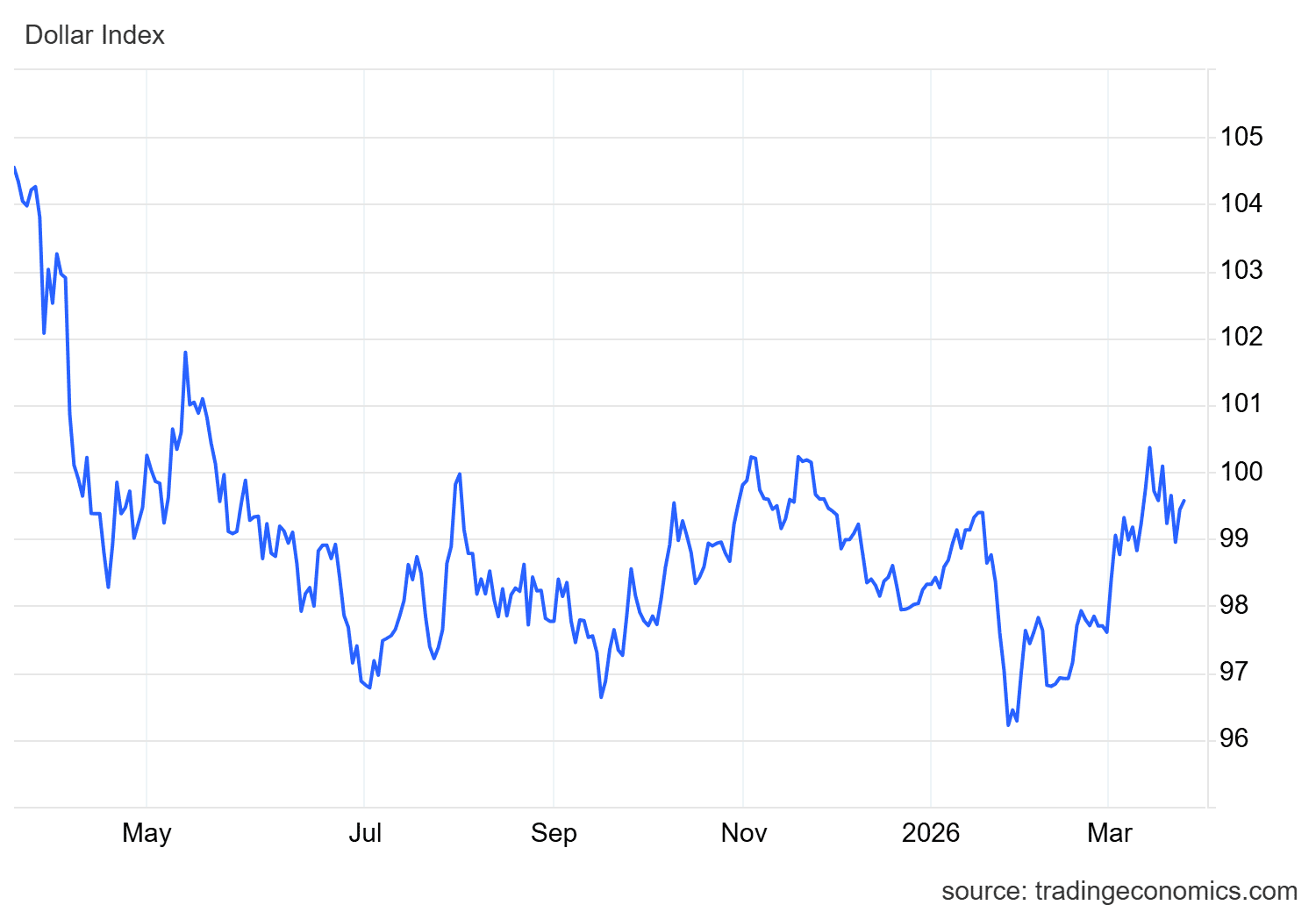
This is reflected in the DXY index, which measures the strength of the dollar against its major peers and currently remains above 99.5, approaching once again the psychological 100 level.
Source: TradingEconomics
In this context, dollar strength could continue to limit the pound’s recovery. If this trend holds, GBPUSD may continue to face a weakness scenario in the coming sessions.
GBP/USD Technical Outlook
Source: StoneX, Tradingview
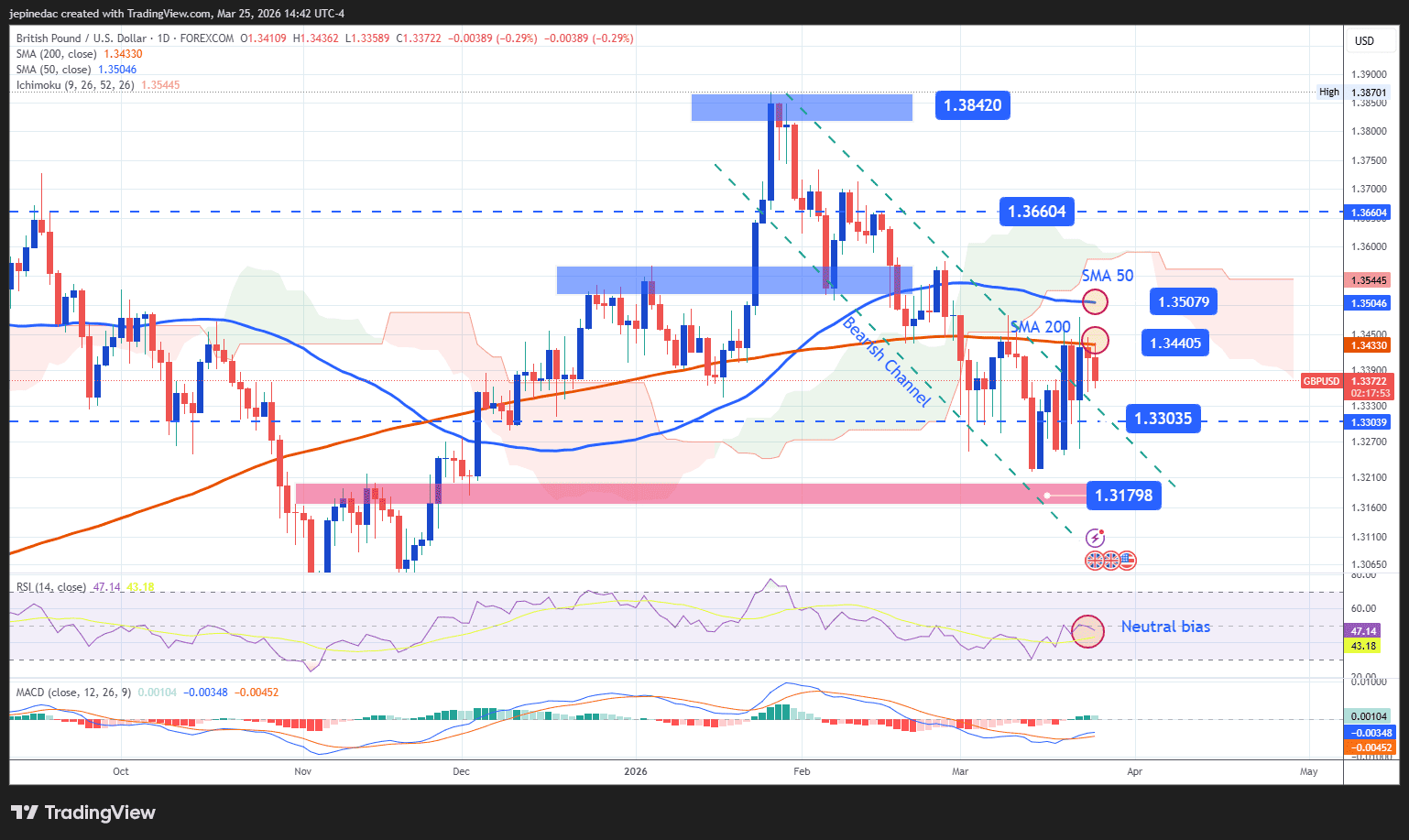
- Potential downtrend channel begins to weaken: Although GBPUSD had maintained a downtrend channel since February, the recent price recovery has introduced a more evident phase of indecision. The channel has started to lose relevance, but there is still not enough strength to confirm a shift toward a bullish bias, meaning a sideways range remains a likely scenario in the short term.
- RSI: The RSI remains near the 50 level, indicating a balance between bullish and bearish momentum over the last 14 sessions. This suggests the absence of a dominant trend and reinforces the idea of a neutral phase.
- MACD: The MACD shows a similar pattern, with the histogram around the zero line, indicating balanced momentum in short-term moving averages and supporting an indecision environment.
Key levels:
- 1.35079 – Key resistance: Level of recent highs aligned with the 50-period moving average. A break above this area could invalidate the downtrend channel and lead to a more dominant bullish bias.
- 1.34405 – Near-term barrier: A recent neutrality zone aligned with the 200-period moving average. Price action around this level could reinforce indecision and the formation of a sideways range.
- 1.33035 – Key support: Level corresponding to recent lows. A move toward this zone could reactivate selling pressure and bring back relevance to the downtrend channel.
Written by Julian Pineda, CFA, CMT – Market Analyst
Follow him on: @julianpineda25