



Recent trading sessions in gold have started to show a consistent neutral tone around the $4,600 level, with price changes of just 0.9% over the last three sessions. For now, a short-term indecision bias has taken hold, linked to the cautious sentiment surrounding the Middle East conflict.
This dynamic has led both gold and the U.S. dollar to pause in terms of demand in the short term. If there are no meaningful updates on the conflict, this indecision is likely to continue shaping XAU/USD price action in the coming sessions.

Caution takes over the market
Since yesterday’s session, Trump’s comments pointed to an ultimatum for Iran if the Strait of Hormuz is not reopened, even referencing extreme scenarios. While such outcomes are not expected to fully materialize, the possibility of new attacks on key infrastructure remains, which could trigger a broader escalation in the conflict.
For now, the lack of confirmation has created a cautious environment in financial markets, as it remains unclear whether further attacks will occur or whether tensions will ease. In this context, markets appear to be waiting for concrete developments rather than reacting to headlines.
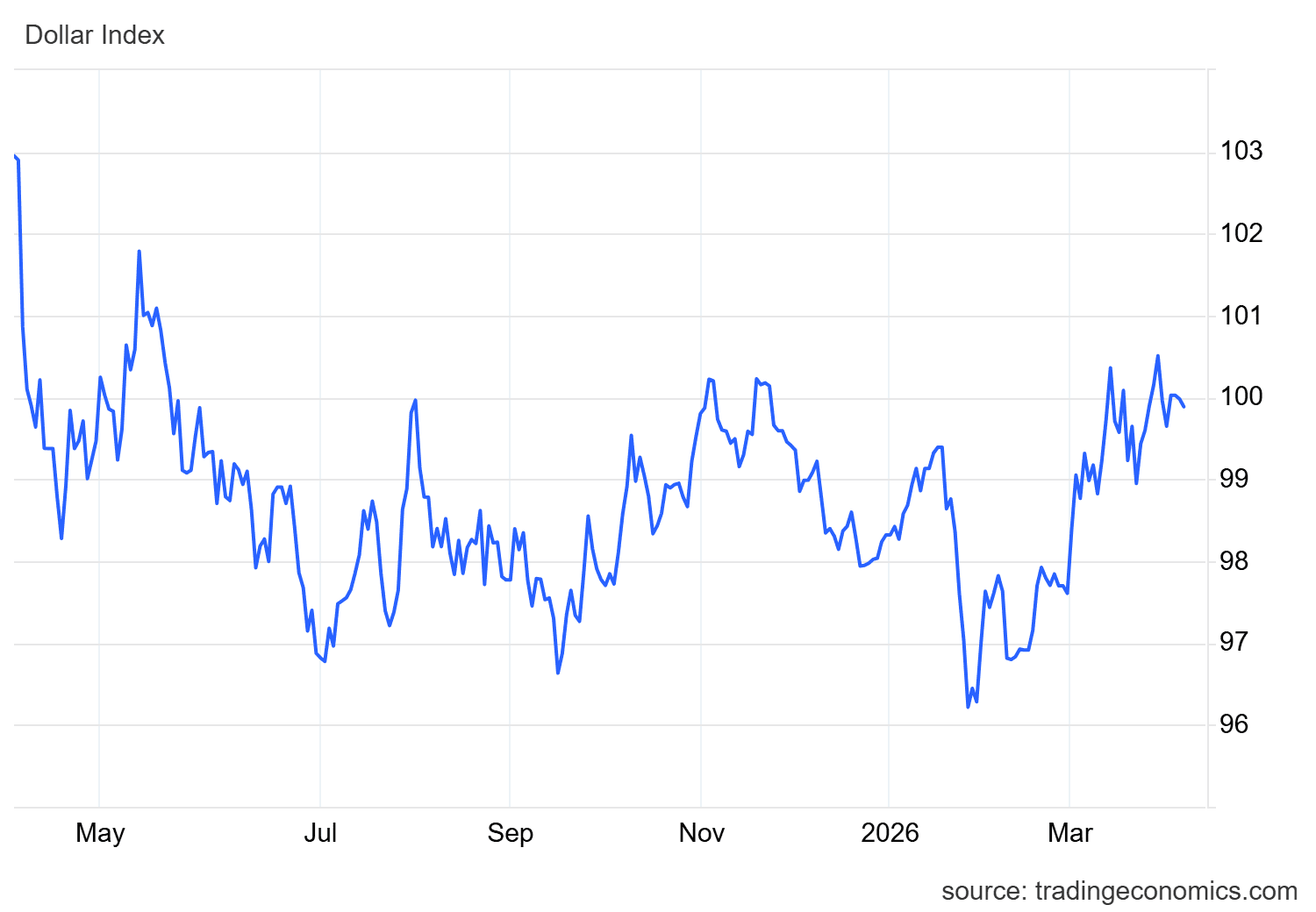
This environment has had a direct impact on the U.S. dollar, where demand has started to moderate, leading to a short-term neutral phase. This is reflected in the DXY index, which continues to hover around the 99.8 level without significant movement, indicating a loss of recent momentum in demand.
Source: TradingEconomics
However, this same effect has not been enough to boost gold. Instead, it has created a similar neutral dynamic in both assets, reflecting a market without a clear directional bias.
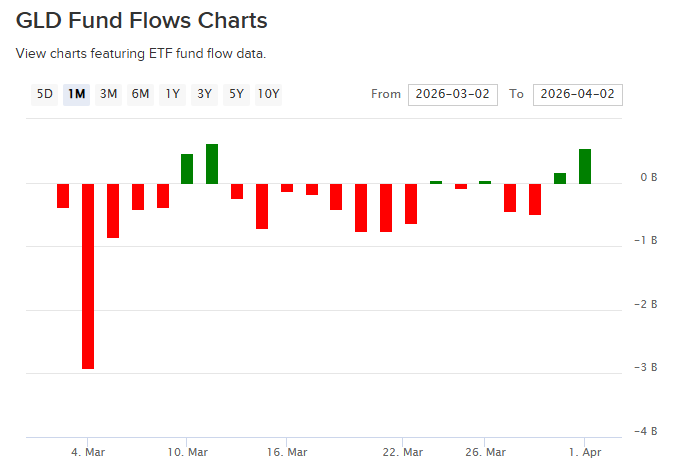
In the case of the SPDR Gold Shares ETF, recent flows show both outflows exceeding $800 million and inflows close to $500 million during the past week, highlighting a lack of consensus in market demand. This behavior is also reflected in XAU/USD price action, which continues to lack a clear trend in the short term.
Source: ETFDB
Taking all of this into account, beyond short-term reactions, it appears that a neutral environment has settled in both gold and the dollar, which could continue to translate into a phase of indecision for XAU/USD unless meaningful geopolitical developments emerge.
Do bonds still matter?
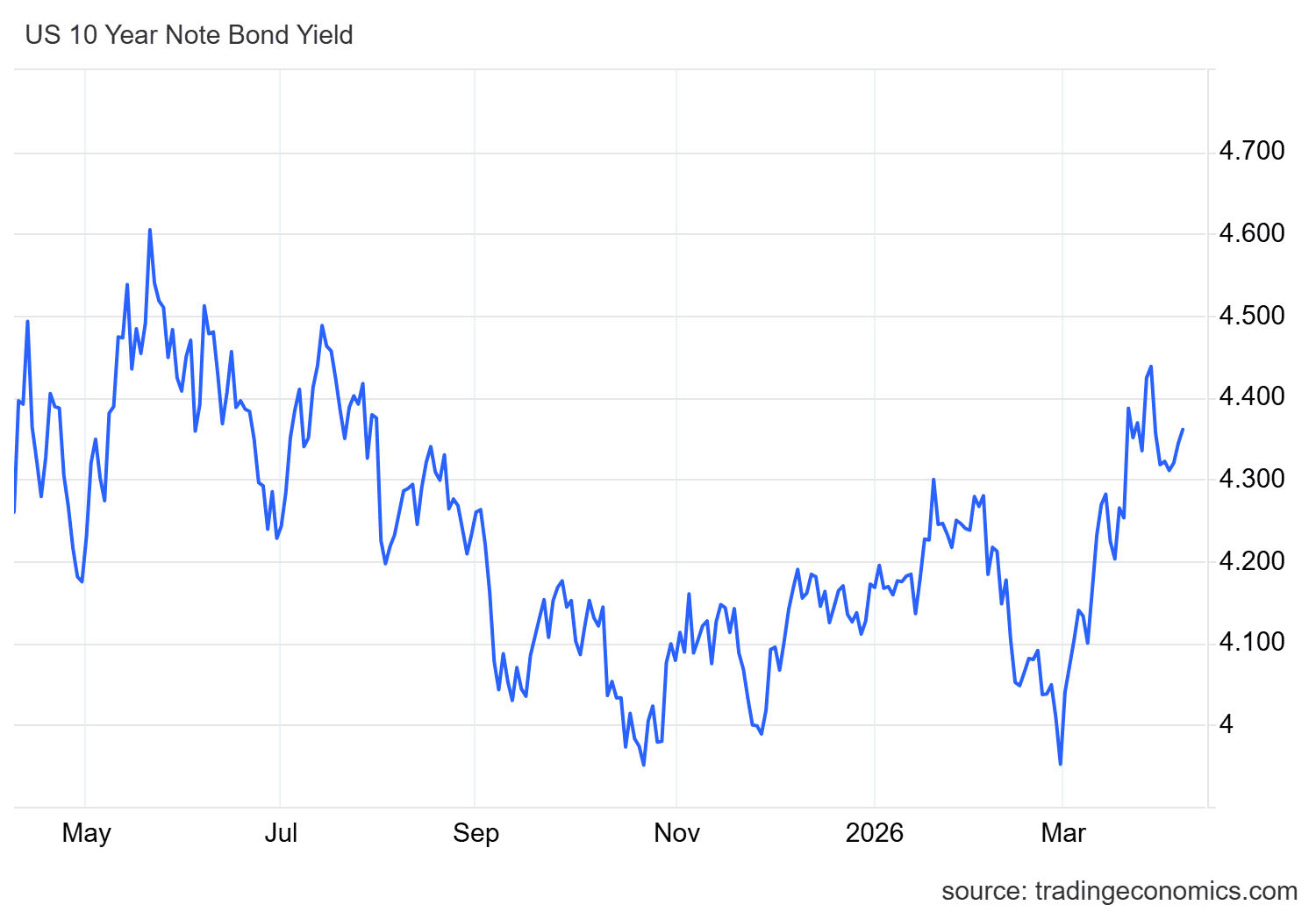
A key factor for gold remains the bond market, particularly U.S. 10-year Treasury yields. In previous sessions, yields had climbed toward the 4.43% level, making bonds a more attractive safe-haven asset and reducing demand for gold.
Currently, yields have pulled back toward the 4.3% area, showing less aggressive movement. This adjustment has helped gold stabilize, as the relative attractiveness of the bond market has moderated.
Source: TradingEconomics
However, this dynamic may remain relevant in the medium term. The Federal Reserve is expected to maintain rates around 3.75% at least through 2027, which could support stability in bond yields. If yields remain above 4.00%, they may continue to limit gold’s appeal as a safe-haven asset, potentially generating downside pressure on XAU/USD over the medium term.
Gold Technical Outlook
Source: StoneX, Tradingview
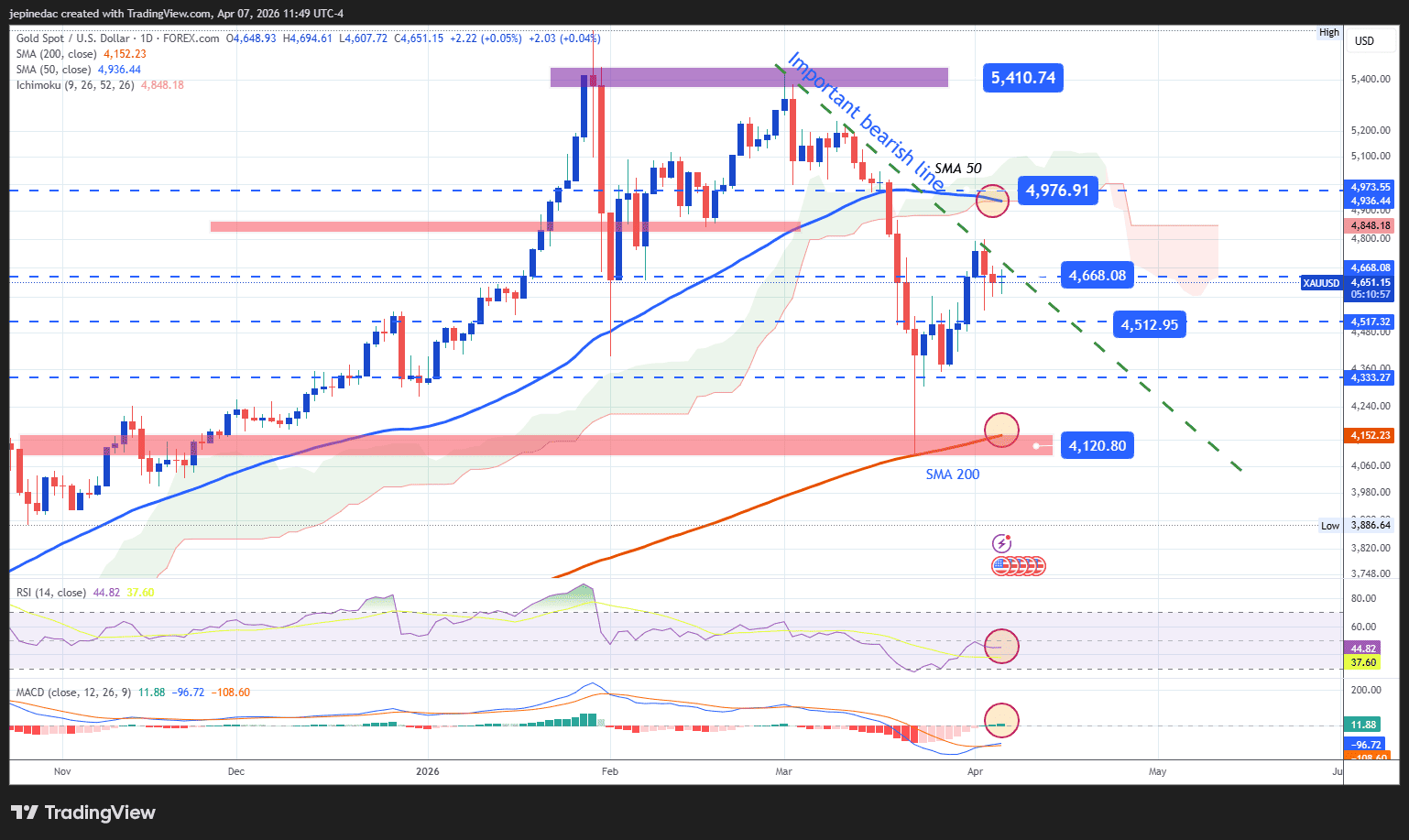
- Downtrend line remains intact: Since early March, gold has been respecting a consistent downward trendline, which remains the most relevant technical structure in the short term. So far, there has not been a strong enough recovery to challenge this pattern, meaning that if selling pressure returns, it could support a continuation of the downtrend in the coming sessions.
- RSI: The indicator continues to hover around the 50 neutral level, suggesting that buying and selling momentum over the past 14 sessions remains in relative balance. This reflects that the market is entering into a phase of indecision between forces, and as long as this dynamic persists, indecision is likely to remain a key feature in price action.
- MACD: The MACD shows a very similar picture, with the histogram fluctuating around the zero line, indicating a balanced momentum in short-term moving averages. This suggests that, while there is some activity, there is no clear dominance, reinforcing the idea of a neutral short-term environment.
Key levels to watch:
- 4,976 USD – Key resistance: A significant high that aligns with the 50-period simple moving average. A move above this level would not only break the current downtrend but could also open the door for a more dominant bullish bias to develop in the coming weeks.
- 4,668 USD – Near-term barrier: A key neutral zone that also aligns with the current trendline. Continued price action around this level could reinforce a more consistent range-bound environment in the short term.
- 4,500 USD – Key support: A major psychological level and the closest downside barrier. A break below this zone could reactivate a dominant bearish bias and support a clearer extension of the current downtrend in the coming sessions.
Written by Julian Pineda, CFA, CMT – Market Analyst
Follow him on: @julianpineda25