



Recent sessions have not been favorable for gold price action in the short term, as XAU/USD has lost approximately 12% of its value over the last five trading sessions. This has led to the emergence of a consistent bearish bias in recent movements of the metal.
Selling pressure can be explained, in part, by gold’s negative reaction to the growth of substitute markets such as U.S. bonds. Additionally, despite the fact that market confidence remains unstable, gold has not been able to maintain its safe-haven status in the short term, which could continue to support ongoing selling pressure in the coming sessions.

Bonds become the main headwind
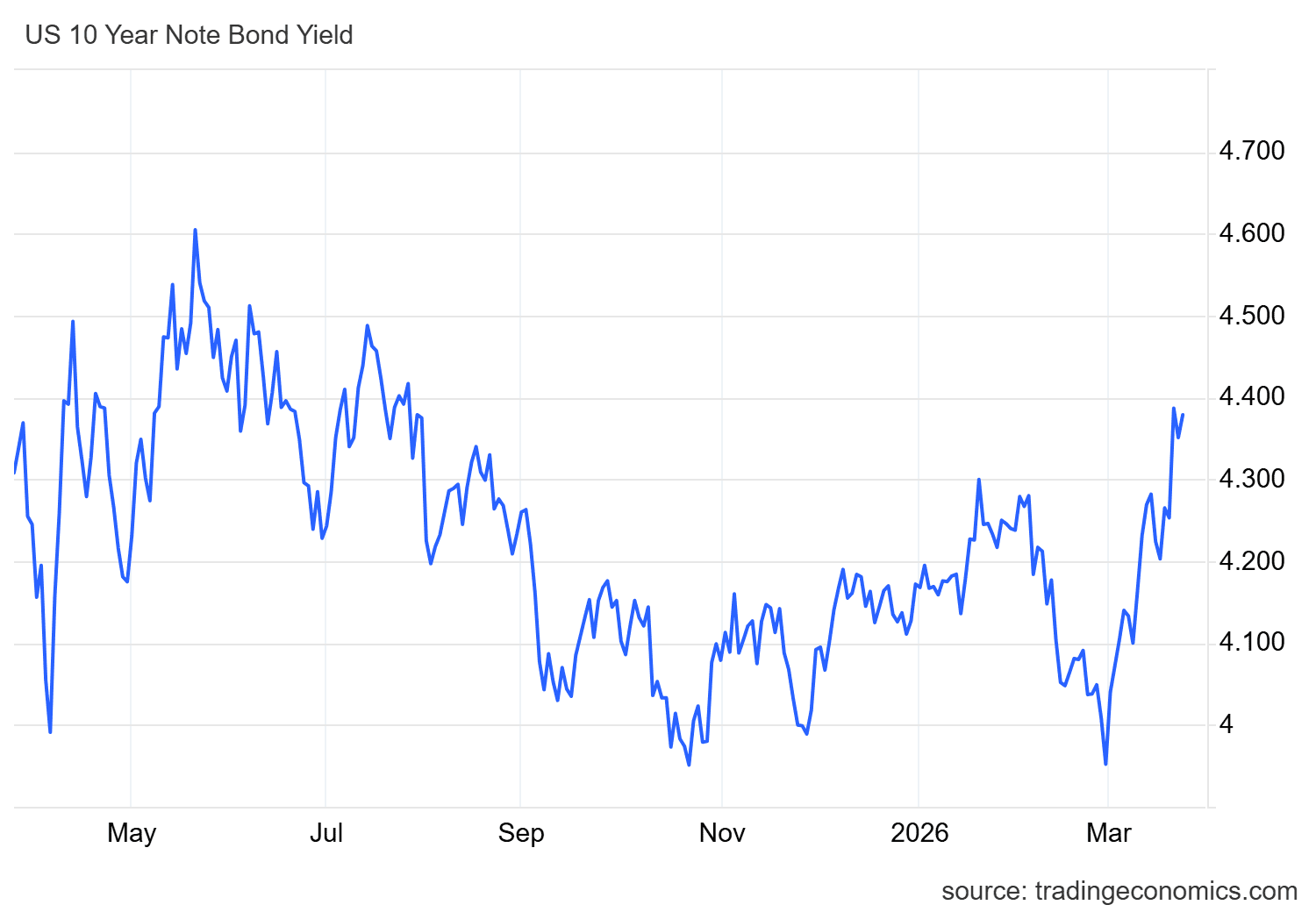
Recent sessions have been particularly relevant since the Federal Reserve maintained interest rates at 3.75% and reinforced a neutral outlook that could extend even until September 2027. This environment has supported the U.S. 10-year Treasury market, where yields have started to show an upward trend, increasing their attractiveness in the short term.
Since then, yields have approached the 4.4% level, levels not seen since July 2025, confirming a strengthening of the fixed income market following last week’s monetary policy announcements.
Source: TradingEconomics
What is important to highlight is that the bond market has positioned itself as one of the main substitutes for gold, as it is considered an alternative safe haven with greater stability. As yields have increased consistently, the attractiveness of bonds has grown, reducing demand for gold, especially since gold does not generate yield.
This environment may be driving a rotation of capital from gold into bonds, limiting the metal’s ability to regain consistent demand in the short term.
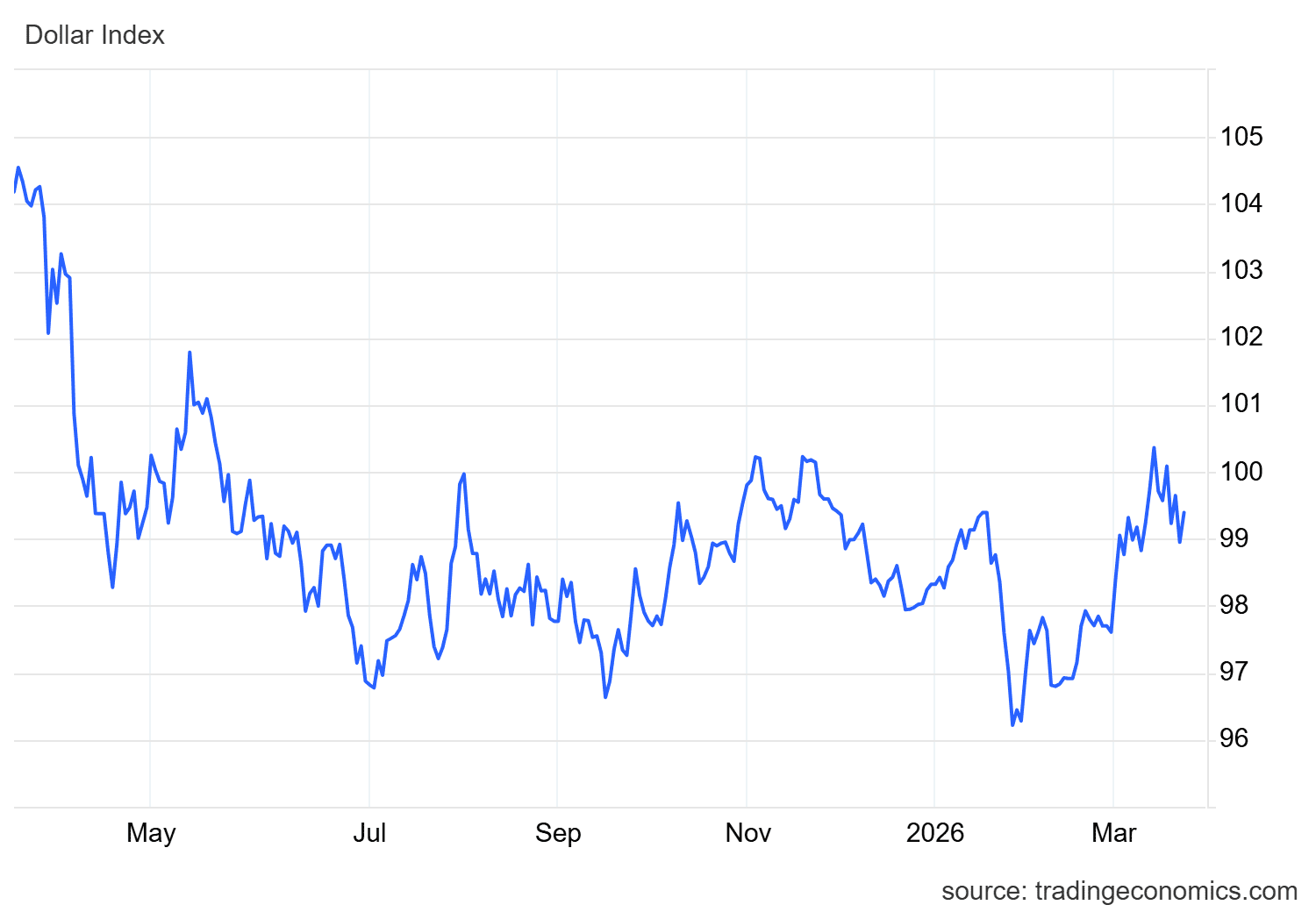
This effect is also reflected in the behavior of the U.S. dollar, as rising bond yields tend to attract foreign capital into dollar-denominated assets, strengthening demand for the currency.
In fact, the DXY index, which measures the strength of the U.S. dollar against its main peers, shows a recent upward trend, with stable movements around the 100 level, indicating consistent strength in the short term.
Source: TradingEconomics
This context is also unfavorable for gold, as XAU/USD is priced in dollars. A stronger dollar makes gold more expensive, reducing its relative attractiveness compared to other assets. In this scenario, the market may prefer exposure to the dollar rather than gold as a safe haven in the short term.
Taking all of the above into account, it appears that substitute assets such as bonds and the U.S. dollar are capturing a significant portion of international capital, reducing exposure to gold. If this dynamic continues, confidence in gold demand could keep deteriorating, supporting continued selling pressure in XAU/USD in the coming sessions.
Confidence remains weak, but this does not support gold
It is important to remember that gold historically benefits from declines in confidence indicators, as this tends to increase demand for safe-haven assets. However, in the current environment, the market does not seem to be considering gold as the primary safe-haven alternative.
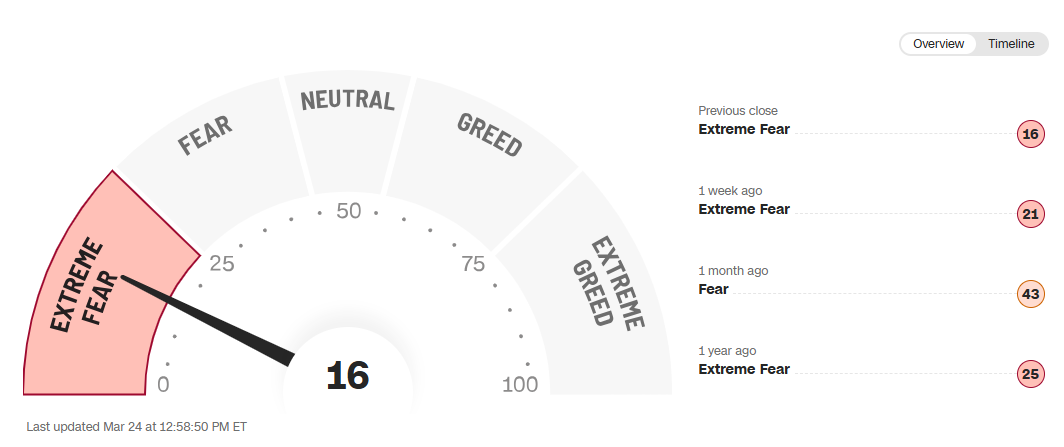
In recent sessions, the Fear and Greed Index has remained around 16 points, reflecting a notable decline in confidence and positioning itself within the “extreme fear” zone, indicating that market sentiment remains fragile.
Source: CNN
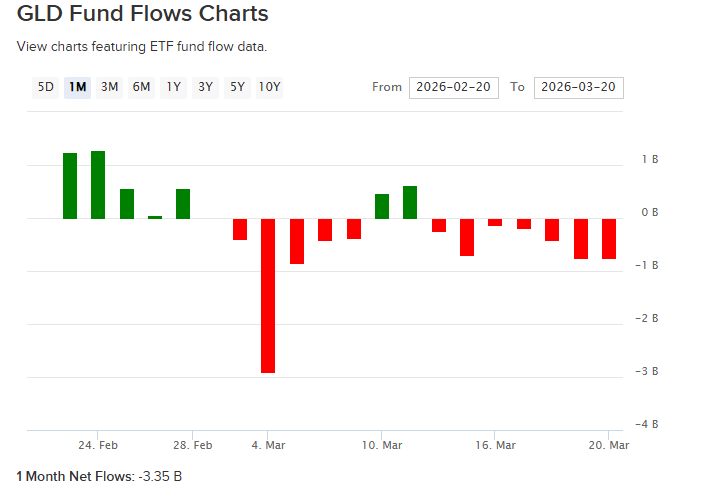
Nevertheless, this weakness in confidence has not supported demand for gold. In fact, capital flows in ETFs such as the SPDR Gold Shares show consistent outflows since March 12, totaling more than $700 million as of March 20. This indicates that, despite the risk environment, the market continues to withdraw capital from gold and appears to be favoring other assets.
Source: ETFDB
In this context, gold appears to be losing relevance as a safe-haven asset in the short term. Despite weak confidence levels, this has not translated into increased demand for the metal. On the contrary, recent behavior suggests that the market is finding greater value in other assets, which could continue to limit gold’s recovery in the coming sessions.
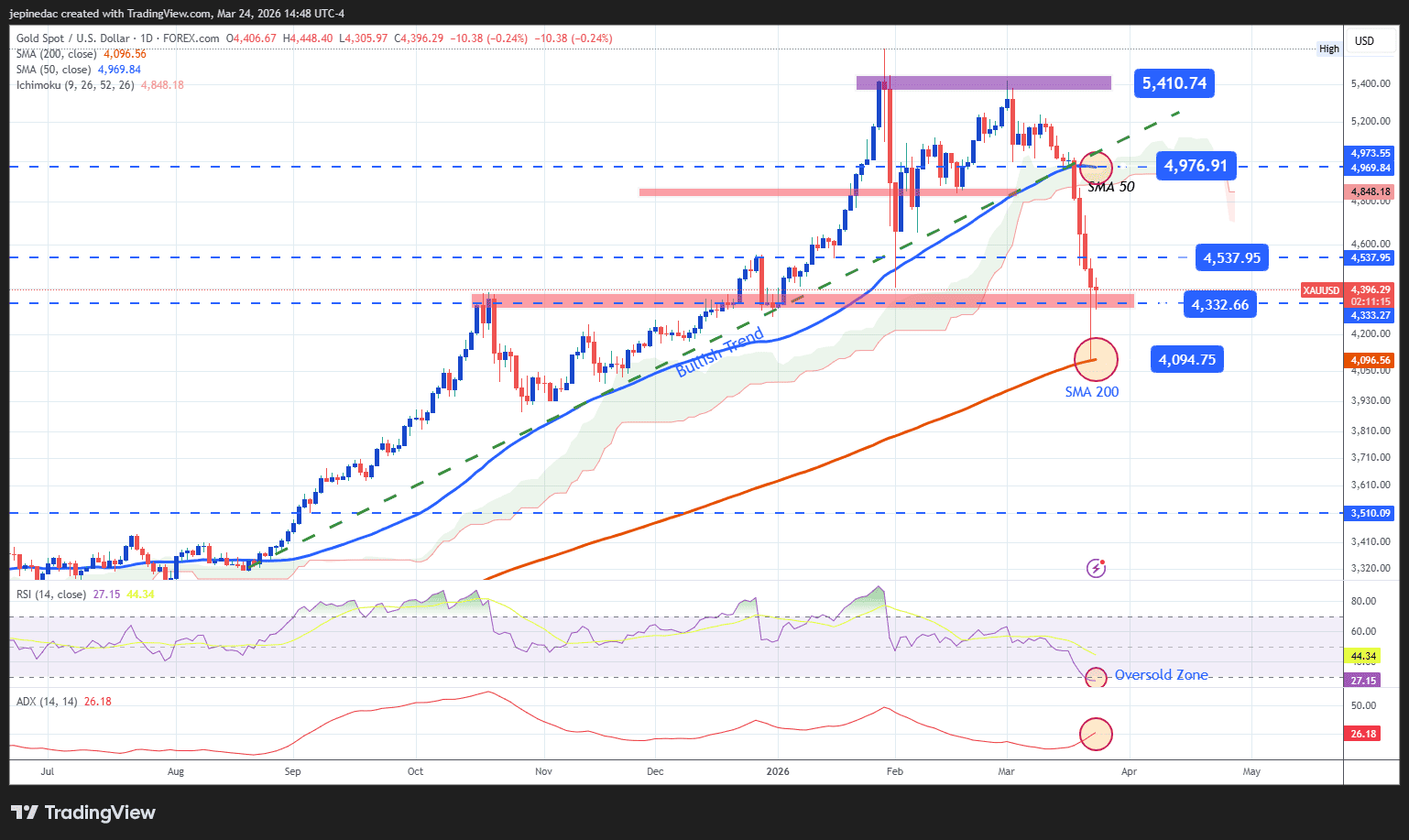
Gold Technical Outlook
Source: StoneX, Tradingview
- The major uptrend breaks down: Although XAU/USD had maintained a consistent upward trend for several months, recent weakness has led to a significant break in its technical structure, marking an important shift in price behavior. This selling move has not only invalidated the previous bullish trend but could also give rise to a new short-term bearish trend, provided that selling pressure continues in the coming sessions.
- RSI: The RSI indicator shows a downward slope below the 50 level, confirming the dominance of selling pressure. However, it is approaching the oversold zone (30), which may indicate excessive bearish pressure and open the door to short-term bullish corrections.
- ADX: The ADX indicator has started to move above the 20 level, signaling an increase in volatility. This suggests that, rather than a clear directional move, the market may enter a phase of indecision with potential corrective movements.
Key levels to watch:
- 4,976 USD – Key resistance: Level aligned with the 50-period moving average. A move above this area could restore the bullish bias and bring back relevance to the previous uptrend.
- 4,537 USD – Near-term barrier: A relevant neutral zone aligned with previous retracements, which could act as resistance during potential bullish corrections.
- 4,300 USD – Key support: A critical level representing the most relevant retracements of recent months. A sustained break below this area could confirm a new short-term bearish trend.
Written by Julian Pineda, CFA, CMT – Market Analyst
Follow him on: @julianpineda25