



The Nikkei 225 delivered another standout performance in 2025, rising 25% to mark its third consecutive year of gains above 20%. That rally extended the index’s advance from the 2008 low to more than 13,000%, while a wide 72% high-to-low range made it the most volatile year in five.
Whether bulls can repeat that level of exuberance in 2026 remains uncertain. While the Nikkei pushed to fresh record highs on Tuesday, momentum signals are showing early signs of fatigue, suggesting further upside may prove harder to sustain without broader participation.
View related analysis:
- ASX 200 Outlook: Qantas, Brambles and ALS Highlight Mixed Signals
- Trade to Watch 2026: Nasdaq 100 Correction Risk Before New Highs
- AUD/USD 2026 Outlook: Policy Divergence and a Shifting Dollar Trend
Nikkei 225 Futures (Yen-denominated) – COT positioning
While the Nikkei remains in a strong uptrend and consolidates ahead of its next bullish breakout, net-long exposure to Nikkei futures has begun to wane. The middle panel shows net-long positioning among large speculators (blue line) and asset managers (light-blue histogram) falling in recent weeks, with both cohorts drifting closer to net-short territory.
This shift is largely driven by a reduction in gross long positions, although gross shorts among large speculators have also risen over the past two weeks. While this does not point to an imminent bearish reversal, it is a development worth monitoring as the year progresses.
More immediately, the weekly chart is showing the potential formation of a shooting star at resistance, which could signal near-term exhaustion if confirmed.
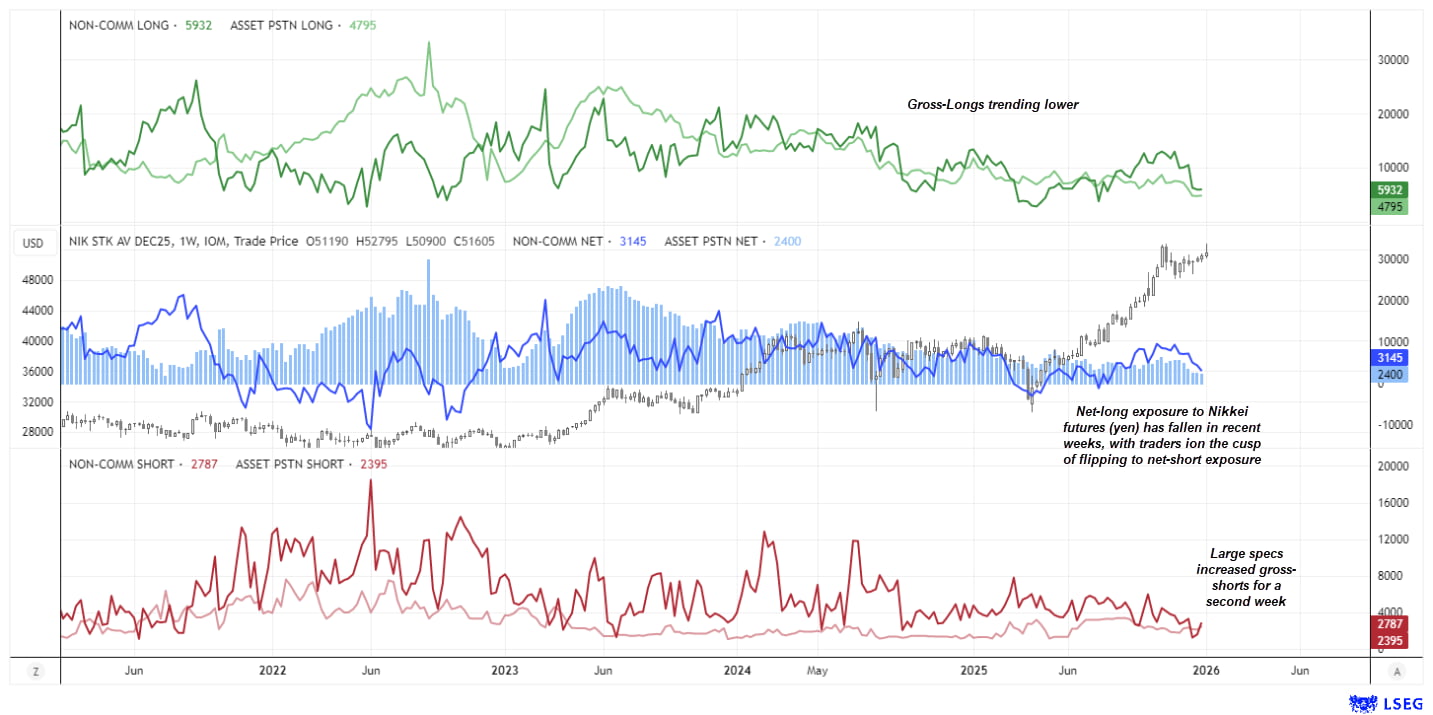
Chart analysis by Matt Simpson - Source: Tokyo Stock Exchange (TSE), CME, LSEG

Nikkei 225, Stock Correlations
The correlation data highlights increasingly narrow leadership within the Nikkei 225, with performance dominated by a small group of high-priced stocks. Fast Retailing and Tokyo Electron remain the most consistent drivers, showing strong correlations across short- and medium-term windows, while semiconductor exposure continues to tie the index closely to global tech sentiment rather than broad market participation.
Short-term correlations have tightened further, suggesting trend strength remains intact but fragile. SoftBank and MUFG have offered intermittent support, but weaker and less stable correlations across the rest of the index point to limited internal breadth, leaving the Nikkei vulnerable should its key leaders lose momentum.

Chart prepared by Matt Simpson - Source: Tokyo Stock Exchange (TSE), LSEG
Nikkei 225 Key Stock Drivers and Risk Signals
Mitsubishi UFJ Financial Group (MUFG) remains the largest Nikkei stock by market capitalisation and continues to trade in a strong uptrend after printing a fresh record high earlier this week. It is difficult to lean bearish on the Nikkei while its most influential heavyweight remains so resilient, suggesting any near-term pullbacks are still likely to be viewed by bulls as opportunities to reload unless a sharp reversal emerges.
SoftBank Group, however, is telling a different story. The Nikkei’s second-largest stock by market cap is carving out a potential bearish continuation pattern on the daily chart, with price set to close back beneath its 20- and 50-day EMAs. This keeps the risk skewed lower, with a move back towards the 4,000 area increasingly plausible near the high-volume node (HVN) of the current consolidation. A break below 3,795 would confirm the next leg lower within its broader bearish daily trend.
Sony Group is showing tentative signs of stabilisation around its 200-day SMA and EMA — levels that often prove difficult to break on first test. Heavy volume accompanied yesterday’s decline into these averages, and today’s inability to push decisively lower may prompt some short covering and allow for a modest bounce. However, unless buying pressure accelerates meaningfully, downside risks remain given the prevailing bearish daily trend and lack of convincing accumulation.
Fast Retailing has been trading sideways in a tight range since December, with Tuesday’s bullish bar failing to break above 58,000 and subsequent price action hinting it may have marked a lower high. While we’ve yet to see strong follow-through from bears, a pickup in volume alongside a renewed price decline could tip the balance in favour of Nikkei bears over the near term and prompt a deeper pullback from the record high set earlier this week.

Chart analysis by Matt Simpson - Source: Tokyo Stock Exchange (TSE), TradingView

Nikkei 225 Futures Technical Analysis
The daily chart shows momentum turning lower for a second consecutive session, although volumes remain lighter than those seen during the rally to record highs. Still, bulls were unable to hold prices at elevated levels for long, leaving recent breakout attempts looking vulnerable as late buyers feel the pressure.
The 51,000 handle and December high now appear to be the next downside focus, with a break below this zone opening the door towards 50,500, where the 20- and 50-day SMAs converge alongside the December VPOC (volume point of control). With MUFG retracing from recent highs and the next three largest Nikkei stocks by market capitalisation failing to show convincing bullish follow-through, the path of least resistance may remain lower into the week, allowing bulls to reassess the potential for another breakout attempt.
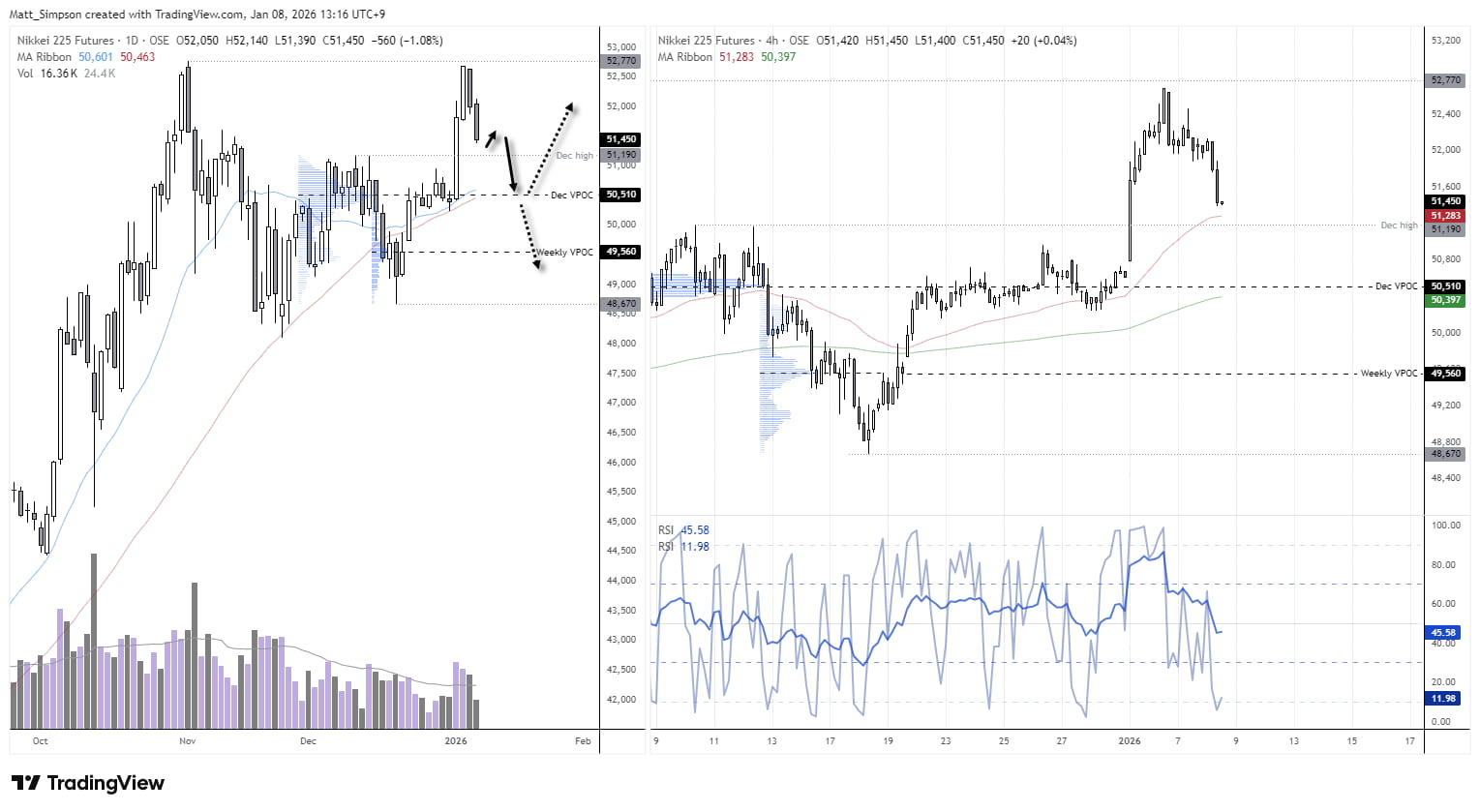
Chart analysis by Matt Simpson - Source: TradingView
View the full economic calendar
-- Written by Matt Simpson
Follow Matt on Twitter @cLeverEdge
How to trade with City Index
You can trade with City Index by following these four easy steps:
- Open an account, or log in if you’re already a customer
• Open an account in the UK
• Open an account in Australia
• Open an account in Singapore
- Search for the market you want to trade in our award-winning platform
- Choose your position and size, and your stop and limit levels
- Place the trade