



As the week progresses, USDJPY price action has started to show a notable decline in the short term, with the pair falling by approximately 0.7%, beginning to form a mild bearish bias on the chart. The selling pressure favoring the yen has been driven mainly by recent comments from the Bank of Japan, which have helped stabilize demand for the currency in the short term. If this dynamic persists, selling pressure could remain relevant in the coming sessions.

Bank of Japan comments
In recent sessions, the Bank of Japan has shown growing concern over the sustained weakness of the yen against currencies such as the U.S. dollar. The institution has highlighted that exchange rate movements are having a direct impact on inflation, as imports of energy and food have become significantly more expensive in recent months.
This factor has gained importance in the short term and may represent a risk to price stability in Japan’s economy. The central bank has even indicated that it does not rule out adjusting its policy if yen weakness persists, opening the door to a more restrictive stance and a potential shift in rate expectations through the remainder of 2026.
In this context, since the latest monetary policy decision, markets have begun to price in the possibility that Japan’s policy rate—currently at 0.75%—could rise in the coming months. This has supported a recovery in 10-year Japanese government bond yields, which now show a consistent upward trend and are trading near 2.35%.
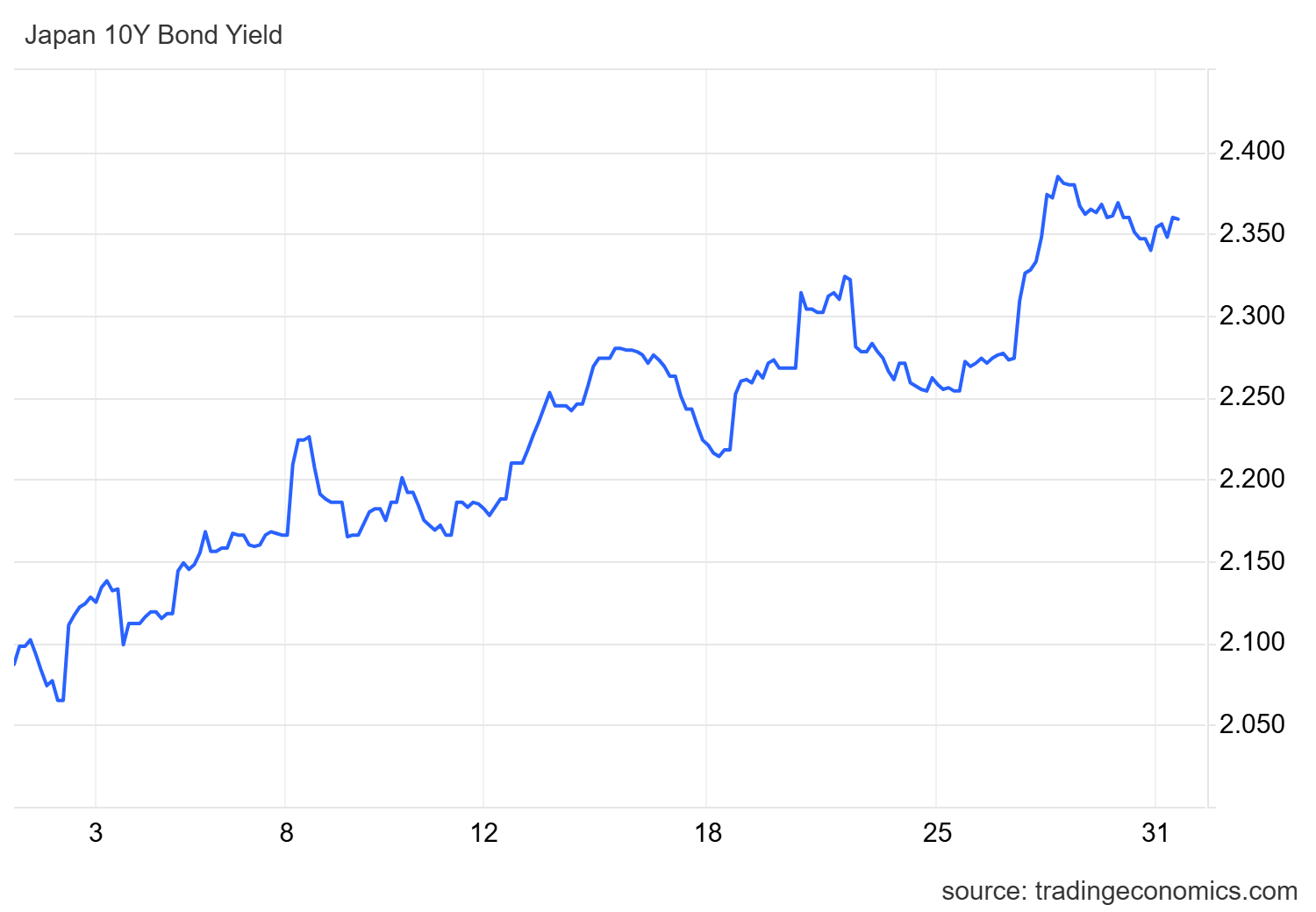
Source: TradingEconomics
This development is particularly relevant, as rising bond yields could improve the attractiveness of Japan’s fixed income market and support a gradual recovery in yen demand in the short term.
Taking all of this into account, recent central bank comments appear to be contributing to a modest improvement in yen sentiment, and as expectations continue to point toward potentially higher rates, this could maintain downward pressure on USDJPY in the coming sessions.
Can the dollar remain a threat?
It is important to note that the strength of the U.S. dollar has been one of the main factors weighing on yen confidence in recent weeks, as the dollar continues to be perceived as a safe-haven currency amid the ongoing conflict in the Middle East.
However, the DXY index, which measures the dollar’s strength against its major peers, has started to show signs of stabilization, holding around the 100 level in the short term. This may be allowing currencies such as the yen to regain some ground in recent sessions.
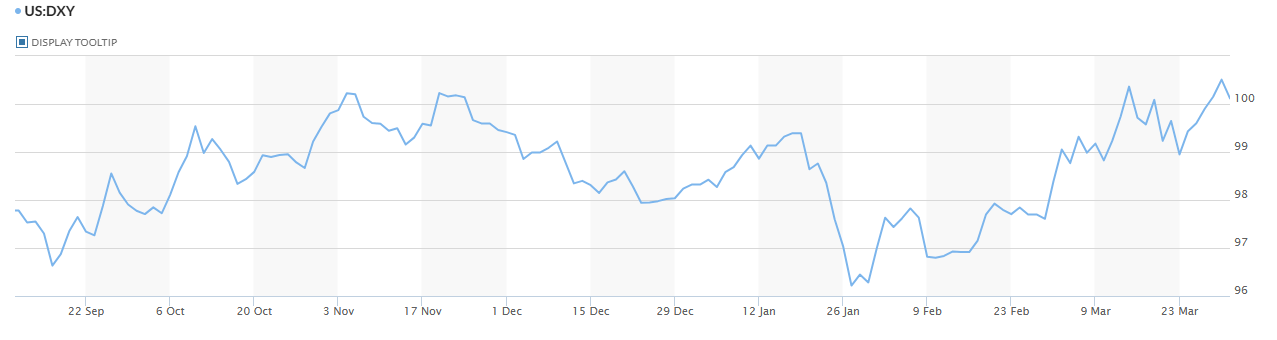
Source: MarketWatch
That said, this stabilization in the DXY does not eliminate the broader bullish bias that has been in place in recent weeks. If the dollar regains strength, it could once again limit the yen’s recovery and lead to a more pronounced indecision phase in USDJPY in the short term.
USD/JPY Technical Outlook
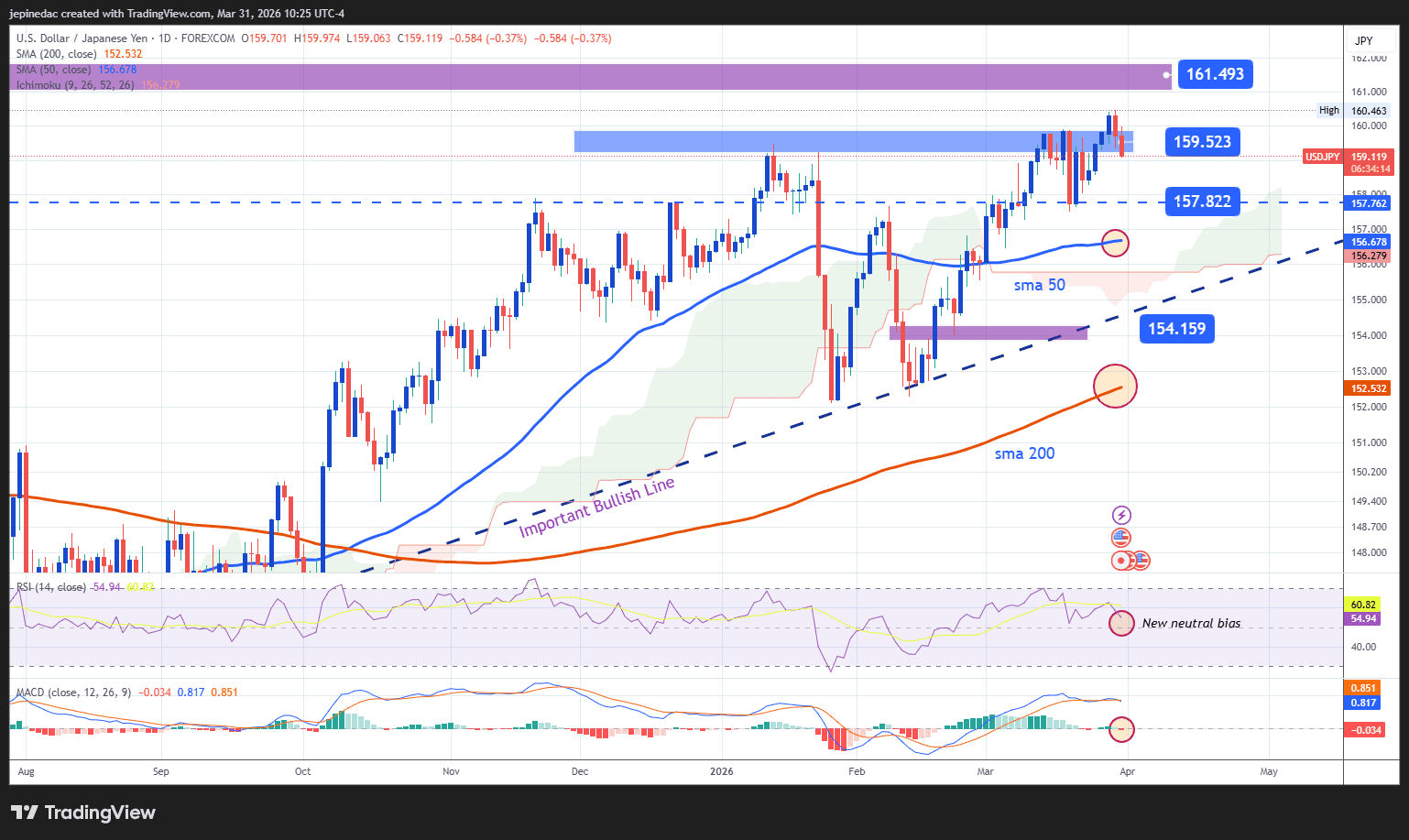
Source: StoneX, Tradingview
- The broader uptrend remains dominant: For several months, USDJPY has maintained a long-term upward trendline, which continues to be the most relevant technical structure on the chart. So far, the recent bearish correction has not been strong enough to threaten this formation, meaning the broader bias remains bullish. However, as price begins to stabilize, a phase of consolidation may develop, potentially leading to further short-term corrective moves within the broader uptrend.
- RSI: The RSI has been trending lower and is now near the 50 level, reflecting a balance between buying and selling pressure over the last 14 sessions. This suggests that the market may enter a more defined phase of indecision in the short term.
- MACD: A similar picture is seen in the MACD, with the histogram hovering around the zero line, indicating neutral momentum in short-term moving averages. If this dynamic persists, it could reinforce an indecisive price environment.
Key levels:
- 161.493 – Key resistance: A level corresponding to highs not seen since 2024, acting as the main upside barrier in the short term. A move toward this area could confirm a stronger bullish bias and support the continuation of the broader uptrend.
- 159.523 – Near-term barrier: A key neutrality zone in the short term. Sustained price action around this level could reinforce indecision or lead to the formation of a sideways range.
- 157.822 – Key support: A level aligned with recent lows. Moves toward this area could reinforce a short-term bearish bias and give more relevance to corrective price action.
Written by Julian Pineda, CFA, CMT – Market Analyst
Follow him on: @julianpineda25