



The last trading week of May is coming to an end, and gold has managed to recover some short-term bullish strength. During the session, the metal posted a gain of more than 1.2%, showing a renewed buying bias toward the end of the week.
The buying pressure trying to stabilize is mainly driven by relative weakness in the bond market and the US dollar, two of gold’s main substitute markets in the short term. For now, this dynamic has allowed the metal to recover ground more consistently. If this scenario continues, gold strength could remain relevant over the coming trading sessions.

Bond yields lose momentum
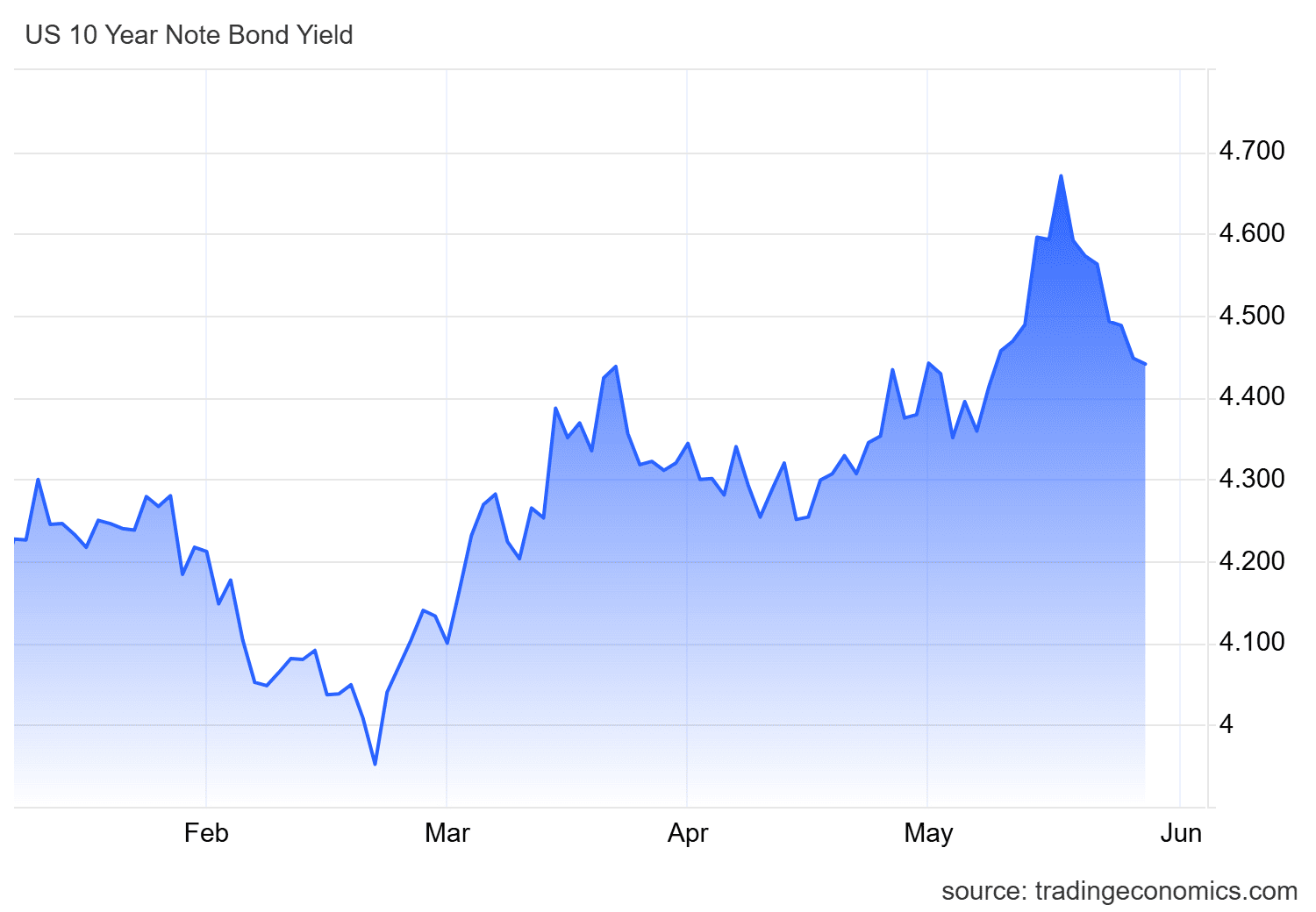
Recent trading sessions have shown a consistent reduction in US 10-year Treasury yields, one of gold’s main substitute assets as a safe-haven market. After reaching levels above 4.6%, the yield has pulled back toward the 4.4% area, marking a downward slope that reflects lower pressure in the bond market in the short term.
Source: TradingEconomics
This move is important because a less attractive bond yield can reduce appetite for these instruments. Since bonds are one of gold’s most relevant substitute markets, the loss of appeal in this area may help demand for the metal stabilize and regain strength in the short term.
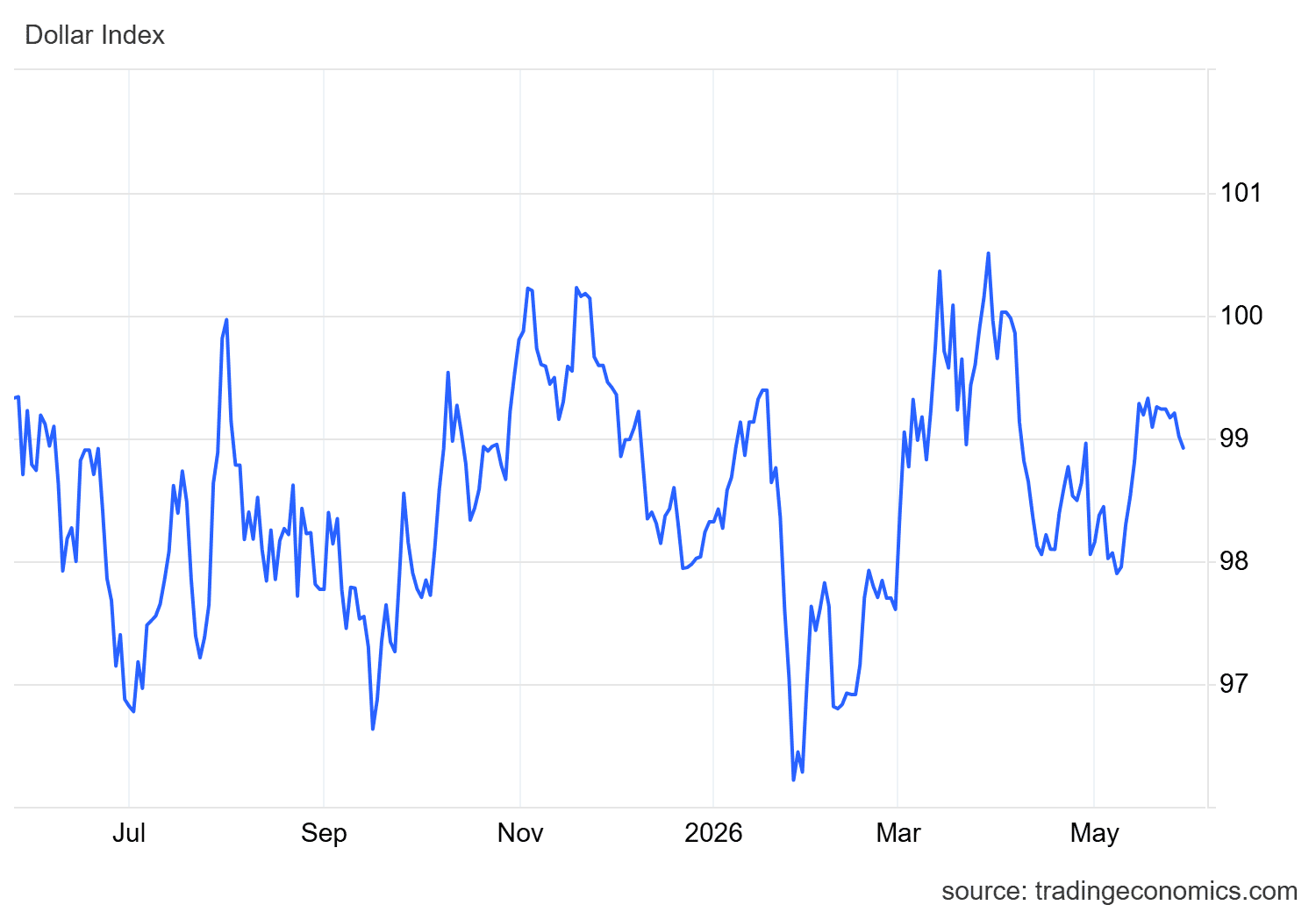
Similarly, the decline in 10-year Treasury yields has also started to affect demand for the US dollar. As yields lose appeal, foreign capital flows into dollar-denominated securities may decline, reducing part of the appetite for the US currency. This behavior can already be seen in the Dollar Index, which shows a downward slope and is trading below the 99-point area, signaling more limited demand for dollars in the short term.
Source: TradingEconomics
This chain of events represents a relief for gold. On one hand, the relaxation in yields reduces the appeal of the bond market as a substitute asset. On the other hand, a weaker dollar lowers the perceived cost of gold internationally. Since gold is priced in dollars, a weaker US currency can make the metal more accessible for global buyers.
Together, the loss of appeal in bonds and the weaker dollar may be helping gold demand stabilize after several weeks of pressure. For this reason, if the dynamic of lower yields and dollar weakness continues, XAU/USD could keep recovering ground and show relevant buying pressure over the coming sessions.
Technical outlook for gold
Source: StoneX, Tradingview
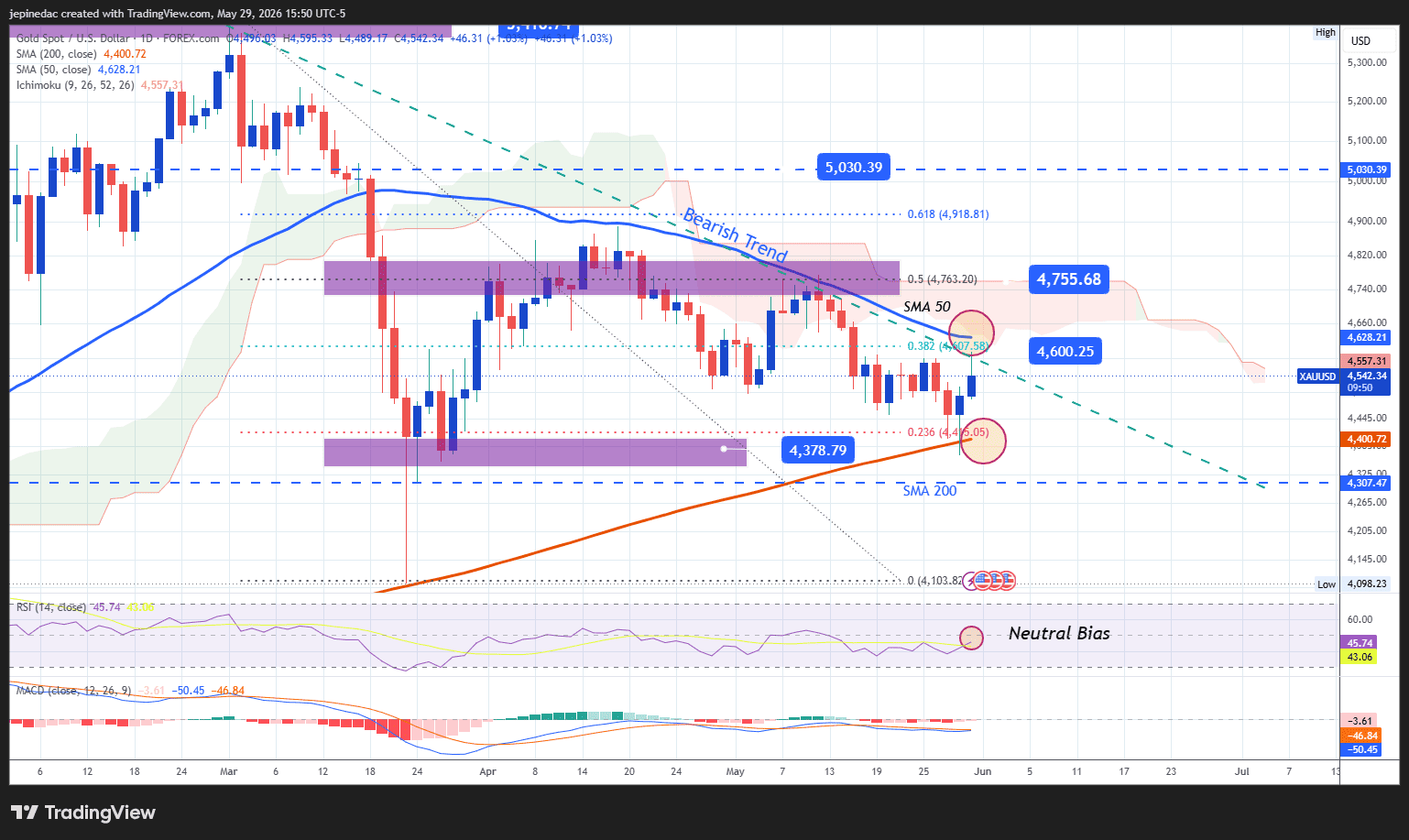
- The bearish trend remains relevant: Despite gold’s recent recovery, the bullish bias is still not strong enough to break the long bearish trendline that has dominated the metal’s movements since March. For this reason, if current buying pressure fails to hold consistently, this bearish structure could remain relevant over the coming weeks of trading.
- RSI: Now, RSI movements have started to approach the neutral 50 area again. This level is relevant because it reflects a balance in market momentum, which could be highlighting a possible phase of indecision in gold’s movements over the coming sessions.
- MACD: The MACD shows a similar dynamic, as the histogram remains close to the 0 area. This indicates a balance in the average strength of short-term moving averages and could also be signaling a potential phase of neutrality in gold’s short-term price action.
Key levels to watch:
- 4,755 USD – Crucial resistance: A recent high level located above the 50-period moving average and aligned with the 50% Fibonacci retracement of the most relevant move on the chart. Price movements toward this point could put the long-term bearish trend line at risk and open the door to a more relevant buying bias over the coming sessions.
- 4,600 USD – Near-term barrier: A neutral zone that has acted as a retracement point in recent weeks and coincides with the 38.2% Fibonacci level. Moves around this level could reinforce a sideways phase and even open the door to the formation of a short-term range in XAU/USD.
- 4,378 USD – Critical support: A relevant low level that coincides with the area marked by the 200-period simple moving average. Price action that manages to break below this level could confirm a dominant selling bias and extend the bearish trend line as the main structure over the following weeks of trading.
Written by Julian Pineda, CFA, CMT – Market Analyst
Follow him on: @julianpineda25