



USD/MXN has barely moved over the last five sessions, posting a variation of around 0.5% and reflecting an increasingly clear phase of neutrality between the US dollar and the Mexican peso. Although the interest rate advantage from the Bank of Mexico remains an important variable, the latest inflation data could start to shift the market outlook.
At the same time, the US dollar is also showing a neutral dynamic amid the cautious stance expected from the Federal Reserve. Together, these forces have limited the pair’s direction and could continue to support a phase of indecision over the coming trading sessions.

Central bank dynamics remain relevant
One of the main factors behind the bearish pressure that has kept USD/MXN under control over the past year and a half has been the rate differential between Mexico and the United States. Within North America, Mexico still has the highest benchmark rate, at around 6.5%, despite the cuts made in recent decisions. In contrast, the United States maintains a benchmark rate of 3.75%, with no short-term changes expected.
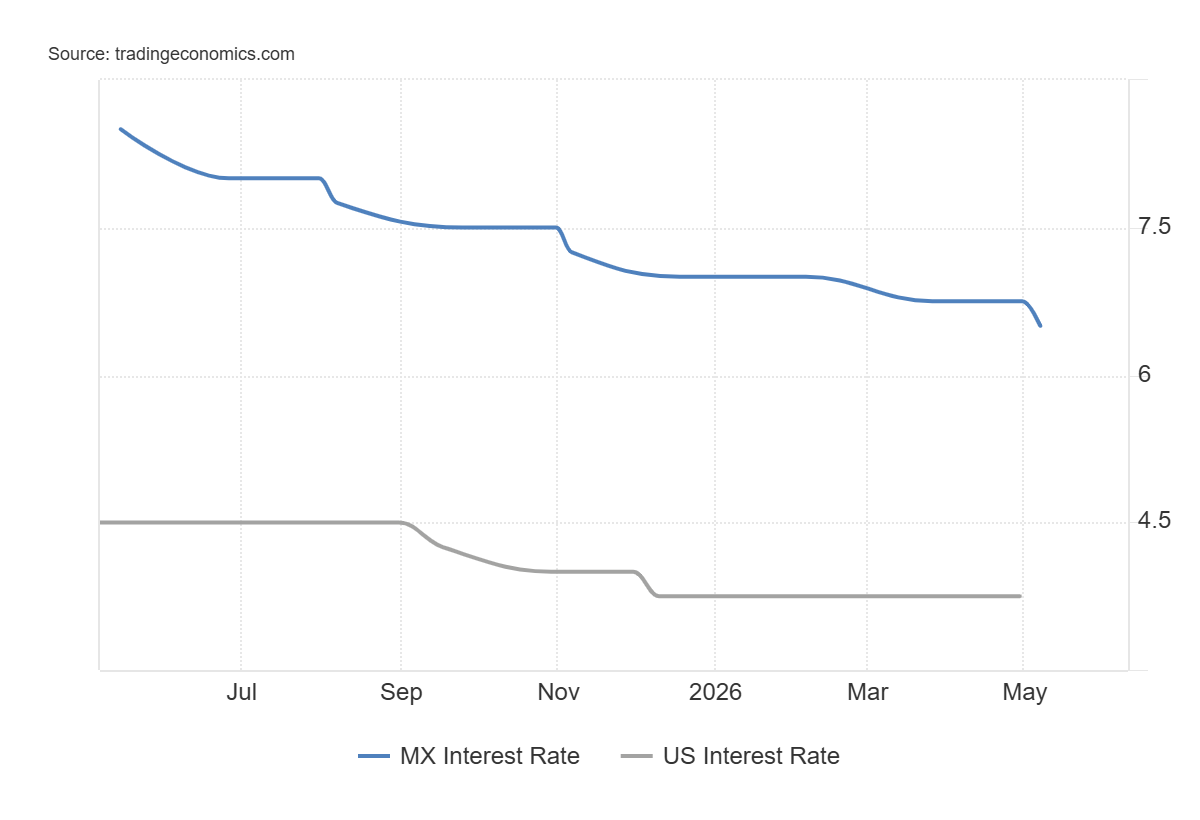
Source: TradingEconomics
This differential makes peso-denominated investments potentially more attractive than US dollar-denominated ones. This can also be seen in the fixed income market, where Mexican 10-year bonds continue to offer a yield above 9.00%, while US Treasuries remain near 4.5%.
Although both markets have shown some decline in yields over recent sessions, the gap remains wide. This stronger relative appeal of peso-denominated assets has been one of the main catalysts behind the strength of the “super peso” and the bearish bias that has dominated USD/MXN in recent months.
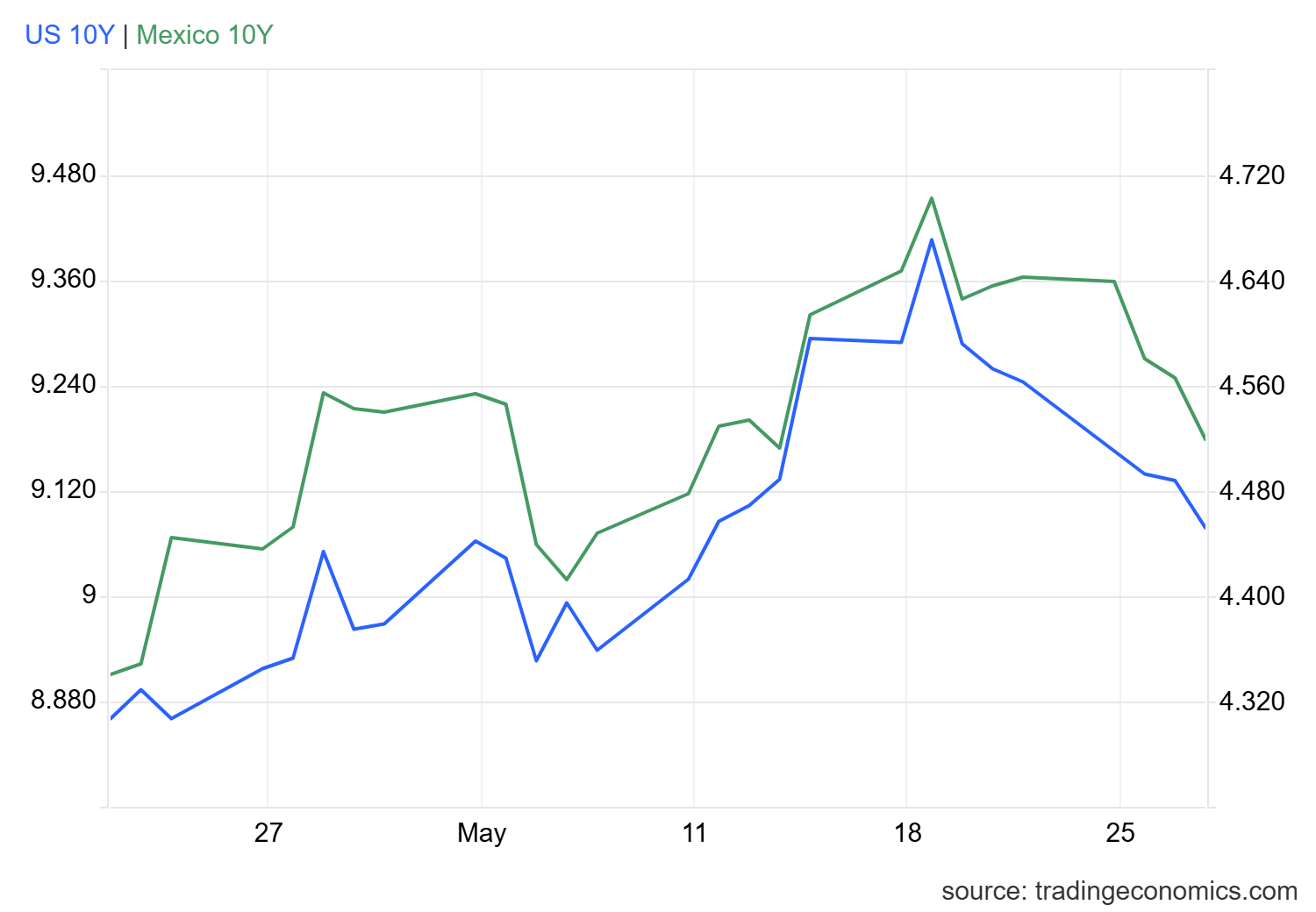
Source: TradingEconomics
However, one reason the peso has started to show more indecision is the uncertainty over whether this rate dynamic can be sustained. In the United States, the market expects the Federal Reserve to remain in wait-and-see mode, as according to the CME Group, there is a probability above 50% that interest rates will remain unchanged at least until December of this year.
In Mexico, the outlook could be different. In the mid-May inflation release, the consumer price index fell 0.16%, while annual inflation moved down to 4.11%. This is relevant considering that the recent annual inflation peak in Mexico stood at 4.59% in March. If this moderation continues with the full May data, it could begin to reflect a more consistent slowdown in inflationary pressures across the Mexican economy.
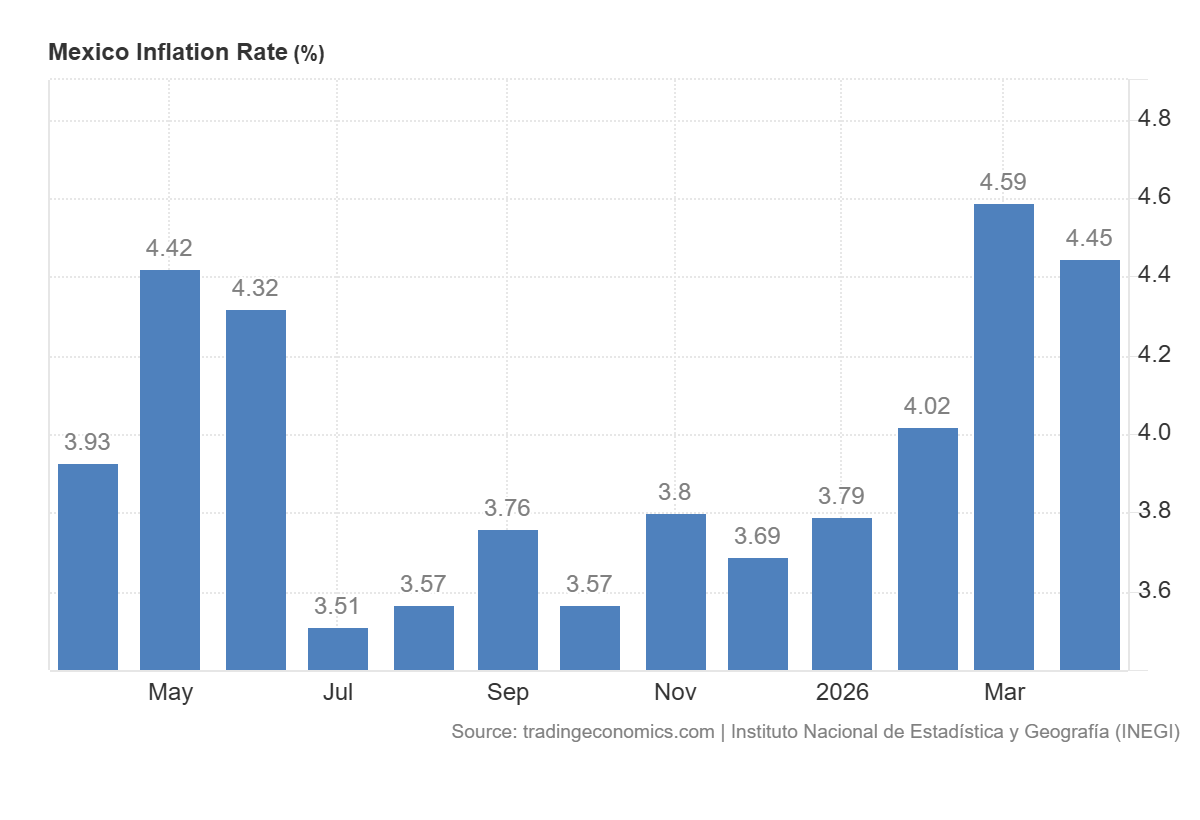
Source: TradingEconomics
Inflation data in Mexico remains key for the monetary policy outlook. If inflationary pressures continue to moderate, especially with the full May figures, expectations for a more aggressive Banxico could weaken in the coming decisions. With the possibility of further cuts still on the table, the central bank could continue making gradual adjustments lower, reducing the appeal of the rate differential with the United States.
So far, this scenario appears to be pushing the peso into a more neutral phase. For this reason, USD/MXN could continue to show indecision over the coming sessions as the market waits for new data that may clarify the Bank of Mexico’s policy path for the coming months.
Technical outlook for USD/MXN
Source: StoneX, Tradingview
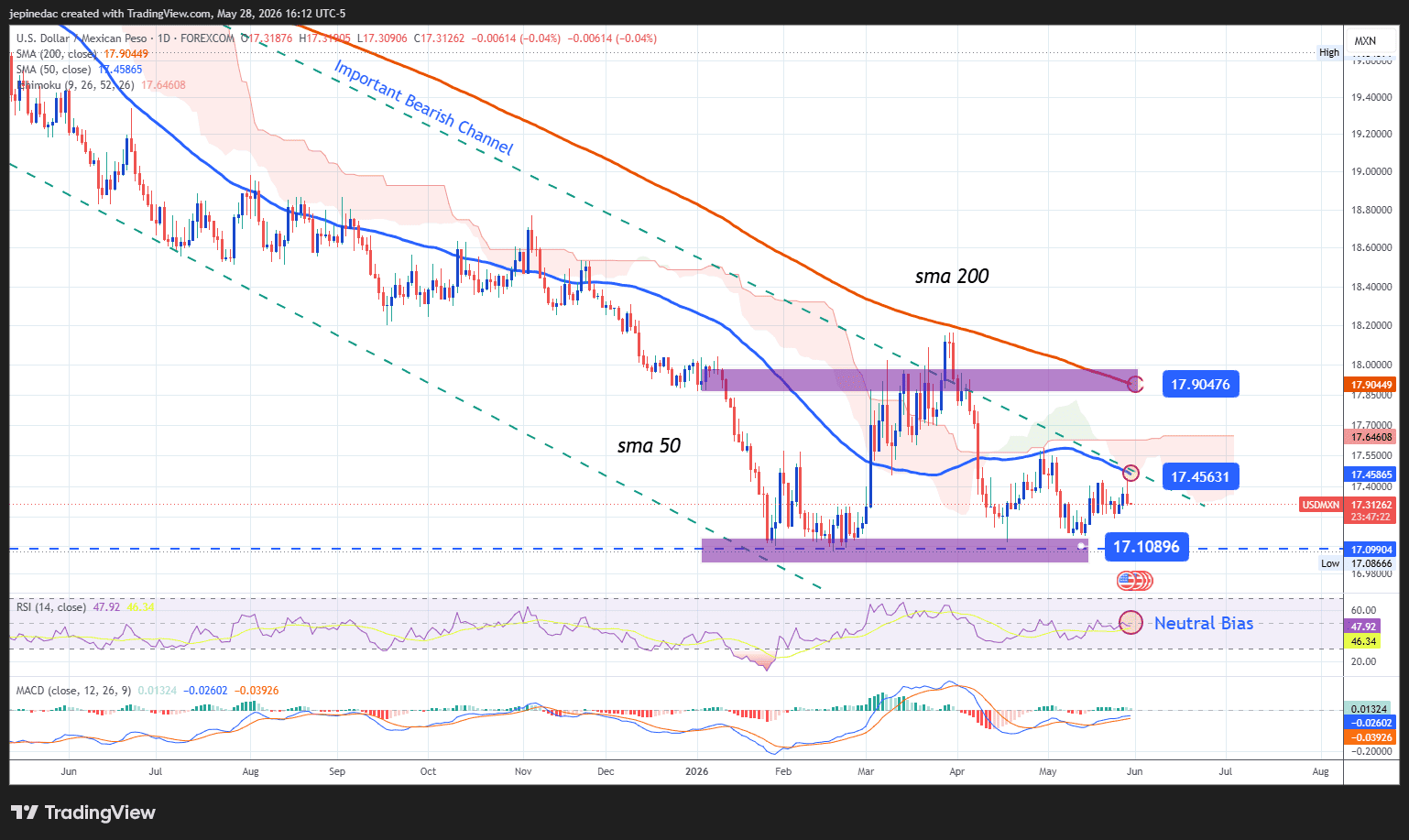
- The broad bearish range remains intact: Since 2025, the main movements on the USD/MXN daily chart have maintained a long-term bearish structure, which remains the dominant pattern to watch. However, recent neutrality in the pair is becoming more evident and, if it continues, could put this structure at risk, opening the door to a more relevant phase of indecision over the medium term.
- RSI: The RSI line remains close to the 50 level, suggesting a balance between buying and selling momentum over the last 14 sessions. This behavior reinforces the idea of an indecisive environment in short-term price action.
- MACD: A similar dynamic can be seen in the MACD, as the histogram remains close to the 0 level, indicating neutrality in the strength of short-term moving averages. This also reinforces the presence of a consistent phase of indecision in USD/MXN price action.
Key levels:
- 17.90 – Main resistance: A recent high area that coincides with the barrier marked by the 200-period simple moving average. Price movements toward this zone could not only generate an important breakout of the bearish structure but also open the door to a dominant buying bias over the following weeks of trading.
- 17.45 – Current barrier: A level that coincides with the bearish trendline and the 50-period moving average. This point is relevant, as movements too close to this zone could reinforce indecision and extend a possible sideways range over the coming sessions.
- 17.10 – Relevant support: The 2026 low area, which acts as the main downside barrier. Moves toward this level could bring the selling bias back into focus and confirm the continuation of the long-term descending channel as the dominant structure in the coming sessions.
Written by Julian Pineda, CFA, CMT – Market Analyst
Follow him on: @julianpineda25