



Iran, WTI Crude Oil Key Points
- The US and Iran made progress toward signing a Memorandum of Understanding toward peace over the weekend.
- Traders continue to shrug off any signs of escalation in the Middle East.
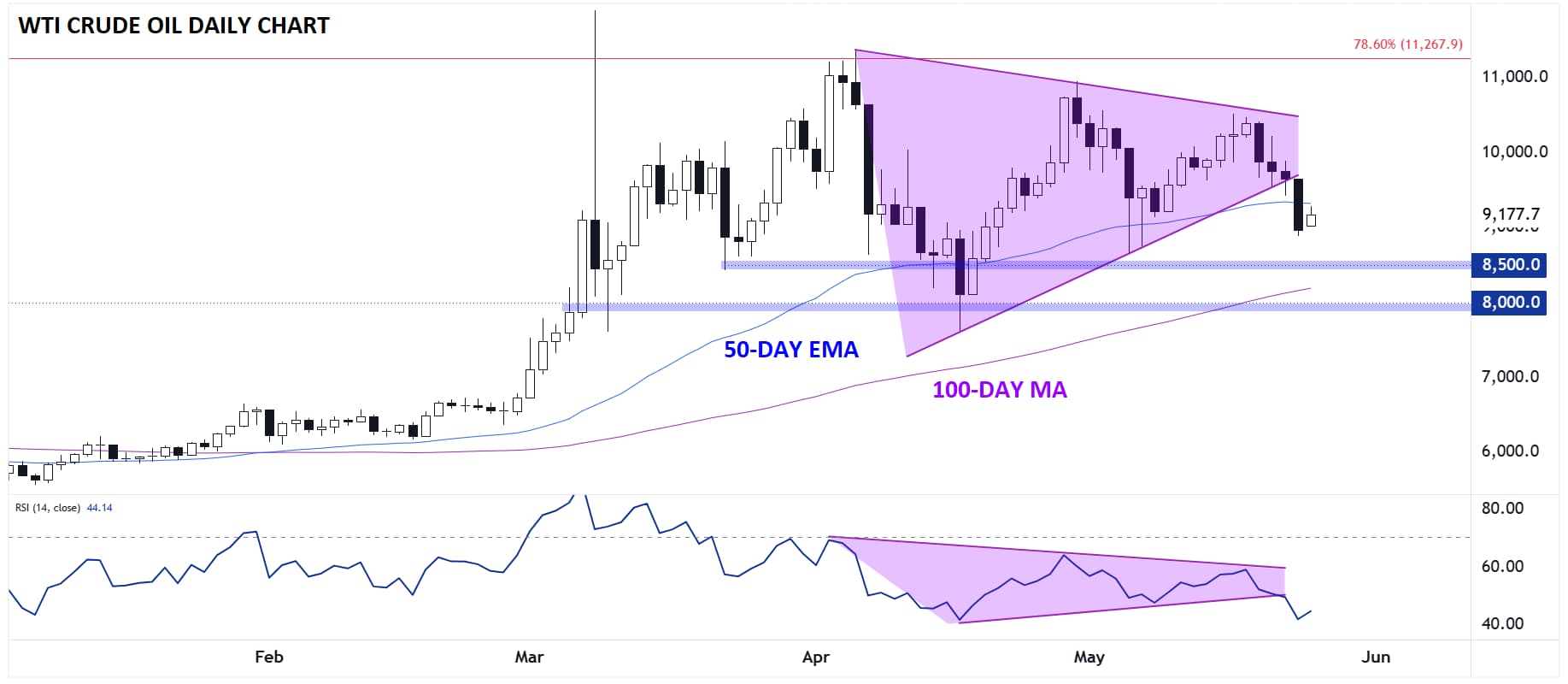
- WTI’s next support levels to watch are around $85 (the late March and early May lows) and $80 (essentially the bottom of the post-war range).
The long holiday weekend in the US and UK was good news, not just for the unseasonably warm weather, but also for apparent progress toward a “Memorandum of Understanding” toward peace in Iran. Even today’s inevitable return to work and setbacks in the Middle East are not deterring the broad optimism yet.
Over the weekend, the US and Iran reportedly reached general agreement on a 60-day deal to stop the conflict and begin a path toward reopening the Strait of Hormuz, with only the issue of frozen Iranian assets as the “final obstacle” to be ironed out. Despite that apparent progress, the US and Iran exchanged “self-defense” strikes in the past 24 hours, while Israel and Lebanon continue to battle in Southern Lebanon.
Looking to prediction markets, the expected probability of traffic in the Strait of Hormuz returning to normal by the end of June (the market’s biggest concern) have reverted back to essentially a coinflip after spiking toward 70% over the weekend:
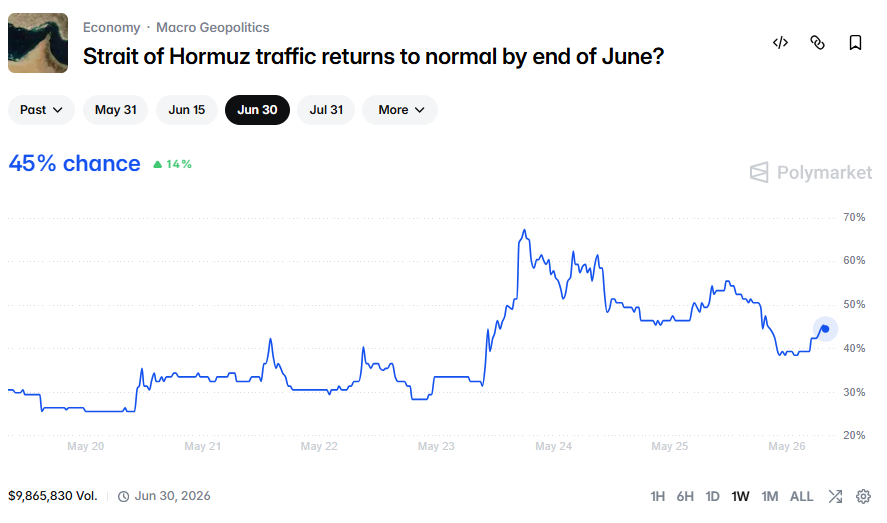
Source: Polymarket
Ultimately, the price action so far this week underscores that markets maintain an asymmetric reaction function to news out of Iran: Any positive headlines lead to large rallies in risk assets and drops in oil prices, while negative headlines only drive token declines in risk assets and limited spike in oil prices. Until that dynamic shifts, traders will continue to give the established trends the benefit of the doubt.
Crude Oil Technical Analysis: WTI Daily Chart
Source: Tradingview, StoneX
Speaking of established trends, WTI Crude Oil hasn’t had much of a clear trend over the last six weeks or so, with prices carving out a broad symmetrical triangle pattern over that period. This weekend’s news was the catalyst for a breakdown from that pattern, suggesting that the path of least resistance is now to the downside in the short term.
The next support levels to watch are around $85 (the late March and early May lows) and $80 (essentially the bottom of the post-war range), with a formal signed agreement as a potential near-term bearish catalyst. Meanwhile, a rally back above the 50-day EMA near $93 would shift the short-term bias back to the neutral morass that has frustrated traders on both sides for weeks now.
-- Written by Matt Weller, Global Head of Research
Check out Matt’s Daily Market Update videos on YouTube and be sure to follow Matt on Twitter: @MWellerFX