



The trading week is approaching its end, and the euro is trying to maintain bullish strength against the US dollar. This can be seen in recent EUR/USD price action, with the pair attempting to hold a gain of more than 0.2% during the session and starting to show a new short-term buying bias.
Part of this buying pressure comes from recent updates on the Middle East conflict, where the possibility of a truce has brought some calm to markets and limited the strength of the US dollar, even after the release of the US PCE data. For now, if this temporary sense of optimism holds, it could continue to support relevant buying pressure in EUR/USD over the coming trading sessions.

Is the Middle East situation having an impact again?
During today’s session, it was reported that the United States began imposing new sanctions on an Iranian agency, in an attempt to ease part of the problems related to trade control in the Strait of Hormuz. At first, this could have reactivated tensions between both sides. However, shortly after, reports suggested that both parties had reached a tentative agreement to maintain a 60-day ceasefire and begin formal negotiations on Iran’s nuclear program.
This event helped market sentiment shift back toward a short-term optimistic bias and once again reduced the geopolitical risk premium. In this context, WTI crude oil has weakened again and is already trading below the $90 area, which also helps moderate concerns over additional global inflationary pressures.
This is relevant for the US dollar, as lower geopolitical uncertainty tends to reduce demand for the dollar as a liquidity safe-haven currency. During periods of higher tension, the dollar usually benefits from its defensive role; however, when confidence improves around potential negotiations, that demand tends to be moderate.
This dynamic can already be seen in recent DXY movements, the index that measures the dollar’s strength against its main rivals. At the moment, the index is showing a relevant downward slope and is moving again near the 99-point area. Although this does not represent an aggressive bearish move, it does reflect some neutrality or weakness in the dollar in the short term.
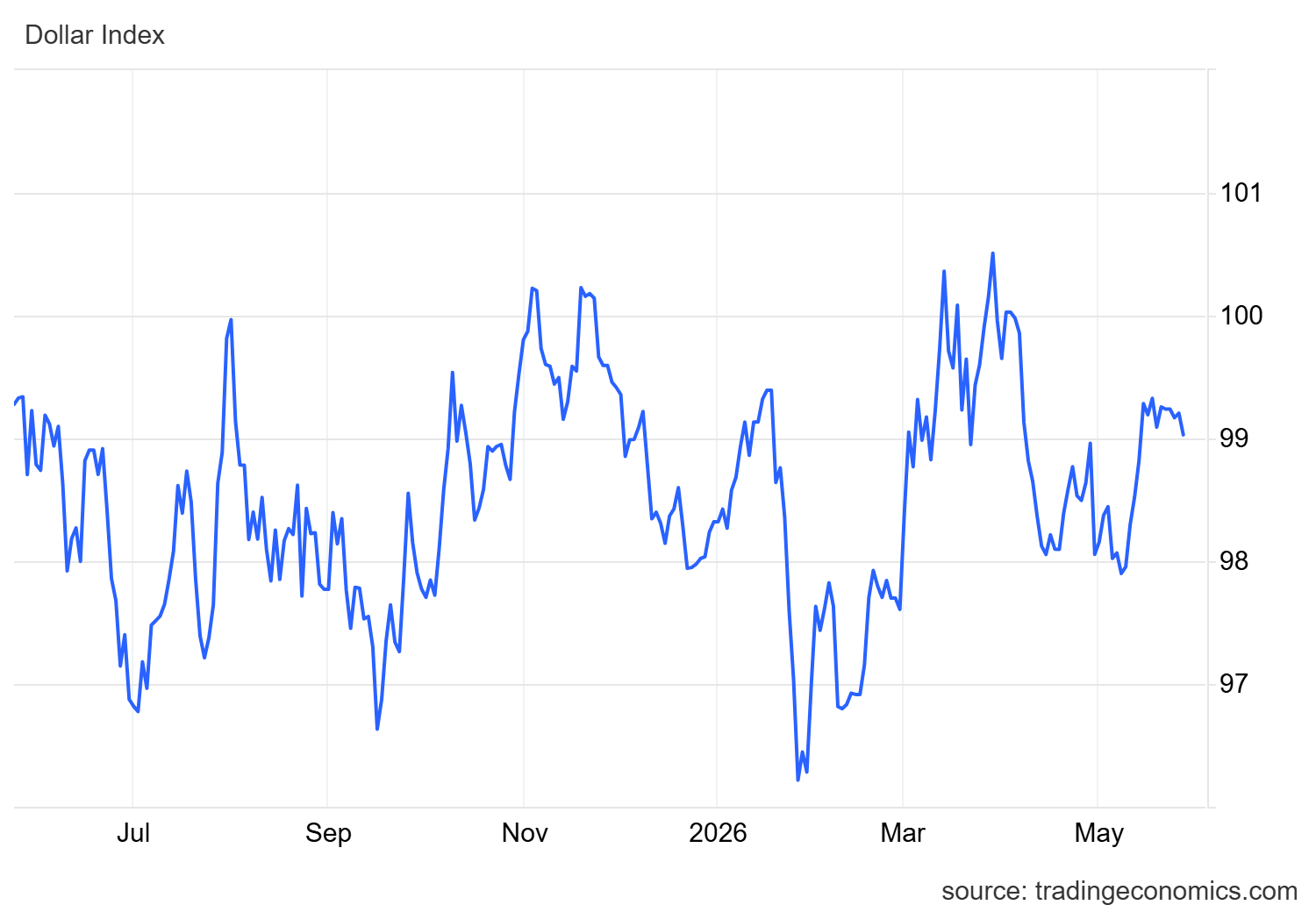
Source: TradingEconomics
This scenario has started to gain relevance in EUR/USD price action, as weaker demand for dollars allows the euro, one of its main rivals, to recover ground. If this dollar weakness continues over the coming sessions, it could keep supporting relevant buying pressure in EUR/USD.
Does the monthly PCE change in the US have an impact?
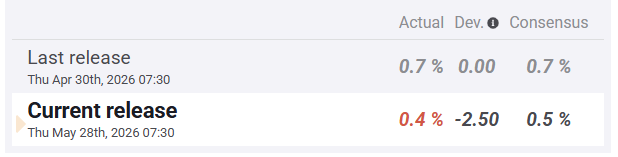
During today’s session, the monthly PCE figure was also released. This indicator measures changes in the prices of goods and services purchased by consumers in the United States. The reading came in at 0.4%, below the expected 0.5% and also well below the previous 0.7% reading.
This means that, although some inflationary pressures remain, the data shows some moderation in the pace of price increases in the short term. While this reading does not fully shift the Federal Reserve’s narrative toward a more flexible monetary policy stance, it also does not reinforce the need for an excessively aggressive approach in the short term.
Source: FXSTREET
In fact, after the economic data was released, there were no major changes in the Federal Reserve probability table. Until December of this year, the market continues to assign a probability above 50% that interest rates will remain unchanged at the 3.75% reference level. Therefore, although the data is relevant for the economic outlook, it has not significantly changed the expected scenario of a cautious Fed for the upcoming monetary policy decisions.
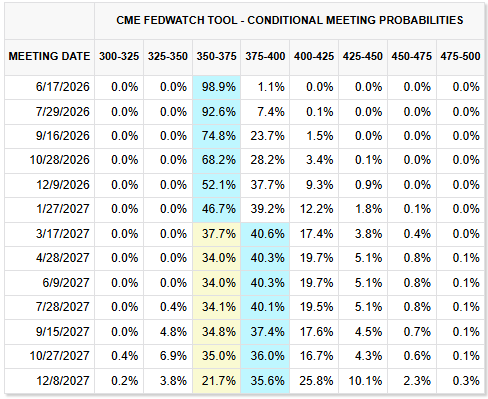
Source: CMEGROUP
That said, for now there is no clear expectation of additional aggressiveness from the Federal Reserve after the PCE release. Since the data has not translated into higher short-term rate expectations, it has also not been a strong enough catalyst to reactivate consistent demand for US dollars. In this context, EUR/USD could continue to find room to maintain buying pressure over the coming trading sessions.
Technical outlook for EUR/USD
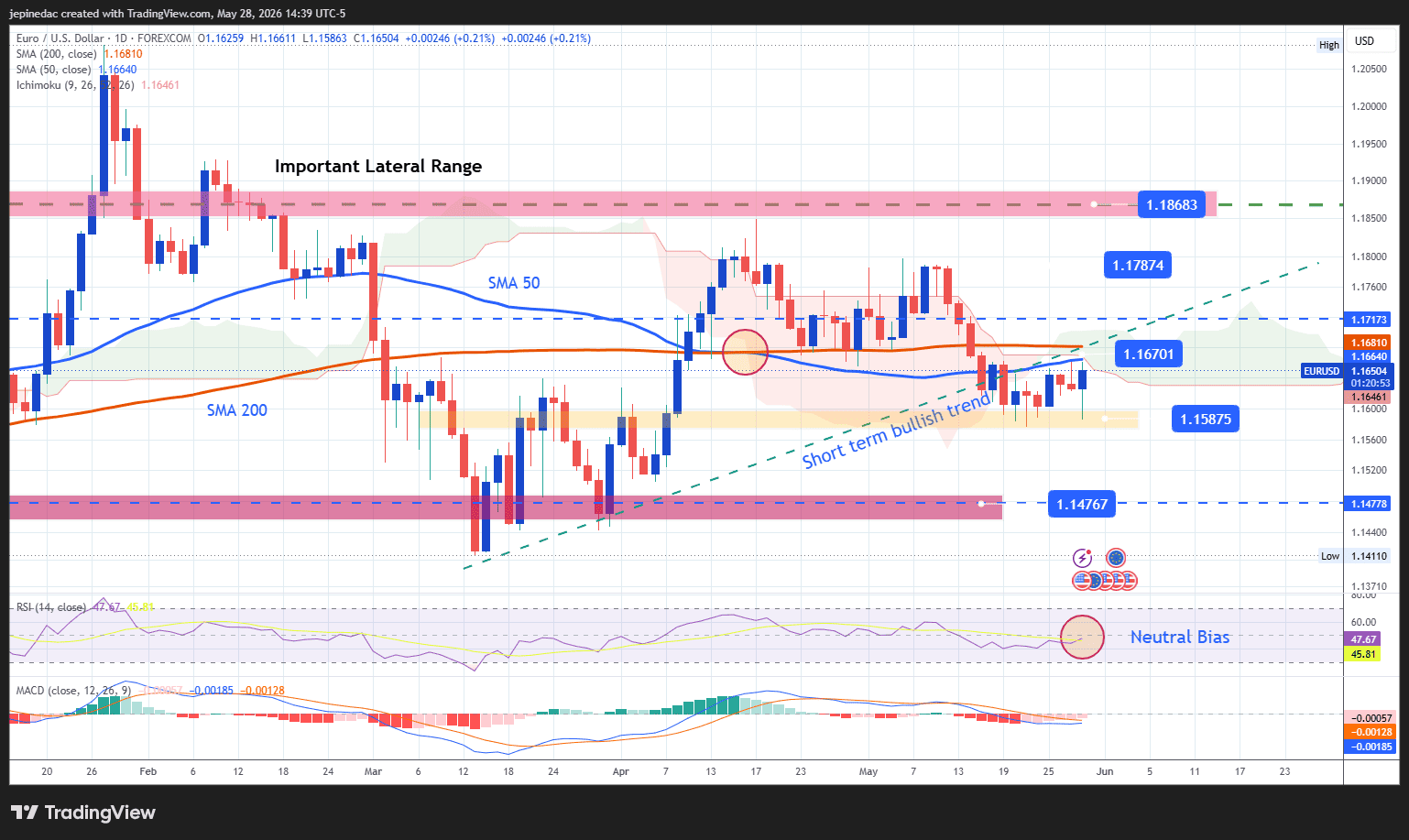
Source: StoneX, Tradingview
- Bullish trendline attempts to remain relevant: Since mid-March, a bullish trendline has managed to hold on the daily chart. So far, there has been no relevant bearish correction putting this technical structure at risk, which means it remains one of the most important patterns to watch. If buying pressure stabilizes, this trendline could continue to remain relevant over the coming sessions.
- RSI: Now, the RSI remains close to the neutral 50 level, suggesting a balance between short-term bullish and bearish momentum. This also leaves room for a phase of indecision if current buying pressure fails to consolidate on the chart.
- MACD: A similar scenario can be seen in the MACD, as the histogram remains close to the 0 line. This suggests a balance in the strength of short-term moving averages and also highlights the importance of the phase of indecision that has started to form in the market.
Key levels:
- 1.17874 – Relevant resistance: This level corresponds to current highs and stands as the most important upside barrier to watch. Price movements above this zone could open the door to new highs and consolidate short-term buying strength, extending the current bullish trendline in the coming sessions.
- 1.16701 – Near-term barrier: A neutral level that coincides with the 50- and 200-period moving averages, making it one of the most relevant areas to monitor in the short term. Price movements too close to this level could extend the neutrality phase and open the door to the possible formation of a sideways range in the coming sessions.
- 1.15875 – Definitive support: A level located below the moving averages that acts as a relevant retracement area. A break below this level could begin to highlight a more consistent selling bias and open the door to more dominant selling pressure over the following trading sessions.
Written by Julian Pineda, CFA, CMT – Market Analyst
Follow him on: @julianpineda25