



The trading week is almost over and, for now, one of the most relevant factors is the indecision that has developed around EUR/USD in recent sessions. The pair has barely moved, posting a variation of around 0.2% over the last three sessions, reflecting a lack of clear short-term direction.
This dynamic is partly explained by the outlook for a more aggressive Federal Reserve, which continues to support demand for the US dollar and limits the euro’s ability to gain ground. If this central bank dynamic continues to influence the bond market, EUR/USD could remain in a relevant phase of neutrality over the coming trading sessions.

Central bank dynamics
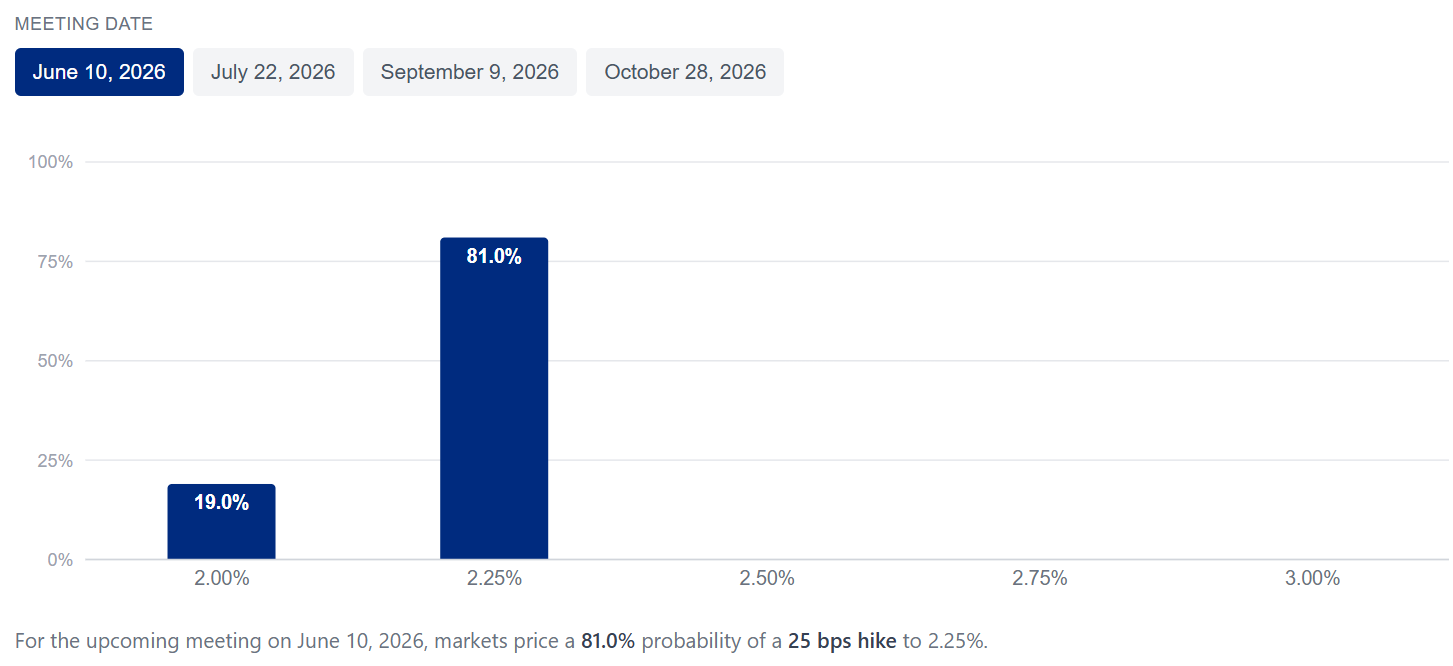
Now, rising inflation data in several regions has once again raised concerns around central bank policy, and this also appears to be the case in Europe and the United States. For the European Central Bank’s June 10, 2026 decision, the market is now pricing in a possible shift from stable rates toward potential increases. Now, there is an 81% probability that the deposit rate, currently at 2.00%, could be raised by 25 basis points to a new level of 2.25%. This would be the first move of this kind in Europe in several months and is starting to reflect an important shift in the monetary policy outlook.
Source: ECBWATCH
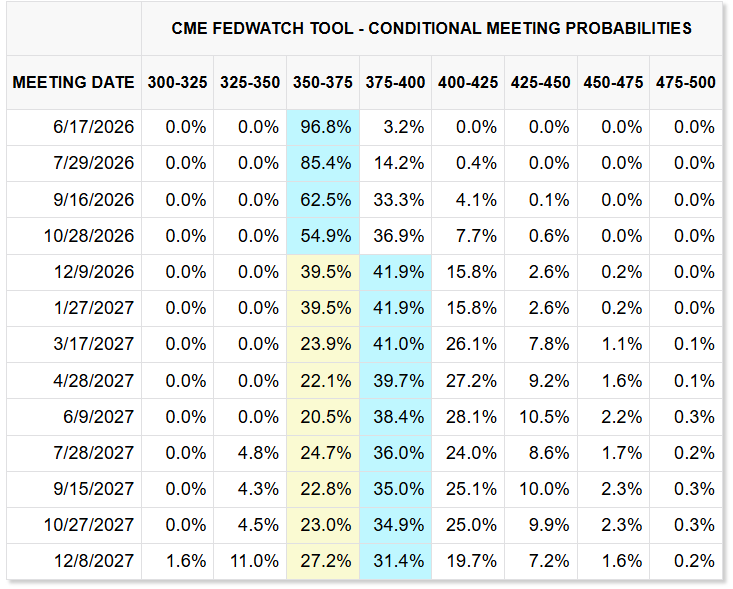
The Federal Reserve’s outlook does not look as aggressive in the short term. According to the CME Group probability table, there is a probability above 50% that, from now until October 2026, interest rates will remain stable at the current level. However, the restrictive outlook begins to gain relevance toward December, where there is already a probability above 40% that the rate could move from the current 3.75% level toward a possible 4.00% reference. This suggests that the Fed could also adopt a more aggressive tone, although not as soon as the European Central Bank.
Source: CMEGROUP
However, the possibility of a more aggressive European Central Bank has still not been enough to restore confidence in euro demand in the short term. This is mainly because the US reference rate, at 3.75%, remains well above Europe’s deposit rate, which stands at 2.00%. Even if the ECB begins raising rates and partially reduces this differential, several hikes would still be needed to reach levels similar to those in the United States.
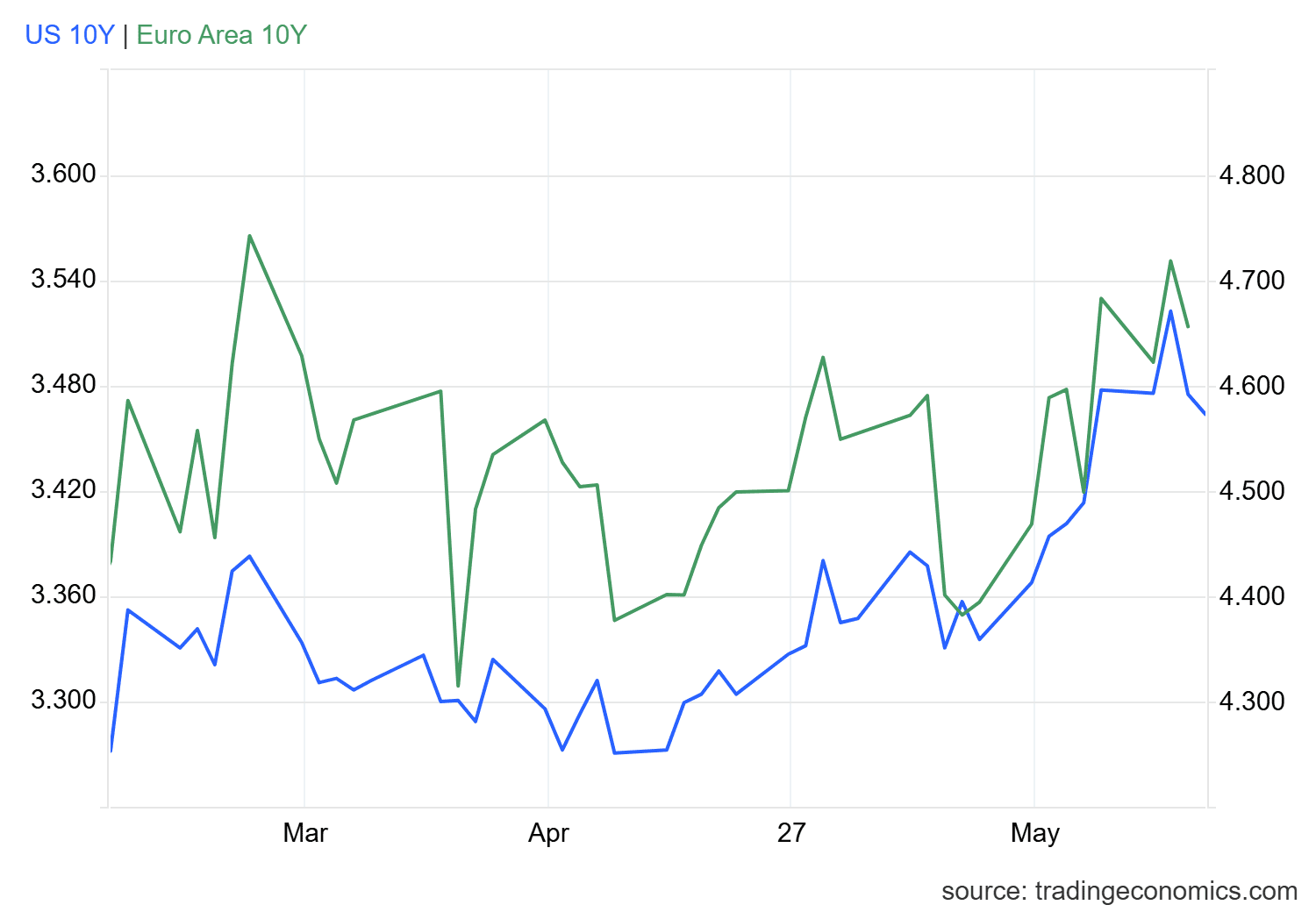
This difference remains clear in the bond market. Although yields have started to pull back in both regions over recent sessions, US 10-year bonds still offer a yield near 4.6%, while Europe remains around 3.5%. This differential continues to favor US bonds, which offer higher returns and may attract more consistent demand. Over time, this allows the US dollar to retain part of its short-term strength and limits a sustained recovery in the euro against the dollar.
Source: TradingEconomics
One of the factors still limiting euro strength is the differential between central banks and bond markets. As long as the market does not see a calmer Federal Reserve compared with a more aggressive European Central Bank, it will be difficult for the rate differential to narrow quickly. In this scenario, indecision and neutrality around EUR/USD could remain relevant over the coming trading sessions.
Technical outlook for EUR/USD
Source: StoneX, Tradingview
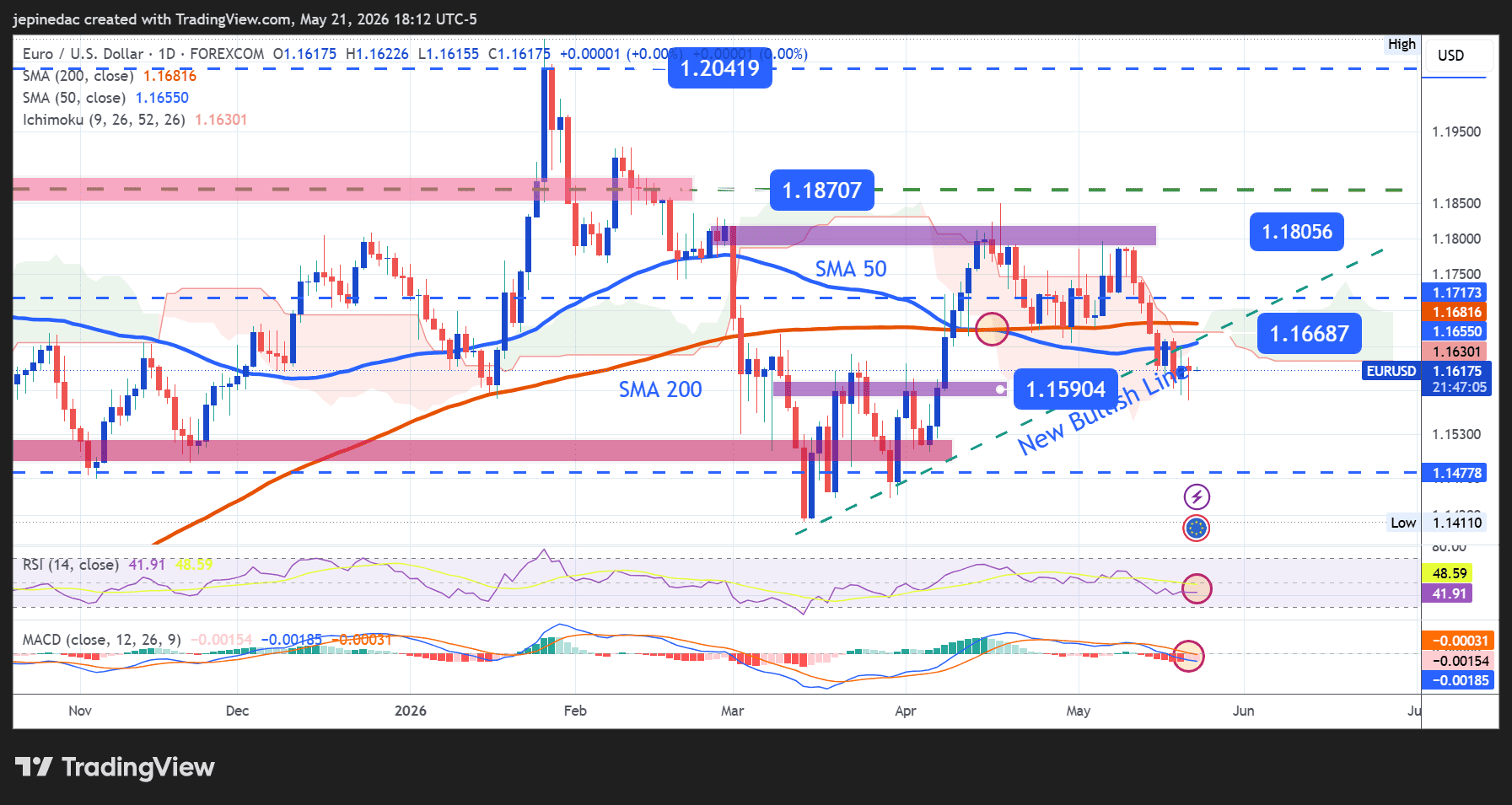
- The new bullish trendline is starting to lose relevance: Since mid-March, EUR/USD has managed to hold the formation of a potential bullish trendline. However, recent weaknesses and neutral price action have started to call this technical structure into question. If buying pressure fails to stabilize again in the short term, this phase of indecision could become more relevant and even open the door to the formation of a more important sideways range.
- RSI: Now, the RSI is flattening near the neutral 50 area, suggesting a balance in market momentum. This behavior highlights the lack of clear short-term direction and, if it continues, could reinforce an increasingly relevant phase of neutrality.
- MACD: A similar scenario can be seen in the MACD, as the histogram remains close to the 0 line. This suggests a balance in the strength of short-term moving averages and also highlights the importance of the indecision phase that has started to form in the market.
Key levels:
- 1.18056 – Relevant resistance: This level corresponds to current highs and stands as the most important upside barrier to watch. Price movements above this area could open the door to new highs and consolidate short-term buying strength, extending the current bullish trendline in the coming sessions.
- 1.16687 – Near-term barrier: A neutral level that coincides with the 50- and 200-period moving averages, making it one of the most relevant areas to monitor in the short term. Price action that remains too close to this level could extend the neutrality phase and open the door to the possible formation of a sideways range in the coming sessions.
- 1.15904 – Definitive support: A level located below the moving averages that acts as a relevant retracement area. A break below this level could begin to highlight a more consistent selling bias and open the door to more dominant selling pressure over the following trading sessions.
Written by Julian Pineda, CFA, CMT – Market Analyst
Follow him on: @julianpineda25