



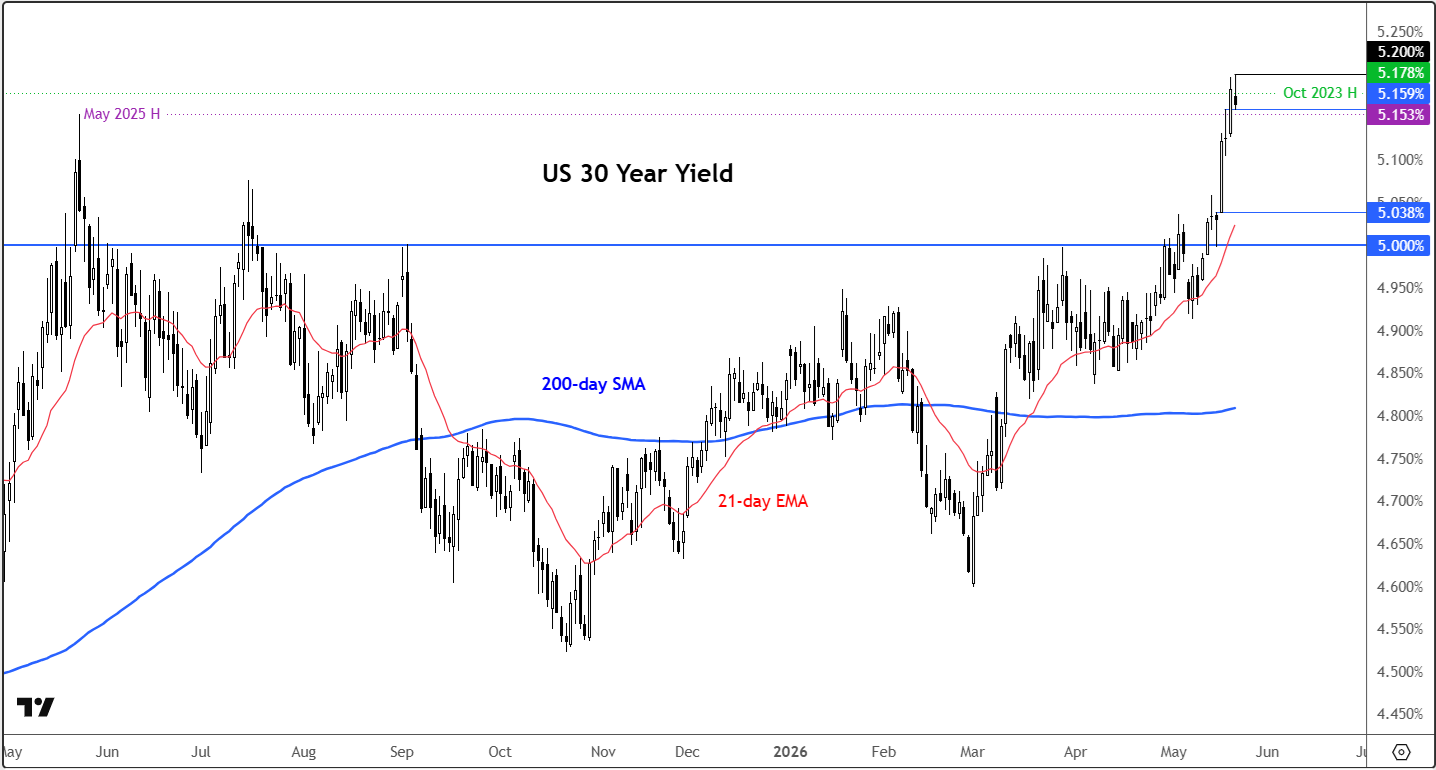
The US 30-year Treasury yield briefly climbed to 5.20% today, its highest level since 2007, before retreating modestly alongside softer oil prices. But the broader trend remains troubling. Before the escalation of the US-Iran war, markets had been moving steadily towards a softer inflation outlook, with markets pricing in further easing of US monetary policy. But roughly three months later, yields soared due to a substantial repricing and all to do with the closure of the Strait of Hormuz. Even so, US technology stocks have surged higher, and the Nasdaq 100 has only recently pulled back from its all-time highs again. But the risk of a deeper correction is there now with yields surging. Any correction in the equity markets should provide further support to safe haven US dollar.
Iran conflict could drag on as US Senate advances measure to limit Trump's Iran war powers
Initially, investors believed the conflict would remain contained and that disruption to the Strait of Hormuz would prove temporary. Instead, shipping flows through one of the world’s most important energy corridors remain severely restricted, keeping energy markets under sustained pressure. For as long as this remains the case, the path of least resistance for yields and the dollar will remain to the upside.
The pressure is certainly growing on Trump after the Senate approved a procedural vote yesterday related to a war powers resolution. If this is adopted, the war powers resolution would severely restrict Trump’s war powers in Iran. This only increases Iran’s negotiation powers, which may mean even a longer stalemate in the situation and much higher energy prices.
Inflation pressures are feeding back into rates markets
With crude oil holding at these elevated levels for an extended period, both inflation and inflation expectations have moved sharply higher once again. Producer price inflation in the US has accelerated to 6.0%, while consumer inflation has climbed to 3.8%, both reaching their highest levels since 2023. When inflation becomes more persistent, lenders demand higher long-term yields to compensate for the erosion of purchasing power. This should mean even higher bond yields, which is bad news for risk and good for the dollar.
Inflation could accelerate further in the coming months. Jet fuel prices have surged, meaning higher plane ticket prices. Meanwhile petrol costs remain elevated too which is very bad for the US consumer reliant on private transport - that’s almost everyone. And then you have fertiliser prices soaring sharply, which will eventually work their way through food prices. So, supply chains and consumer prices alike will feel the pressure which should be bad news for everyone.
This is turn means that the fiscal backdrop in the United States continues to deteriorate. Treasury issuance is increasing rapidly at precisely the same moment investors are demanding higher compensation to hold longer-dated debt.
The combination is difficult for bond markets to absorb smoothly. Not only will mortgage rates go up for consumers, but the debt servicing costs will increase sharply for the government, which would need to be financed by issuance of even more debt at even higher yields, or by reducing budgets of other sectors of the economy.
But it is not just US bond yields rising. We have seen a big shift in global yields as a result of the Iran conflict.
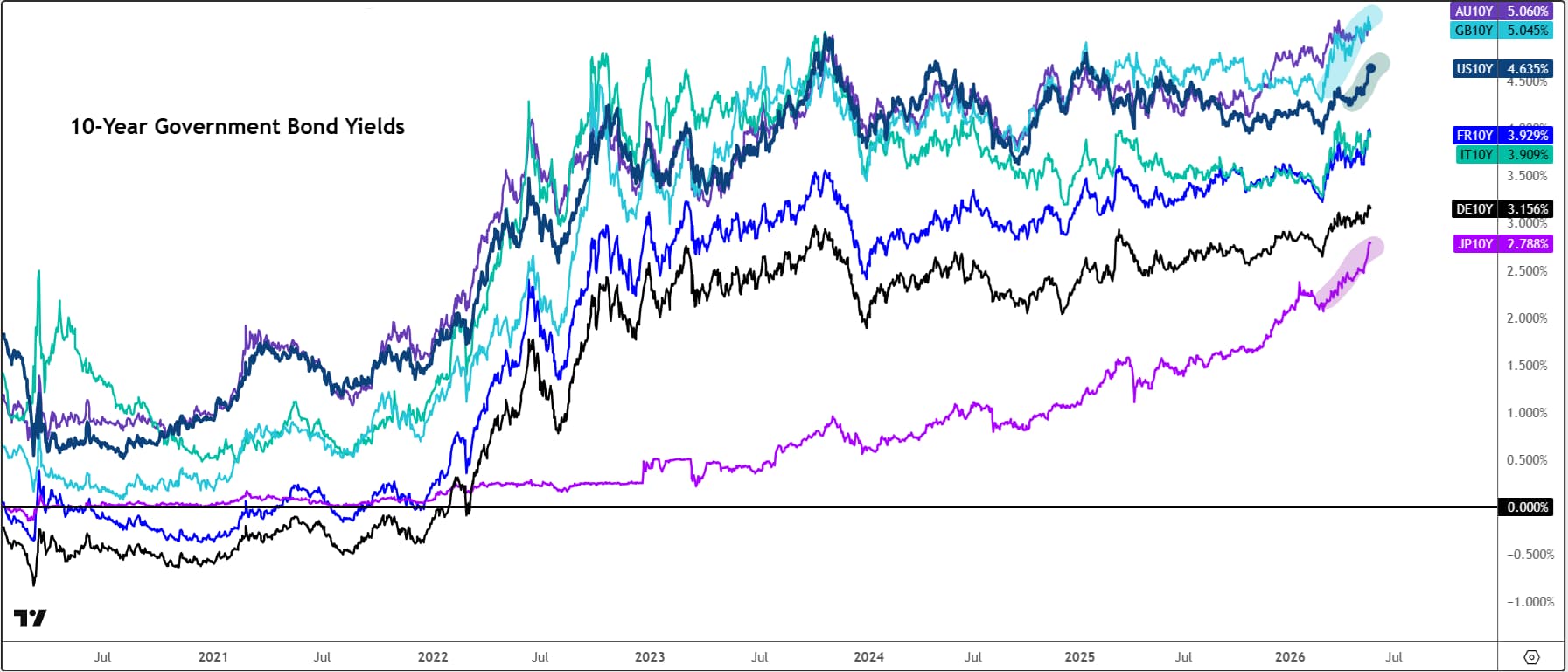
Source: TradingView.com
It is a messy situation to say the least.
Will markets force Trump to accept a bad deal to end the conflict?
As mentioned, the bond markets are approaching uncomfortable territory. Last year, yields were rising sharply when Trump unleashed tariffs, before he paused those and eventually settled for much lower rates. Now with yields rising to similar levels and higher in the case of 30-year, this raises an increasingly important question for investors: how high can yields realistically rise before Trump TACOs? Sustained yields above 5% would place growing strain on both public and private sector finances, raising risks of stagflation and potentially downgrading of US credit ratings. The pressure is certainly building, but will Trump do anything about it just yet?

-- Written by Fawad Razaqzada, Market Analyst
Follow Fawad on Twitter @Trader_F_R
How to trade with City Index
You can trade with City Index by following these four easy steps:
- Open an account, or log in if you’re already a customer
• Open an account in the UK
• Open an account in Australia
• Open an account in Singapore
- Search for the company you want to trade in our award-winning platform
- Choose your position and size, and your stop and limit levels
- Place the trade