


The first week of June begins with the euro showing renewed signs of short-term weakness. This can be seen in recent EUR/USD price action, with the pair falling more than 0.2% during the session.
The new selling pressure comes as the US dollar shows greater stability, supported by Middle East updates that have renewed demand for the US currency. If this effect continues, the current selling pressure could remain relevant in EUR/USD over the coming trading sessions.

Middle East tensions remain in focus
At the start of this trading week, concerns around the Middle East conflict became relevant again. New reports showed attacks between both sides, which could put peace negotiations and stability around the Strait of Hormuz at risk. In fact, there were also reports of a possible suspension of direct talks in the short term, once again complicating the geopolitical outlook in the region and lifting the market’s risk premium.
This situation has already started to create relevant short-term effects. WTI crude oil moved back above the $90 area, reviving concerns about potential inflationary pressures in a context where energy commodities have not managed to decline sustainably.
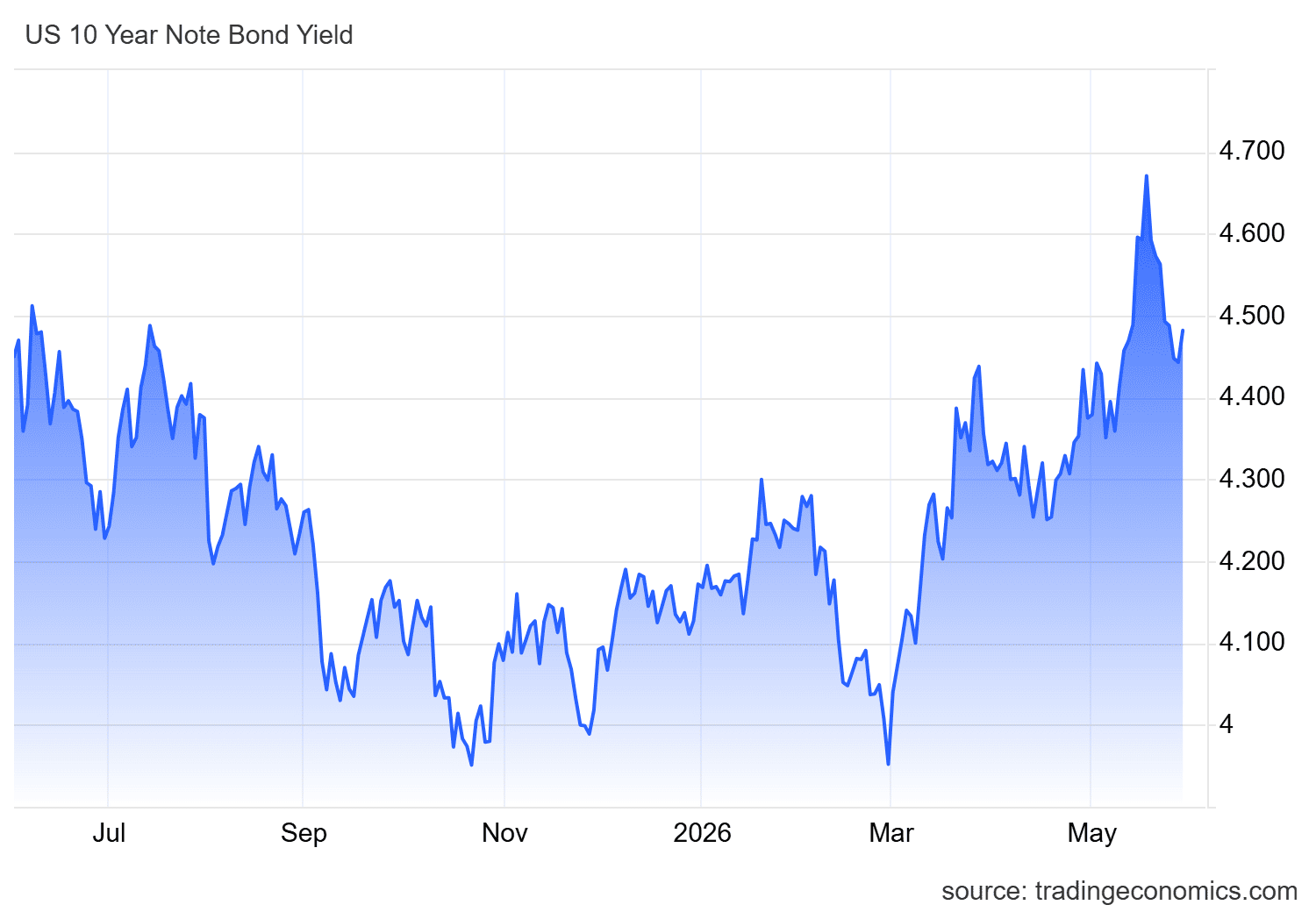
This scenario could also feed expectations of a more aggressive Federal Reserve, especially in the United States, and has supported a recovery in bond yields. The US 10-year Treasury yield has shown a short-term rebound, maintains a positive slope, and is moving back toward the 4.5% area. This increases the appeal of US bonds, especially when compared with other regions such as Europe.
Source: TradingEconomics
This dynamic has acted as short-term support for the US dollar. First, because the dollar tends to behave as a safe-haven currency during periods of geopolitical uncertainty. Second, because a more attractive US bond market can draw foreign capital and stabilize demand for dollars.
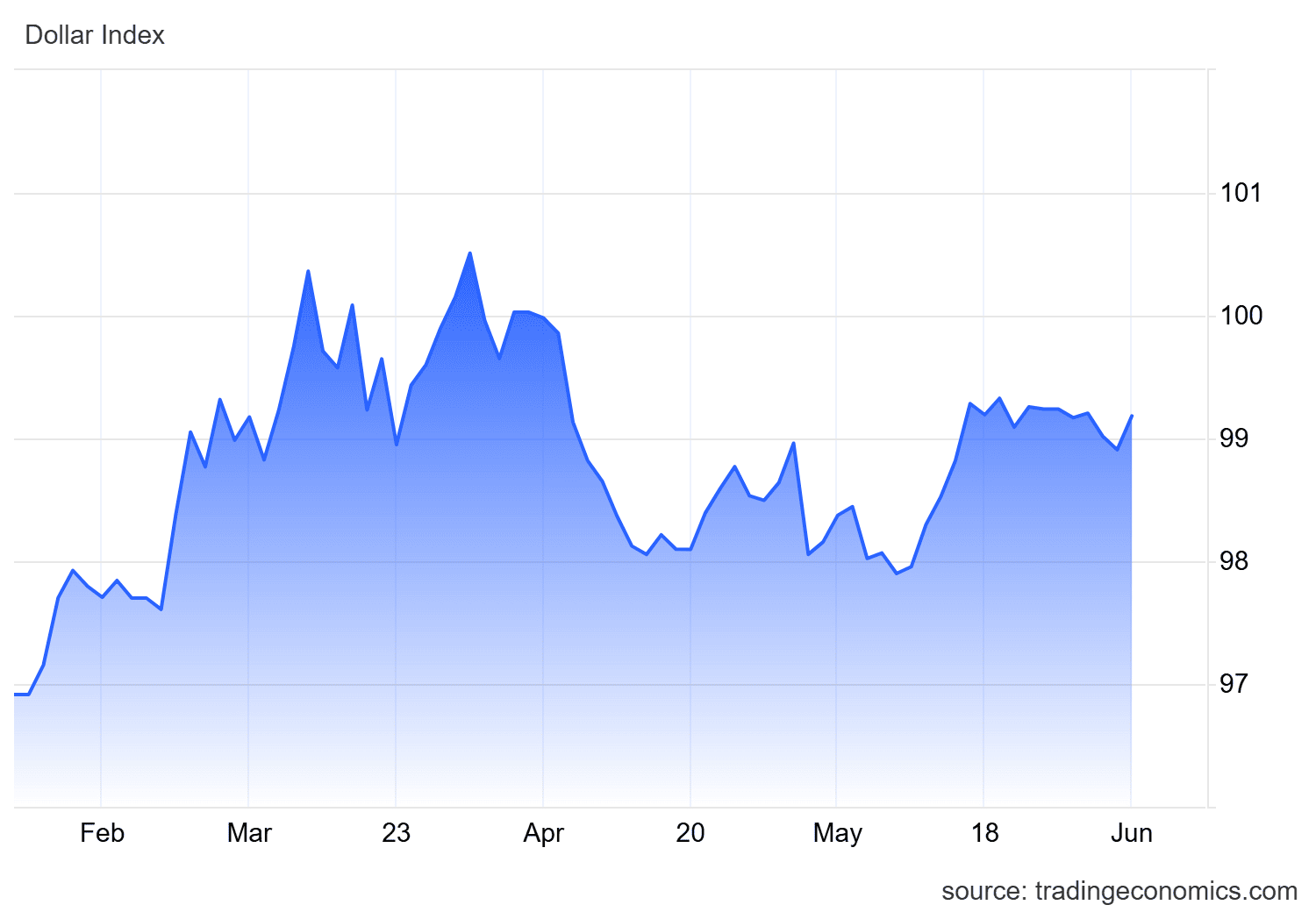
This effect can already be seen in recent movements of DXY, the index that measures the dollar’s strength against its main rivals. The index is now back above the 99-point area, showing a consistent recovery in dollar demand in the short term.
Source: TradingEconomics
The dynamic remains similar to previous weeks: as long as Middle East tensions stay elevated and this supports the US bond market, demand linked to these events could make it difficult for the euro to recover ground consistently. In this scenario, selling pressure could remain present in EUR/USD over the coming sessions.
Could inflation readings be relevant for the euro?
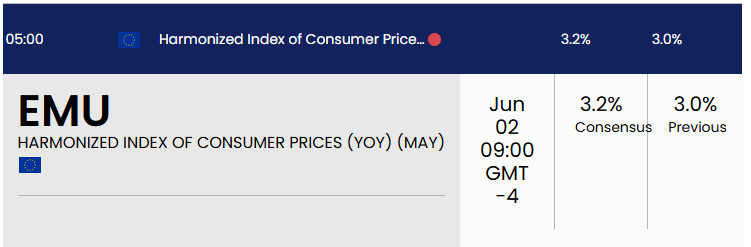
Tomorrow, June 2, the HICP y/y inflation reading for the European region is expected. The figure is estimated to come in 3.2%, above the previous 3.00% reading. This would not only point to additional inflationary pressures but also move inflation further away from the European Central Bank’s 2.00% CPI annual average target.
Source: Data - FXSTREET
At this stage, the ECB Watch probability table already shows a 92% probability that the European Central Bank will raise rates by 25 basis points at the June 10 decision. However, for the July 22 meeting, there is still a probability of near 66% that the deposit rate will remain unchanged after a possible increase toward 2.25%.
This is where the inflation data becomes important. If inflation comes above expectations and remains far from the central bank’s target, the market could start pricing in a stricter ECB stance for the decisions after June. In that case, expectations of higher rates in Europe could help stabilize demand for the euro over the medium term.
Therefore, beyond the current selling pressure in EUR/USD, the inflation reading could open the door to a stronger phase of indecision on the chart over the medium term if it reinforces expectations of a more restrictive European Central Bank.
Technical outlook for EUR/USD
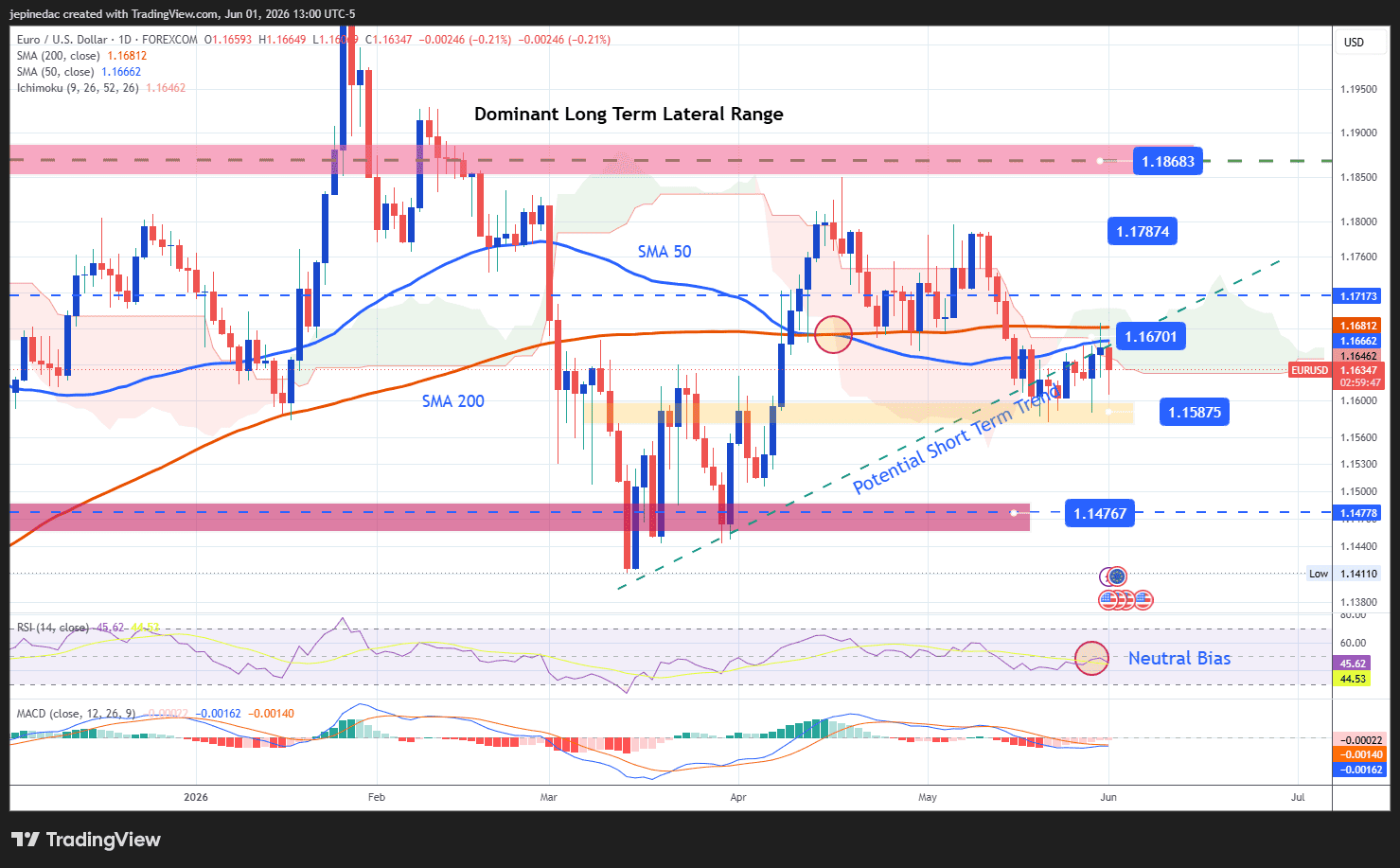
Source: StoneX, Tradingview
- Potential trendline starts to lose relevance: Although recent EUR/USD movements had been trying to keep a possible bullish trendline in play, the neutrality of recent sessions has started to weaken this structure. For now, a broad long-term sideways channel continues to dominate, marked between the upper area of 1.18683 and the lower area of 1.14767. As long as indecision remains present in price action, this sideways channel could continue to be the most relevant structure to watch over the coming sessions.
- RSI: Now, the RSI remains close to the neutral 50 level, suggesting a balance between short-term bullish and bearish momentum. This also leaves room for a phase of indecision if current buying pressure fails to consolidate on the chart.
- MACD: A similar scenario can be seen in the MACD, as the histogram remains close to the 0 line. This suggests a balance in the strength of short-term moving averages and also highlights the importance of the indecision phase that has started to form in the market.
Key levels:
- 1.17874 – Relevant resistance: This level corresponds to current highs and stands as the most important upside barrier to watch. Price movements above this zone could open the door to new highs and consolidate short-term buying strength, bringing a possible bullish trend line back into focus as the dominant pattern over the coming sessions.
- 1.16701 – Near-term barrier: A neutral level that coincides with the 50- and 200-period moving averages, making it one of the most relevant areas to monitor in the short term. Price action that stays too close to this level could extend the neutrality phase, weaken the possible short-term trendline, and keep the broad sideways range from recent months as the dominant structure.
- 1.15875 – Definitive support: A level located below the moving averages that acts as a relevant retracement area. A break below this level could start to confirm a more consistent selling bias and open the door to stronger selling pressure in the following sessions, putting the euro’s short-term strength into question.
Written by Julian Pineda, CFA, CMT – Market Analyst
Follow him on: @julianpineda25